

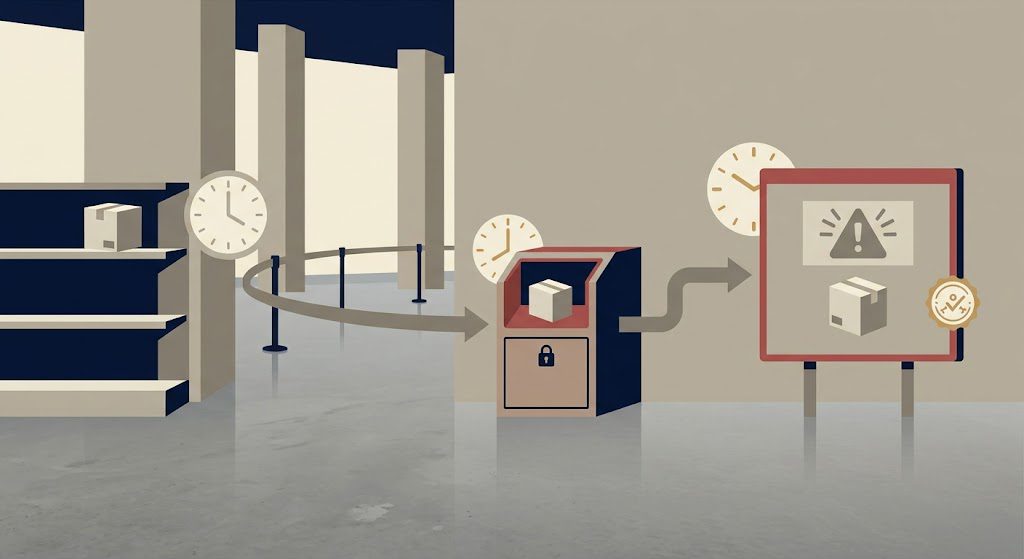
A counterfeit product does not disappear from the UAE market the moment somebody posts a warning online. The new regulations put an actual clock on what happens after the competent authority notifies the supplier.
Under the Executive Regulations of the Anti-Commercial Fraud Law highlighted by the Ministry of Economy and Tourism on September 3, a supplier must immediately stop selling or displaying notified adulterated, spoiled or counterfeit goods and withdraw them from markets and warehouses within no more than 24 hours. The supplier must also notify the sales points and entities it supplied, then publicly announce the withdrawal within 48 hours in Arabic and English.
The regulations turn a confirmed commercial-fraud problem into a timed withdrawal and public-notice process instead of leaving the response vague.
Consumers, retailers, importers, e-commerce sellers, trademark owners and anyone who discovers that a purchased product has been officially flagged.
Clear deadlines make it easier for consumers and businesses to judge whether a supplier is responding to an official withdrawal properly.
A social-media accusation is not the same as an authority notification; the 24-hour legal clock described by the Ministry starts from official notice.
The supplier must withdraw the goods, issue the required public notice and follow the applicable destruction, recycling or re-export procedures.
Stop using a product if an official safety warning tells you to, keep your receipt and packaging, and complain only through verified government channels.
Consumers and legitimate brands benefit from faster removal and clearer public disclosure when violating goods are identified by authorities.
Consumers can submit complaints through official Ministry channels; supplier obligations begin when the Ministry or competent authority issues the relevant notification.
Look for the official withdrawal notice, the supplier response, affected batches or products, refund or remedy instructions and any authority update.
That timing matters because it gives consumers something concrete to watch. Once the authority has notified the supplier, the response is no longer an open-ended promise to investigate.
The 24-Hour Clock Starts After Official Notification
The trigger is important. The Ministry’s briefing says the withdrawal deadline runs from the supplier receiving notification from the Ministry or the competent authority.
So a viral TikTok, an angry review or even a convincing laboratory screenshot does not automatically create the statutory 24-hour deadline described in the regulations. It may justify reporting the issue. The legal withdrawal clock discussed by the Ministry is tied to official notification.
That protects consumers from delay without turning every unverified allegation into an official recall.
What Must Happen Next
| Deadline / stage | Supplier obligation | What a consumer should look for |
|---|---|---|
| Immediately after notice | Stop selling or displaying the violating goods. | The product should no longer be offered as normal stock once the supplier is officially notified. |
| Within 24 hours | Withdraw the goods from markets and warehouses and notify supplied sales points and entities. | Check whether stores and online listings stop offering the affected goods. |
| Within 48 hours | Publicly announce the withdrawal in Arabic and English. | Look for a clear public notice that identifies the affected goods and next steps. |
| Within 30 days, where eligible | Re-export qualifying goods to the country of origin or exporting country under the prescribed controls. | This is a supplier/compliance step, not a consumer remedy by itself. |
The Ministry also says the periods can be shortened when the goods create risks to human or animal health or safety, or to the environment. That means 24 and 48 hours are not always the fastest possible response.
Counterfeit, Adulterated and Spoiled Are Not the Same Consumer Problem
The briefing groups adulterated, spoiled and counterfeit goods inside the withdrawal framework, but the practical risk can be different.
A counterfeit product may involve copied branding and unknown manufacturing. A spoiled product may create a direct health risk. An adulterated product may contain ingredients or modifications that make the label unreliable. The safest consumer action depends on the product and the authority notice.
Do not assume that a fake luxury accessory and a contaminated food product deserve the same response. Follow the specific withdrawal notice and any health or safety instruction attached to it.
If You Already Bought It, Save the Evidence
Keep the receipt, order confirmation, packaging, serial or batch information and screenshots of the listing. Those details can help show exactly what you bought, when you bought it and from whom.
Then check whether the Ministry, local economic authority, municipality or another competent regulator has published a notice for the product. If the issue is still only a rumor, report it rather than presenting it as an established counterfeit finding.
For ordinary consumer complaints, the Ministry says it receives complaints and works with competent UAE authorities. But use the official channel. Our investigation into the fake Consumer Protection website scam showed why searching for a complaint page and clicking the first convincing result can create a second fraud on top of the first one.
The Public Notice Is Part of the Protection
The 48-hour public-announcement requirement is more than paperwork. It reduces the chance that the supplier quietly removes stock while people who already bought it remain unaware.
A useful notice should let a consumer identify whether their product is affected and what they should do. Robius would watch for product name, batch or identifying details, seller instructions, refund or replacement information where applicable, and the authority behind the withdrawal.
The Ministry’s briefing does not mean every consumer automatically receives the same refund remedy in every fraud case. The underlying product, contract, harm and applicable consumer-protection rules still matter. The new deadlines are about removal and disclosure.
That difference resembles another rule we use in our online coaching consumer-rights guide: a law can protect you without making every disappointing transaction automatically refundable. The facts and the remedy still have to match.
E-Commerce Makes the Withdrawal Test More Visible
The Ministry specifically said the regulations are designed to keep pace with modern forms of trade, including e-commerce. Online listings therefore matter just as much as a physical shelf when consumers are trying to see whether violating goods are still being offered.
If an officially notified product remains available after the withdrawal period, capture the listing details and report them through the competent authority rather than confronting the seller or trying to investigate the supply chain yourself.
And do not let a fake message create urgency around a real consumer-protection story. The lesson from the AED 3 parcel-text scam is still useful: start from the official government or company channel, not the link that found you.
The Robius Layer: Watch the Clock, but Watch the Trigger First
The headline number is 24 hours. The more important rule is what starts those 24 hours.
Once an authority has notified the supplier, the regulations create a fast sequence: stop sale, withdraw, tell downstream sellers and publicly announce. Before that point, a consumer allegation may be important, but it is not the same thing as an official finding.
That is exactly the kind of distinction worth learning if you are new to the UAE. Government names, official notices and deadlines are powerful signals, but only when you verify where they came from.
So if a product you own is officially flagged, check the authority notice, identify the exact product or batch, stop using it when safety guidance says to, keep your proof of purchase and follow the official complaint or recall process. The deadline belongs to the supplier. The verification step belongs to you.
Sources
- Emirates News Agency (WAM): Ministry of Economy and Tourism briefing on Cabinet Decision No. 107 of 2026, including 24-hour withdrawal, 48-hour public notice and 30-day re-export rules. https://www.wam.ae/en/article/c227c2y-ministry-economy-and-tourism-requires-withdrawal
- Ministry of Economy and Tourism: Official consumer-complaints page and verified complaint channels. https://www.moet.gov.ae/en/consumer-complaints1
Robius.news — Dubai, UAE — 2026 | Built to be first. Built to be trusted.