 UAE, UNFILTERED
There Is Now a Scam That Targets People Trying to Report a Scam
Fake consumer protection website scam Dubai There Is Now a Scam That Targets People Trying to Report a Scam A business cheated you. So…
The short answer
Fake consumer protection website scam Dubai There Is Now a Scam That Targets People Trying to Report a Scam A business cheated you. So…
Fake consumer protection website scam Dubai
There Is Now a Scam That Targets People Trying to Report a Scam
A business cheated you. So you go online, search for Consumer Protection, and file a complaint. You are doing everything right.
Then the phone rings. The caller knows your name. Your email. The exact details of the complaint you just submitted.
Of course they do. You typed it all into their website.
What the Scam Actually Is
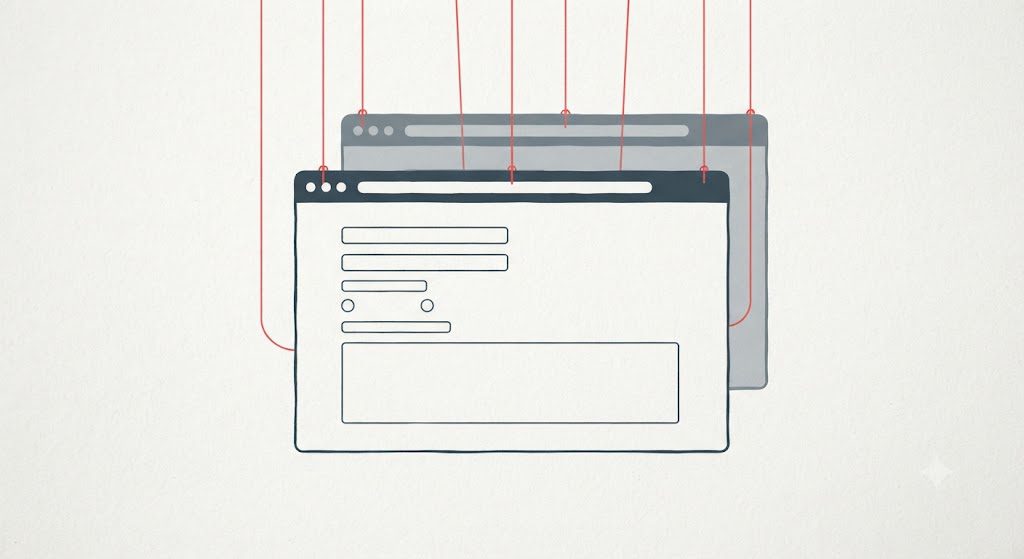
The trap starts before the callback. Fraudsters create fake Consumer Protection websites or links that capture the victim’s complaint details. The caller can then quote those details back to sound official before asking the victim to install remote-access software or expose banking information. The safest rule is to reach government services through official channels you opened yourself and never install software because an unsolicited caller asked you to.
What Dubai Police Actually Warned About
On 7 July 2026, the Anti-Fraud Centre at Dubai Police’s General Department of Criminal Investigation issued a warning. It concerned fake links and unknown apps claiming to represent Consumer Protection.
The advice was direct. Use only official Consumer Protection channels when filing a complaint. Never share banking data with an unauthorized party.
The Centre described the method in unusual detail. That level of detail usually means one thing. It is working on real people.
How the Scam Actually Runs
It moves in four steps. Each one makes the next easier.
- You search online for the Consumer Protection platform. Instead of the official page, you land on a convincing fake.
- You fill in the form. Your name, your email, your phone number, the details of your complaint. You have just handed a criminal a script.
- A caller contacts you claiming to be a Consumer Protection employee. To prove it, they recite your complaint back to you.
- The caller asks you to install a remote-control app, then to log into your online banking while it runs. Now they can see your screen and move your money.
Notice what makes it work. Nothing is hacked. No virus is clicked. You are simply guided, step by step, into opening your own front door.
Why the Callback Is So Convincing
Most scam calls fail because the caller knows nothing about you. This one starts by knowing everything that matters.
They know you have a complaint. They know who it is against. They know your name and your number.
So when a stranger opens with accurate, private details, your brain files them as legitimate before you have thought about it. That is not stupidity. That is how trust works, and the scam is built around it.
The Remote-Access App Is the Whole Attack
Dubai Police were explicit about the tool. These apps control a computer or phone remotely. They mirror the screen and expose confidential data.
Here is the uncomfortable part. The apps themselves are not malicious. They are legitimate software that IT support teams use every day. That is exactly why the request sounds reasonable, and why your phone will not warn you.
So the danger is not the app. It is installing it because someone called you.
Make this an absolute rule with no exceptions. Nobody who contacts you ever needs remote control of your device. Not your bank. Not the police. Not Consumer Protection. If they ask, they are a criminal, and the conversation is over.
Real vs Fake
| Real Consumer Protection | The scam | |
|---|---|---|
| How you reach it | Official channel, typed in yourself | A search result or a sent link |
| What happens next | Your complaint is processed | A call quoting your own complaint |
| What it asks for | Never your bank login | Remote access and a bank login |
| Software to install | None | A remote-control app |
The Real Complaint Routes, So You Do Not Need to Search
The scam only works because people go hunting for the right channel. So stop hunting. Know the routes before you need them.
For a consumer dispute, use the official Consumer Protection channels directly. For a problem with a bank, an insurer, or a finance company, there is a better route that most residents have never heard of. Sanadak, the UAE’s independent financial ombudsman, resolves those disputes for free. It costs nothing, it is real, and no search engine is required to find it.
For reporting the fraud itself, go to the eCrime platform or call 901. The Dubai Police app also handles reporting and case tracking, and it is worth installing before you have a reason to use it. The right time to find an official channel is never the moment you are panicking.
The Rule That Protects You
This scam exploits one specific habit. Reaching government services through a search engine. That is the vulnerability, and it is fixable in a second.
- Reach official services through the official app, or by typing the address yourself. Never through a search result or an ad.
- Never install remote-access software because someone contacted you and asked.
- Never log into your bank while any screen-sharing or remote app is running.
- A caller knowing your details proves nothing. They may have collected those details themselves.
- Never share banking passwords, card numbers, or codes with anyone claiming to represent a government service.
- Urgency is the signal to stop. Hang up and verify independently.
There is a wider lesson here, and it is the one Robius keeps returning to. A convincing surface proves nothing. A professional website proves nothing. We have seen the same principle in a broker whose own regulation page contradicted the public registers, and in fake salary certificates that banks always eventually catch. Only the official source settles it.
If You Have Already Installed the App
Act immediately. The criminal may still have access.
Turn off your internet connection. Uninstall the remote-access app. Contact your bank at once to freeze your accounts and cards, and to flag any transfer that has already left.
Then change your banking passwords from a different, clean device. Review your recent transactions carefully. Report the incident through eCrime or by calling 901, and keep the website address, the phone number, and every screenshot as evidence.
The Bottom Line
There is a bitter logic to this one. The people who fall for it were already trying to do the right thing. They were already angry about being wronged once. That emotional state is exactly what the scam needs.
So protect the moment. When you go to report a problem, reach the service through an official channel you opened yourself.
And if anyone asks you to install software so they can help you, the help has already stopped being real.
Sources
- Emirates 24|7: Dubai Police Anti-Fraud Centre warning on fake Consumer Protection sites and remote-access software (7 July 2026) — https://www.emirates247.com/uae/dubai-police-warns-of-fake-consumer-protection-scams-targeting-bank-accounts/3379
- Gulf Today: The four-step method, including the callback that quotes the victim’s own complaint — https://www.gulftoday.ae/news/2026/07/07/dubai-police-warn-residents-against-fake-consumer-protection-websites-used-in-bank-fraud
- Gulf News: Dubai Police on the rise in fake calls posing as officials and banks — https://gulfnews.com/uae/crime/dubai-police-warn-of-rise-in-fake-calls-posing-as-officials-and-banks-1.500503458
- Dubai Police eCrime: Official platform for reporting electronic crime — https://www.ecrime.ae/
Robius.news — Dubai, UAE — 2026 | Built to be first. Built to be trusted.