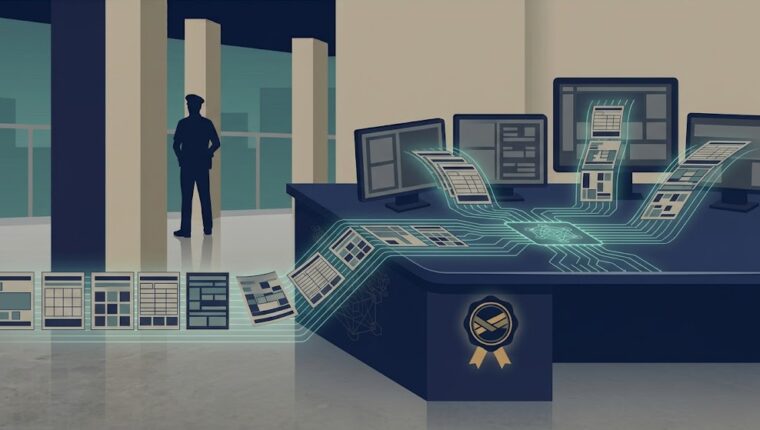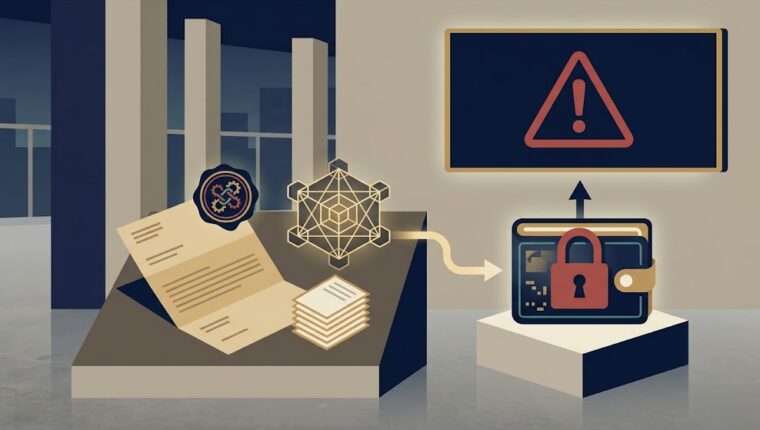


UAE scam call how it works
Nobody thinks they will fall for a scam call. Then the phone rings, and the person on the other end is calm, official, and already knows your name.
This is a reconstruction of how one of these calls actually works. It is based on a real UAE case documented by security researchers, and on the patterns Dubai Police have warned about.
We have rebuilt it moment by moment. At each step, we show the lever being pulled, and the exact point where you could still put the phone down.
| THE ROBIUS VERDICT: A scam call is not a lie you fail to spot. It is a script engineered to switch off the part of your brain that spots lies. The call works by building false authority, manufacturing urgency, and keeping you talking so you never stop to verify. It is designed to feel like cooperation, not coercion. The single move that defeats every version is the same. Stop, hang up, and call the organization back on a number you already have. Everything below is what happens if you do not. |
0:00 — The Opening
The caller is polite and slightly bored, like someone processing routine paperwork. That tone is deliberate. Panic would make you suspicious. Boredom makes it feel real.
They say they are calling from a government department to check your records. They do not demand anything yet. They are just confirming who you are.
The lever: authority. A calm official voice borrows the weight of an institution before it has proven a thing. Where you could stop: right here. No real department opens a cold call by processing your records over the phone.
0:40 — The Proof
You are slightly unsure, so the caller offers proof. Check your messages, they say. Our department will send you a file number.
A moment later, a message arrives with an official-looking reference. You read it back. See, they say. That is your case.
The lever: manufactured evidence. The message feels like verification, but anyone can send a text with a number in it. Nothing was proven. Something was performed. Where you could stop: a reference number is not identity. It costs a scammer nothing to generate.
1:30 — “This Is a Recorded Line”
Now the tone shifts, just slightly. The caller says the line is being recorded, for compliance.
It sounds reassuring. It is actually control. Recording language makes the interaction feel formal and legally serious, which raises the cost, in your mind, of hanging up or refusing.
The lever: commitment. Every small compliance makes the next one easier, and backing out feel ruder. Where you could stop: formality is not legitimacy. A scammer can say the word “recorded” as easily as any real official.
2:15 — The Problem
Only now does the problem arrive. There is an unpaid fine on your record. A traffic violation, or a visa issue, or a suspicious transaction on your account. The details vary. The structure never does.
And there is a deadline. Pay today, or the matter escalates. A vehicle is seized. A visa is flagged. An account is frozen.
The lever: fear plus a clock. Urgency exists for one reason. To stop you from doing the one thing that kills the scam, which is to hang up and check. Where you could stop: the deadline is the tell. Real processes do not collapse if you verify them tomorrow.
3:00 — The Handover
To resolve it, the caller says, we just need to confirm a few details. Or worse, they ask you to install an app so they can help you directly, or to log into your bank while they guide you.
This is the moment the money moves. A code you read out. A screen you share. A transfer you approve while a calm voice talks you through it.
The lever: assisted compliance. It no longer feels like you are being robbed. It feels like you are being helped through a problem. Where you could stop: this is the hard line. No real official ever needs your code, your screen, or a payment to a personal account.
3:45 — After
The call ends warmly. The problem is resolved, you are told. You feel relief, not alarm. That is by design too. The longer you feel helped rather than robbed, the more time the money has to disappear.
The realization comes later. An hour, a day. The number does not answer. The department has no record. And the account is lighter than it was.
The Pattern, Named
Read those steps again and you see it is not really about fines or visas or banks. It is a fixed sequence, and the topic is just set dressing.
| Step | The lever | Your counter |
|---|---|---|
| Calm official opening | Borrowed authority | Cold calls are not how records work |
| A texted reference number | Fake proof | A number is not identity |
| “Recorded line” | Commitment and formality | Formality is not legitimacy |
| An urgent penalty | Fear and a deadline | Real processes survive a delay |
| “Let me help you” | Assisted compliance | No code, no screen, no personal account |
Why Knowing This Works
A checklist of red flags fails under pressure, because pressure is exactly what the call manufactures. But a pattern is different. Once you have seen the shape of the whole thing, you recognize step one for what it is, and you never reach step five.
That is the point of reading this while nothing is wrong. You are installing the recognition now, so it fires later, when a calm voice is doing everything it can to stop you thinking.
The Only Move You Need
You do not have to out-argue a scammer. You do not have to prove they are fake. You just have to leave the conversation they control.
Hang up. Then call the organization back on a number you already have, from your card, your app, or the official website you typed yourself. A real official will not mind. A scammer cannot follow you there.
If money already moved, act fast. Freeze the card with your bank, keep every screenshot, and report it through eCrime or 901. If the dispute is with a bank or insurer and stalls, Sanadak, the UAE’s free financial ombudsman, can step in.
The Bottom Line
The people who fall for these calls are not careless. They are ambushed by a script built specifically to bypass caution, from someone who has run it a thousand times.
So do not try to win the call. End it. The moment you hang up and dial a number you trust, the entire machine falls apart.
Sources
- Resecurity: Documented UAE scam-call case and transcript — https://www.resecurity.com/blog/article/cybercriminals-impersonate-dubai-police-to-defraud-consumers-in-the-uae-smishing-triad-in-action
- Dubai Police (official): Be Aware of Fraud campaign guidance and the eCrime reporting platform — https://www.ecrime.ae/
- UAE Financial Intelligence Unit: Analysis of organized financial fraud tactics and enablers in the UAE — https://www.uaefiu.gov.ae/en/
Robius.news — Dubai, UAE — 2026 | Built to be first. Built to be trusted.