
e& Careem Uber stake sale
That is the phrase Careem’s own chief executive used to describe the deal. A closer, deeply familiar alignment. It is the kind of line a company says when it wants a significant ownership shift to sound like a reunion rather than what it actually is, a UAE telecom giant handing back a slice of one of the region’s most-used apps to its original American owner, with a clear path to the rest of it.
| VERDICT: e& just sold part of Careem back to Uber, with an option that could hand over the remainder by 2032. e& cut its Careem Technologies stake from 50.03% to 37.53% for $100 million in cash, and both sides locked in options that could see Uber acquire e&’s entire remaining position in a window opening December 2031. We flagged the cross-border ownership question in UAE super-apps in last week’s trend piece. This deal is the live, current example of exactly that dynamic, playing out on the app most UAE residents already use for rides, food, groceries, and payments. |
What Actually Happened
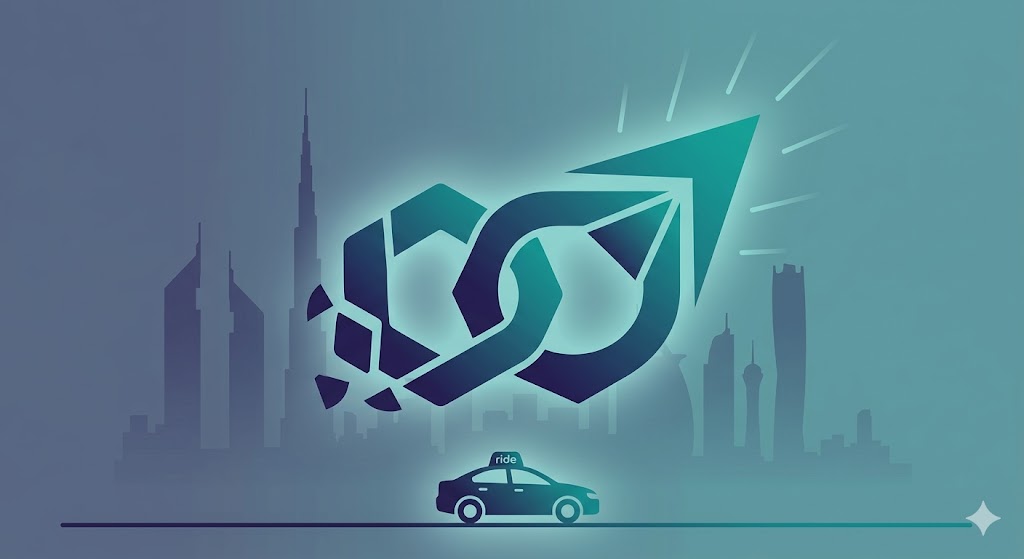
On June 1, e& signed a binding agreement to sell 12.5% of its Careem Technologies stake to Uber for $100 million in cash. That cuts e&’s ownership from 50.03% down to 37.53%, dropping it from majority shareholder to a large minority one. The deal still needs regulatory approval, but both companies have already filed it with the Abu Dhabi Securities Exchange as done in substance.
Buried inside the filing is the part that matters most. e& and Uber agreed to reciprocal options, e& can require Uber to buy its remaining shares, and Uber can require e& to sell them, exercisable in a window running from December 1, 2031 to January 31, 2032. In plain terms, both sides have already built the off-ramp for e& to exit Careem Technologies entirely within the next six years, and for Uber to end up owning the whole thing.
This follows e&’s own earlier move in the opposite direction. The telecom group bought a majority stake in what was then called Careem Everything App for $400 million from Uber back in December 2023, explicitly to build out its own digital consumer ecosystem. Less than three years later, it is selling part of that position back.
Why It Is Worth More Attention Than It Got
This deal barely made a ripple outside business press when it was announced. Most coverage treated it as a routine corporate stake adjustment, which on paper it is. But it lands directly on top of something we wrote about last week, the trend of UAE super-apps converging on the same handful of services and the consequences of who actually owns the company behind that convergence.
Careem is not a small or peripheral part of daily life here. Based on the disclosed terms, the deal implies an equity value for Careem Technologies of roughly $1.6 billion. Gross transaction value across its core services, food delivery, grocery delivery through Quik, and the Pay and Plus fintech and subscription layers, has grown almost fivefold over the past two years. This is not a ride-hailing app with a side project. It is the payment rail, the grocery channel, and the food delivery layer for a large share of UAE residents, all running through one increasingly Uber-controlled entity.
e& frames the sale as discipline, a move to focus capital on its core telecom business while keeping some exposure to Careem’s growth. That is a coherent corporate logic, and shareholders will likely welcome it. It is also, from the resident’s side of the relationship, a step in exactly the direction we flagged as worth watching: more of the app that handles your daily life moving under the control of a company headquartered outside the UAE.
What This Means in Practice
To be precise about what is and is not changing right now. Careem’s day to day operation, the app you use, the riders and drivers, the grocery and food partners, does not change because of this filing. Uber already owned the ride-hailing business outright since 2019. What shifted is the ownership of Careem Technologies, the entity covering everything else, food, groceries, payments, and the broader super-app layer.
The practical consequence for residents is not an immediate one. It is a structural one. Decisions about how Careem’s data flows, which markets it prioritises, how its payment and lending products evolve, and what platform standards it adopts will increasingly be made by a board answering to Uber’s global strategy rather than a UAE telecom group’s regional one. That is not necessarily worse. Uber brings real global product and engineering depth that could make Careem’s app genuinely better. But better product and more centralised foreign control of a platform this embedded in daily life are two different things, and both are true at once.
The 2031 to 2032 option window is the detail worth remembering longer term. It means the question of whether Careem ends up fully Uber-owned is not hypothetical. It is scheduled. Whatever happens with UAE data residency rules, AI-driven personalisation, or the broader agentic government integrations we have covered elsewhere, that six-year clock is now running in the background.
The Bottom Line
None of this is a reason to stop using Careem. The app remains one of the most useful pieces of daily-life infrastructure in the UAE, and that will not change overnight because of a stake sale. But the deal is a clean, concrete data point for the argument we made last week: cross-border ownership in UAE super-apps is not an abstract policy question. It is a live, scheduled process, happening in plain sight in regulatory filings most people never read.
Worth doing the same thing we suggested for any super-app: keep at least one alternative for rides and food installed and used occasionally, keep wallet balances modest, and watch which entity ends up actually owning the platform that runs more of your day than almost anything else on your phone.
Sources
• The National: Uber acquires controlling stake in UAE’s Careem from e& in $100 million deal — https://www.thenationalnews.com/business/markets/2026/06/01/uber-acquires-controlling-stake-in-uaes-careem-for-100-million/
• Khaleej Times: e& sells 12.5% stake in Careem to Uber for $100 million — https://www.khaleejtimes.com/business/uaes-e-sells-125-stake-in-careem-to-uber-for-100-million
• Arabian Business: Careem stake sold to Uber for $100m in cash deal — https://www.arabianbusiness.com/business/retail/careem-sale-uber
• AGBI: Sale of stake in Careem app brings e& $100m — https://www.agbi.com/telecoms/2026/06/sale-of-stake-in-careem-app-brings-e-100m/
• Wamda: Uber increases Careem ownership after $100 million stake purchase from e& — https://www.wamda.com/2026/06/uber-increases-careem-ownership-100-million-stake-purchase-e
Robius.news — Dubai, UAE — 2026 | Built to be first. Built to be trusted.