

AI kill switch UAE business risk
On June 9, Anthropic released its most capable AI models yet, Claude Fable 5 and Claude Mythos 5, the product of a closely guarded development programme called Project Glasswing. Four days later, the US government ordered them switched off for almost everyone on Earth, including, for a brief period, Anthropic’s own staff who happened to hold a foreign passport.
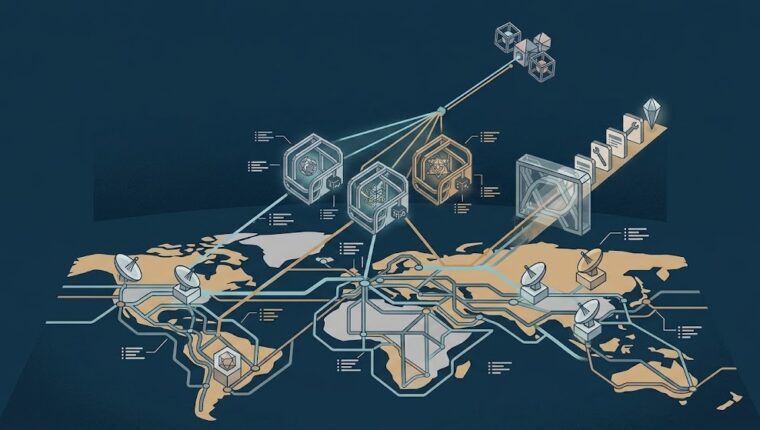
The episode lasted less than a week and most UAE residents never heard about it. It deserves your attention anyway, because it is the clearest live demonstration yet of a risk that sits underneath every country and company that has built its AI strategy on American infrastructure. That includes the UAE, in a more direct way than most of the coverage of this story has acknowledged.
| VERDICT: Access to frontier AI is not a purchase. It is a continuing permission that can be withdrawn. The US government suspended global access to two Anthropic models overnight, on national security grounds, with no advance warning to allies and no mechanism for them to object first. The specific capability involved was narrow. The structural lesson is not: the country that builds the world’s leading AI infrastructure also controls the switch, and it has now shown it will use it without consultation. Any organization, in the UAE or anywhere else, treating frontier AI access as a stable, permanent asset rather than a relationship that depends on Washington’s continued goodwill is carrying a risk it has not priced in. |
What Actually Happened, Precisely
Mythos 5 had been available only to a small set of partners and biology researchers under additional safety screening since its development began. Fable 5, a related model with its own safeguards, was released more broadly on June 9. On June 12 at 5:21pm Eastern time, the US Commerce Secretary sent a directive to Anthropic’s chief executive ordering the suspension of all access to both models by any foreign national, anywhere, including outside the United States and including Anthropic’s own foreign-born employees.
Anthropic has no real-time way to verify the nationality of every user across its platforms. Complying with an order written that broadly left only one option: disable both models for everyone, US citizens included, which the company did within hours.
The stated justification was a national security concern, specifically a method for bypassing Fable 5’s safety guardrails that the government believed could be used to identify and exploit cyber vulnerabilities at unusual speed. Anthropic disputed how serious the underlying issue actually was, noting that comparable capabilities exist in rival models already on the market, and that it had not been given a detailed account of the specific threat the government was responding to. It complied with the order regardless.
Why Europe Reacted the Way It Did
The timing made the episode land harder than it might have otherwise. Nine days earlier, the European Commission had published its Technological Sovereignty Package, a set of measures explicitly designed to reduce Europe’s dependence on AI infrastructure built and controlled outside the EU. The Commission has stated that Europe currently relies on non-EU providers for more than 80% of key digital products, services, and infrastructure.
The Anthropic suspension arrived as close to a real-world demonstration of that exact dependency as European officials could have asked for, and they said so plainly. Officials and lawmakers across the EU described it as confirmation of a long-standing fear, sometimes called the kill switch concern, that American technology embedded in critical systems carries an invisible off switch that Washington can use unilaterally, on any user, in any country, including treaty allies, without warning or consultation. Canada’s prime minister raised the same concern publicly in the days before the G7 summit, framing it as a lesson about the danger of overreliance on a small number of American AI providers.
The episode shadowed the G7’s own AI discussion this week, where Anthropic’s chief executive sat at the same table as the leaders whose governments had just watched Washington demonstrate exactly the kind of dependency risk they were there to discuss.
Why the UAE Should Read This Story Closely
Here is the part of this story that most coverage outside the region has missed entirely. The dependency dynamic that alarmed Brussels this week is not a European problem. It is the same foundation the UAE has built its entire national AI strategy on, deliberately and at far greater relative scale.
G42, the company at the centre of the UAE’s AI ambitions, secured its $1.5 billion partnership with Microsoft in 2024 on the explicit condition that it unwind its prior technology relationships with Chinese partners. Stargate UAE, the Abu Dhabi compute campus designed to eventually reach five gigawatts of capacity, is being built specifically on Nvidia chips and run in partnership with OpenAI, Oracle, and Cisco, all American companies operating under American export rules. The UAE made a clear strategic choice: align fully with the US AI ecosystem to gain access to its most advanced chips, models, and partnerships, rather than try to build an entirely independent stack.
That choice has paid off enormously. It is a meaningful part of why the UAE earned a seat in the G7 AI conversation this week. It is also, after this episode, a choice that carries a more visible price tag than it did two weeks ago. The US government has now shown, against its own flagship AI company, that it will suspend access to advanced AI capability unilaterally, on short notice, for reasons it does not fully explain even to the company being ordered to comply, and without distinguishing between adversaries and allies in how the suspension is applied.
Nothing in this episode targeted the UAE specifically, and nothing suggests Washington intends to apply this kind of order to its allies’ civilian government and business AI systems. The restriction was narrow, aimed at a single capability class with cybersecurity implications, not a blanket suspension of access to American AI broadly. That distinction matters and should not be lost in translation. But the mechanism that this episode revealed, that frontier AI access ultimately depends on a continuing decision by a foreign government rather than a permanent, owned asset, applies with equal force to every organisation built on that access, regardless of how friendly the relationship currently is.
The Practical Question for UAE Businesses
Set the geopolitics aside for a moment and ask the question a UAE business should actually be asking. If the system you have built your operations around, your customer service AI, your fraud detection, your internal tools, depends entirely on one foreign provider’s continued willingness to grant access, what is your plan for the week that access is unavailable, for any reason?
A cybersecurity lawyer commenting on this episode in international trade publications made the point plainly: organisations should now treat the potential unavailability of AI models as a real input into business continuity planning, not a hypothetical. That advice was written for European companies. It applies just as directly to a UAE business running customer operations through a single AI vendor with no fallback, and arguably more so, given how concentrated the country’s AI infrastructure bet has become.
This is not an argument for the UAE to abandon its US partnerships, which have been the single biggest driver of the country’s AI progress over the past five years. It is an argument for treating AI infrastructure dependency the way any serious business treats supplier concentration risk: know exactly how exposed you are, understand what triggers could interrupt access, and have at least a partial fallback for the systems that genuinely cannot afford to go dark for a week.
The Bottom Line
The story out of Washington this week was not really about Anthropic, or even primarily about Europe. It was a live, unscheduled demonstration of how frontier AI access actually works in 2026. It is not bought. It is granted, continuously, by a government that has just shown it will revoke that grant on its own timeline, for its own reasons, without asking first.
The UAE has built one of the most ambitious AI strategies on earth on the assumption that this access remains stable. That assumption was reasonable, and it has produced real results, including a seat at this week’s G7 table. It is also, after this week, an assumption worth re-examining rather than simply trusting. The countries and companies that come out ahead over the next decade will be the ones that took this episode as the warning it was, not the ones that watched it happen to someone else and moved on.
Sources
• Euronews: AI takes centre stage at G7 as Western fears over US kill switch get real — https://www.euronews.com/my-europe/2026/06/17/ai-takes-centre-stage-at-g7-as-western-fears-over-us-kill-switch-get-real
• AI News: The AI off switch, how Anthropic’s export controls sparked a global AI sovereignty scramble — https://www.artificialintelligence-news.com/news/anthropic-export-controls-ai-sovereignty/
• IAPP: The global implications of the White House’s export controls on Anthropic — https://iapp.org/news/a/the-global-implications-of-the-white-houses-export-controls-on-anthropic
• The Register: US clampdown on Anthropic models sends EU sovereignty surge into overdrive — https://www.theregister.com/ai-and-ml/2026/06/15/us-clampdown-on-anthropic-models-sends-eu-sovereignty-surge-into-overdrive/5255487
• WebProNews: US export ban on Anthropic’s AI models ignites Europe’s push for tech independence — https://www.webpronews.com/us-export-ban-on-anthropics-ai-models-ignites-europes-push-for-tech-independence
• Datalawgy: A slap in the face, US export ban on Anthropic and European technological sovereignty
Robius.news — Dubai, UAE — 2026 | Built to be first. Built to be trusted.