
Jaywan Mastercard co-badged card UAE
For most of its life, the UAE’s own payment card worked beautifully at home and stopped at the border. That just changed. On 21 July 2026, Al Etihad Payments and Mastercard announced the world’s first Jaywan-Mastercard co-badged credit card, giving Jaywan global acceptance for the first time. It sounds like plumbing. It actually touches your fees, your travel, and which card is worth holding. Here is the plain version.
| THE ROBIUS VERDICT: Jaywan going global is genuinely good for you, mostly through lower domestic costs. But not every Jaywan card works abroad, so check the badges on yours before you rely on it overseas. Al Etihad Payments, a wholly owned subsidiary of the Central Bank of the UAE, owns and runs Jaywan, the national card scheme. Its new partnership with Mastercard launches the first Jaywan-Mastercard co-badged credit card and builds a Mastercard network node inside the UAE. A Jaywan-only card is for local and GCC use. A co-badged card adds an international network for global acceptance. The consumer win is cost and choice. The catch is that you must confirm which type you actually hold. |
First, What Jaywan Actually Is
Jaywan is the UAE’s national domestic card scheme, the local equivalent of the networks you already know. It is owned and operated by Al Etihad Payments, which is itself a wholly owned subsidiary of the Central Bank.
Domestically, Jaywan transactions run through the national switch, UAESWITCH. The whole point of building it was to keep local payments on local infrastructure, which tends to lower the cost of processing a payment. Banks have already started issuing it, with First Abu Dhabi Bank launching a Jaywan debit card and Commercial Bank of Dubai a prepaid version.
What the Mastercard Deal Adds
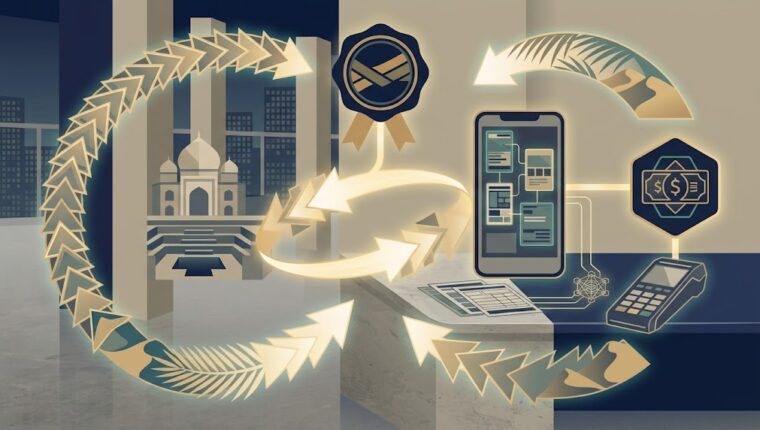
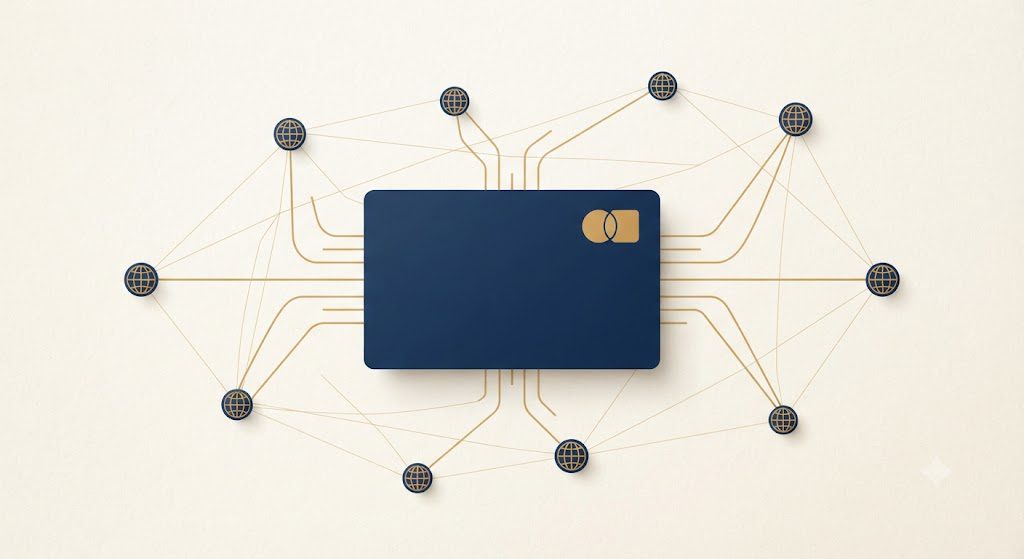
A domestic card has one obvious limit. It stops at the border. That is the gap this deal closes. The partnership launches the world’s first Jaywan-Mastercard co-badged credit card, which pairs the local Jaywan network with Mastercard’s global one. It also puts a new Mastercard network node inside the UAE to process both domestic and international payment flows. Al Etihad Payments already holds co-badging agreements with Visa, Discover, and UnionPay too, so Mastercard joins a set.
In practical terms, a co-badged Jaywan card can be used at home through Jaywan and abroad through the international network, reportedly across some 200 countries.
Why This Is Good for You
The consumer upside is real, and it is mostly quiet rather than flashy. Keeping domestic payments on national infrastructure is designed to reduce payment costs, and lower costs in the system tend to reach customers over time. You also get more choice, since banks can now offer a card that is locally rooted and globally usable. And a domestic scheme adds resilience, because the country is less dependent on any single foreign network for its everyday payments.
There is a structural point worth holding onto here, the same one behind every payments story we cover. Your protection sits with the regulated entity behind the card, and Jaywan traces directly to the Central Bank through Al Etihad Payments. That is the same question we asked in the Wio and Geidea partnership: who actually stands behind the money.
The Catch You Must Check
Here is the part to not skip. Not every Jaywan card works overseas, and assuming yours does could strand you abroad. A Jaywan-only, or mono-badge, card is built for the UAE and the wider GCC. Only a co-badged card, carrying both Jaywan and an international network, is designed for use in foreign countries. So before you travel, look at your physical card and confirm the badges on it.
And do the boring homework the same way you would with any card. Confirm overseas acceptance, foreign transaction fees, ATM charges, and currency-conversion costs directly with your bank. Global acceptance is not the same as free or cheap acceptance.
Which Card Do You Have
| Card type | Where it works | What to check |
|---|---|---|
| Jaywan only (mono-badge) | UAE and GCC | That you are not relying on it abroad |
| Jaywan co-badged | UAE and internationally | Foreign transaction and FX fees |
| Any Jaywan card | Domestic processing via UAESWITCH | The badges printed on the card itself |
The Trend Underneath
Zoom out and this is a country building sovereign financial infrastructure, then plugging it into the world on its own terms. A national card scheme that also rides global networks is the same idea as the UAE’s wider push in payments and AI. Build the rails at home, keep control of them, and connect outward rather than depend inward. For residents, that combination of local cost savings and global usability is a good deal, provided you hold the right version of the card.
The Bottom Line
Jaywan going global with a Mastercard co-badge is a genuine step forward, and the benefits to you are mostly in lower domestic costs and more choice, backed by the Central Bank.
Just do one thing before you travel. Check whether your Jaywan card is co-badged, and confirm its overseas fees. And if a card dispute ever stalls with your bank, remember that Sanadak, the UAE’s free financial ombudsman, is there to help.
Sources
- WAM (Emirates News Agency): Official announcement of the world’s first Jaywan-Mastercard co-badged credit card and the new UAE network node (21 July 2026) — https://www.wam.ae/en/article/b4t9q2n-al-etihad-payments-mastercard-announce-first
- Gulf News: Jaywan-only versus co-badged cards, GCC versus international use, and the advice to check fees and logos before travel — https://gulfnews.com/business/banking/uae-rolls-out-jaywan-the-first-national-payment-card-banks-launch-new-schemes-1.500614102
- Emirates 24|7: What Jaywan is, its co-badging partners (Visa, Mastercard, Discover, UnionPay), and current bank issuers — https://www.emirates247.com/business/what-is-jaywan-everything-you-need-to-know-about-uaes-national-payment-card/3831
- Central Bank of the UAE (official): Al Etihad Payments and the national payments infrastructure — https://www.centralbank.ae/en/
Robius.news — Dubai, UAE — 2026 | Built to be first. Built to be trusted.