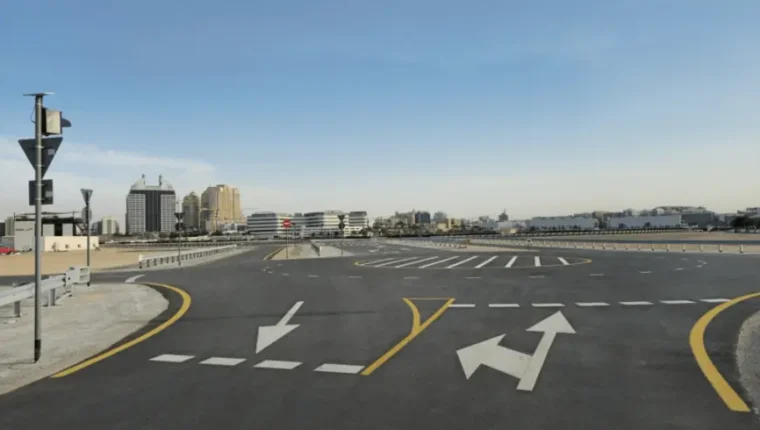

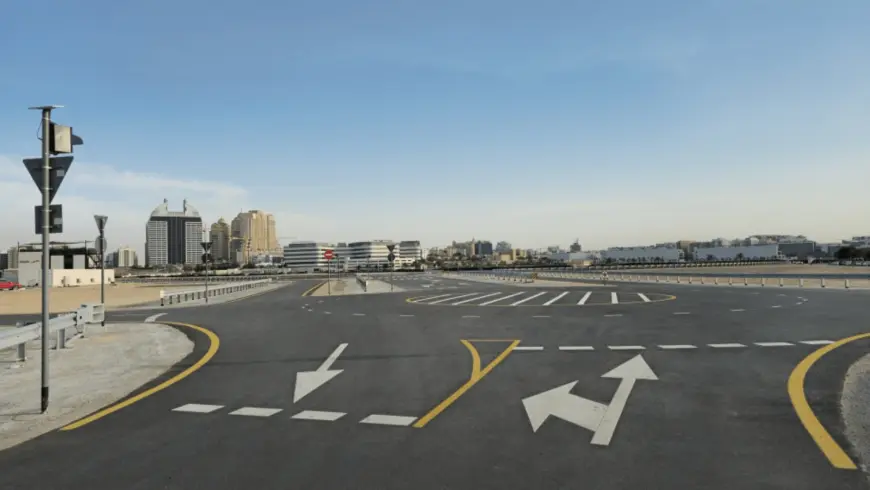
Dubai’s truck rules changed today, but the useful version of the story is not simply “trucks are banned.” The emirate now applies different restriction windows depending on the road: some corridors are closed to heavy vehicles all day, some for 16 hours, and others only during three peak periods.
For logistics operators, contractors and businesses receiving goods, that turns route planning into an operating constraint. A truck that can legally move on one Dubai corridor at 2pm may be barred from another, while Emirates Road is specifically exempt from the new October 1 decision. The practical job is therefore to match the route, clock and permit status before dispatch — not to assume there is one citywide truck curfew.
Dubai’s truck restrictions now vary by corridor and time window, making route legality part of delivery scheduling for freight operators and businesses.
Dubai logistics operators, fleet managers, contractors, warehouses and businesses that receive or dispatch heavy-vehicle deliveries.
Better route and time-window planning can reduce failed dispatches, roadside waiting and delivery promises that conflict with legal truck movements.
Emirates Road is exempt from the October 1 decision, but separate pre-existing restrictions can still apply; operators must check the exact corridor and direction.
RTA and Dubai Police will enforce the corridor-specific restrictions while operators adjust routes, waiting points and delivery windows.
Map recurring routes against the applicable RTA restriction window, build designated rest stops into dispatch plans and verify permit eligibility before restricted-hour movements.
Route-specific RTA notices, signage, permit conditions, rest-area utilisation and any operating data showing how the restrictions affect journey times.
What changed on October 1
Dubai’s Roads and Transport Authority and Dubai Police announced that truck movement restrictions would take effect across selected Dubai roads from October 1, 2026. RTA says the purpose is to improve traffic flow and safety while maintaining the movement of goods. Emirates Road is exempt from this particular decision.
The rule is layered rather than uniform. RTA identifies three broad operating patterns. Al Qudra Street, Al Meydan Street, all crossings and Airport Tunnel are among the locations subject to round-the-clock restrictions. Sheikh Zayed Road and Beirut Street, along with Al Mizhar, Muhaisnah and Oud Al Muteena, are restricted from 6am to 10pm. Roads including Airport Road, Oman Street and Damascus Street use three daily windows: 6.30am–8.30am, 1pm–3pm and 5.30pm–8pm.
That structure matters because Dubai is simultaneously adding road capacity for both commuters and freight. Robius recently examined the 80km Fourth Corridor, which RTA explicitly says is intended to support logistics traffic as well as private vehicles. The October restrictions show the other side of the same transport strategy: new capacity does not remove the need to manage when heavy vehicles use existing urban roads.
This is a dispatch problem, not just a driver problem
A driver can comply only with the route and schedule they are given. For a fleet operator, the bigger risk sits upstream: dispatch software, delivery windows, warehouse loading times and customer promises all need to reflect the road-specific rules.
Consider a business that schedules a delivery across Dubai for 1.30pm. A planner who thinks “the morning peak is over” could still send a vehicle into a midday restriction on one corridor or into a 6am–10pm restriction on another. The restriction therefore becomes part of service-level planning. A promised two-hour delivery window is only useful if the legal route can support it.
This is especially relevant around Dubai’s growing logistics geography. The emirate is expanding infrastructure around Dubai South, Al Maktoum International Airport and inland industrial areas, while the national freight network is also becoming more operational. Robius’s look at the Fujairah–ICAD rail service showed how customs and inland logistics can be redesigned around fewer road handoffs. Road restrictions create a different incentive: use the right corridor and timing, or move part of the journey outside the peak.
The exemption does not mean “use Emirates Road at any time”
RTA’s September 26 announcement says Emirates Road is exempt from the October 1 decision. That sentence needs context. Dubai has used corridor-specific truck restrictions before, including an evening restriction on part of Emirates Road towards Sharjah introduced in January 2025. Operators should therefore not turn the exemption into a blanket assumption that every Emirates Road movement is unrestricted in every direction and at every time.
The safer operational reading is narrower: the new October 1 package does not add Emirates Road to the roads covered by this decision. Existing rules, signs and any corridor-specific restrictions still need to be checked for the actual trip.
That distinction is similar to the way Robius treats autonomous-mobility announcements. A test site, a permit and a commercial service are different statuses. Dubai’s 248-scenario autonomous-vehicle proving ground is infrastructure for validation; it is not automatic approval for every vehicle tested there. With truck rules, an exemption from one decision is not the same as a universal right to move.
Dubai is building places for trucks to wait
A restriction only works operationally if a heavy vehicle has somewhere safe to go. Gulf News, citing RTA, reports that 14 of 16 planned truck rest areas have been completed across six locations, while seven existing rest areas gained 364 spaces, taking their combined capacity to 1,007 spaces. RTA also plans four additional permanent rest areas with private-sector partners.
Those facilities are not a side detail. If a truck arrives early for a permitted window, the alternative to an organised rest area can be roadside waiting, industrial-area spillover or a rushed attempt to reach the customer before a restriction begins. RTA explicitly tells drivers to use designated rest stops and avoid random parking on main roads, residential streets or undesignated areas.
The same reporting says Dubai records roughly 400,000 truck journeys a day and more than 150,000 trucks use rest areas each month. Those are RTA figures reported by Gulf News, not independently measured Robius counts. But they explain why even a modest change in heavy-vehicle timing can have a visible effect on both logistics operations and general traffic.
Permits are the exception path, not a workaround
Some operations cannot simply wait. Gulf News reports that businesses whose work requires truck movement during restricted periods in necessary cases can apply through RTA’s Right of Way Services permit route. That does not mean every delivery can claim an exception. Companies should verify eligibility through RTA rather than building schedules around an assumed permit.
For fleet managers, the cleanest control is to store permit status alongside the vehicle and job record, then block dispatch into a restricted corridor unless the movement is permitted. Dubai has previously linked RTA and Dubai Police systems to help identify heavy vehicles that breach restrictions or permit conditions. The enforcement layer is therefore increasingly digital rather than dependent on a driver producing a paper document at the roadside.
That fits a wider Dubai pattern: transport infrastructure is becoming more instrumented and rules are being enforced closer to the system layer. Robius’s RTA Dubai app guide covers the resident-facing side of that digital transport stack. Commercial fleets need the same mindset internally: route rules should live in systems, not in a driver’s memory.
What a Dubai business should change now
The immediate response is operational rather than strategic. Businesses that run or receive heavy vehicles should map their recurring Dubai routes against RTA’s current restriction windows, then check whether warehouse slots and customer delivery promises still fit.
- Map the exact corridor. Do not use a generic “Dubai truck ban” rule in dispatch.
- Recheck delivery windows. A legal departure time does not guarantee the truck can use the planned road when it reaches it.
- Build waiting into the plan. Use designated truck rest areas rather than informal roadside parking.
- Verify exceptions. If a job genuinely requires movement during a restriction, check the applicable RTA permit route before dispatch.
- Keep customer promises realistic. Same-day or timed commercial deliveries should account for the route-specific restriction, not just distance and traffic.
What Robius will watch next
The first evidence worth watching is not another announcement. It is operating data: whether journey times improve on restricted corridors, whether freight shifts toward alternative routes, how rest-area utilisation changes, and whether businesses report material effects on delivery scheduling.
Dubai is trying to balance two things that naturally compete for road space: a fast-growing city and a logistics economy that cannot stop moving. The October 1 rules make that balance more explicit. Heavy vehicles are not being pushed out of Dubai; their movement is being separated by corridor and time.
For businesses, that makes the new rule less dramatic than a citywide ban — and more operationally demanding. The route itself has become part of the delivery schedule.
Sources
- Dubai Roads and Transport Authority — Truck Movement Restrictions during Peak Periods on Dubai Roads from 1 October 2026
- Gulf News — Dubai to introduce truck movement restrictions from October 1, with Emirates Road exempt
- Dubai Roads and Transport Authority — Expanding Truck-Movement Restrictions to Enhance Road-Safety Levels
Checked 1 October 2026. Restriction windows are route-specific. Businesses and drivers should verify current RTA signs, notices and permit requirements for the exact corridor before dispatch.
Robius.news — Dubai, UAE — 2026 | Built to be first. Built to be trusted.