 UAE, UNFILTERED
The UAE Solved the Problem That Is Blocking AI Infrastructure Everywhere Else. Here Is How
UAE AI infrastructure power grid advantage 2026 The UAE Solved the Problem That Is Blocking AI Infrastructure Everywhere Else. Here Is How. Building a…
The short answer
UAE AI infrastructure power grid advantage 2026 The UAE Solved the Problem That Is Blocking AI Infrastructure Everywhere Else. Here Is How. Building a…
UAE AI infrastructure power grid advantage 2026
The UAE Solved the Problem That Is Blocking AI Infrastructure Everywhere Else. Here Is How.
Building a large AI data centre requires four things to happen at the same time. Power. Permits. Chips. Financing. In most markets these are resolved sequentially. Each one waits for the previous one to clear. The process takes years.
In the United States, the interconnection queue at PJM Interconnection, the regional grid operator covering the eastern US, reportedly held approximately 220 gigawatts of proposed generation projects in its most recent cycle, with just over 55 gigawatts cleared. The ones waiting can wait for years before connecting to the grid. AI data centre developers in the US announce capacity targets and then wait for infrastructure that does not move at the speed of their ambitions.
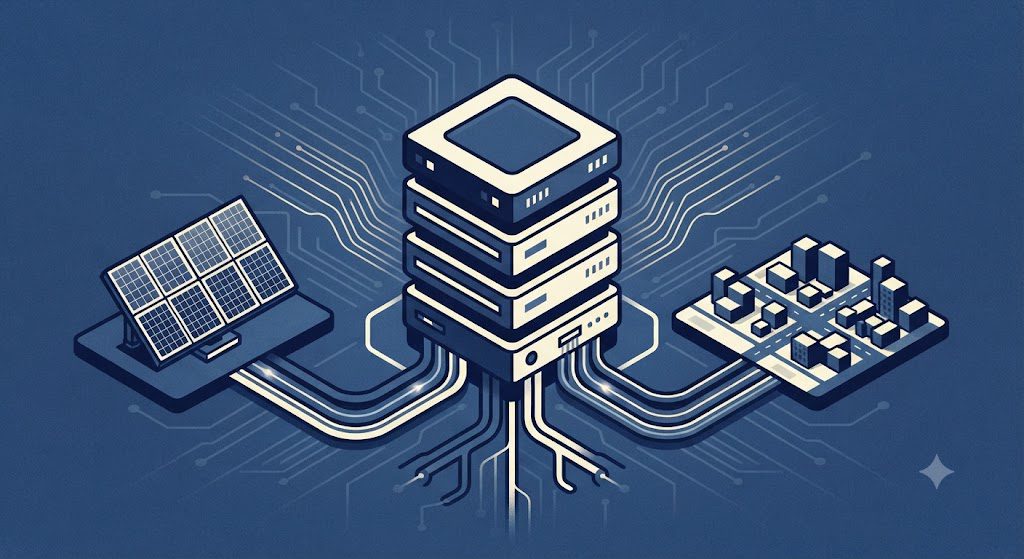
The UAE took a different approach. Power, permitting, chip access, and financing were arranged as a package before Stargate UAE broke ground. That sequencing difference is the story nobody is writing clearly.
| THE ROBIUS VERDICT: The UAE’s Stargate project is on track to be the most significant AI compute deployment outside the United States. The structural advantage is not luck or geography. It is a coordinated government-linked approach that resolved every bottleneck simultaneously. Stargate UAE is a G42, OpenAI, Oracle, NVIDIA, Cisco, and SoftBank project targeting a 1-gigawatt Abu Dhabi compute campus. The first 200-megawatt phase is expected live in 2026. Mubadala-backed G42 and the investment firm MGX supplied capital that could commit to energy generation alongside compute infrastructure. The UAE government resolved permitting, chip access, and grid capacity in parallel. The November 2025 US approval for G42 to purchase up to 35,000 NVIDIA Blackwell-class systems removed the last constraint. Microsoft has committed AED 55.8 billion in UAE investment from 2023 through 2029. |
The US Comparison
Most US-based AI infrastructure projects face a specific bottleneck: the grid interconnection process is governed by utility companies operating under multi-year regulatory timelines. A proposed data centre that needs 100 megawatts of power may wait two to four years just to get a grid connection approved.
This is not a shortage of electricity. The US generates significant power. The constraint is the process for connecting new large loads to the existing transmission infrastructure. Each new connection requires studies, capacity upgrades, and regulatory approval through bodies that move independently of the AI companies wanting to build.
The UAE does not have this problem at the same scale. Power generation and grid capacity were planned alongside the compute buildout. Mubadala, the Abu Dhabi sovereign wealth fund, can commit capital to energy infrastructure at the same time it commits capital to the data centre. There is no separate utility company with its own separate regulatory timeline sitting between the ambition and the execution.
The Chip Access Story
The second constraint resolved was chip access. Advanced NVIDIA GPUs were under US export control restrictions for much of 2024 and early 2025. Without access to the NVIDIA chips that power frontier AI training and inference, the compute capacity targets were theoretical.
In November 2025, the US Commerce Department approved G42 and Saudi Arabia’s HUMAIN each to purchase the equivalent of up to 35,000 NVIDIA Blackwell-class systems, under specific conditions. The conditions included commitments around limiting Chinese technology integration. This approval was the final bottleneck removal. Power, permits, and financing were already in place. The chips could now follow.
The first NVIDIA Blackwell shipment was reported arriving in the UAE within weeks of the November approval. The 200-megawatt first phase of Stargate UAE targets approximately 100,000 NVIDIA GPUs by end of 2026.
What This Means for UAE Residents and Businesses
The practical benefit of locally hosted AI infrastructure is not immediately visible to most residents. But it is real and will become more visible over the next 18 months.
Latency. AI services running on compute physically located in the UAE respond faster than the same service routed through a data centre in the US or Europe. For real-time AI applications, medical diagnostics, autonomous systems, live translation, milliseconds matter.
Data residency. UAE federal law requires certain categories of data to be processed and stored within the country. Medical records, financial data, and government data all have residency requirements. Without local AI compute, UAE entities running AI on sensitive data face a compliance problem. Local compute infrastructure resolves this at the infrastructure level rather than requiring complex data handling agreements.
Cloud pricing. When sufficient local compute exists, UAE businesses can access AI services priced in AED terms from UAE-based providers rather than paying US-dollar prices to overseas cloud providers. This is not live yet in 2026 for most businesses. It is the trajectory the infrastructure buildout is pointing toward.
Sources
- Environment and Energy Leader: The UAE is turning power readiness into an AI advantage, Stargate comparison, July 2026 — https://environmentenergyleader.com/stories/the-uae-is-turning-power-readiness-into-an-ai-advantage,132493
- Fox News: UAE plans agentic AI across half of government operations, AI infrastructure context, May 2026 — https://www.foxnews.com/tech/united-arab-emirates-plans-ai-run-government-within-two-years
Robius.news — Dubai, UAE — 2026 | Built to be first. Built to be trusted.