
Independently researched from the cited ITP coverage, Aleria and DDN announcements, NVIDIA documentation, and independent UAE reporting. Checked on August 5, 2026.
Twenty-eight racks in the UAE. Thousands of Blackwell Ultra GPUs in the United States. The numbers make Aleria’s NVIDIA expansion look like a simple hardware story.
The project clarifies what UAE sovereign AI can control locally and which global technology dependencies remain.
UAE government entities, regulated enterprises, infrastructure buyers, data officers, and national AI planners should pay attention.
Organizations can keep sensitive data and operating control local while using advanced global compute and storage technology.
The rollout remains partly company-reported, depends on major foreign vendors, and lacks public UAE commissioning dates and customer evidence.
The next test is delivery and commissioning of the 28 UAE racks and progress from 8,640 toward 16,000 US GPUs.
Require architecture, data-flow, administrative-control, recovery, portability, and incident evidence before accepting a sovereign-AI claim.
Aleria, NVIDIA, DDN, and institutions running sensitive workloads benefit if the planned capacity becomes operational.
The public material targets governments and national enterprises; commercial eligibility, capacity, and customer terms are not published.
Watch installation status, named workloads, data-residency terms, power and cooling capacity, audit controls, and operational customer evidence.
It is not. The underlying Aleria announcement is dated March 19, even though the ITP coverage is circulating now. Aleria said it would deploy 8,640 NVIDIA Grace Blackwell Ultra GPUs in the US, with a plan to scale to 16,000, while bringing 28 NVIDIA DGX Vera Rubin NVL72 racks to the UAE.
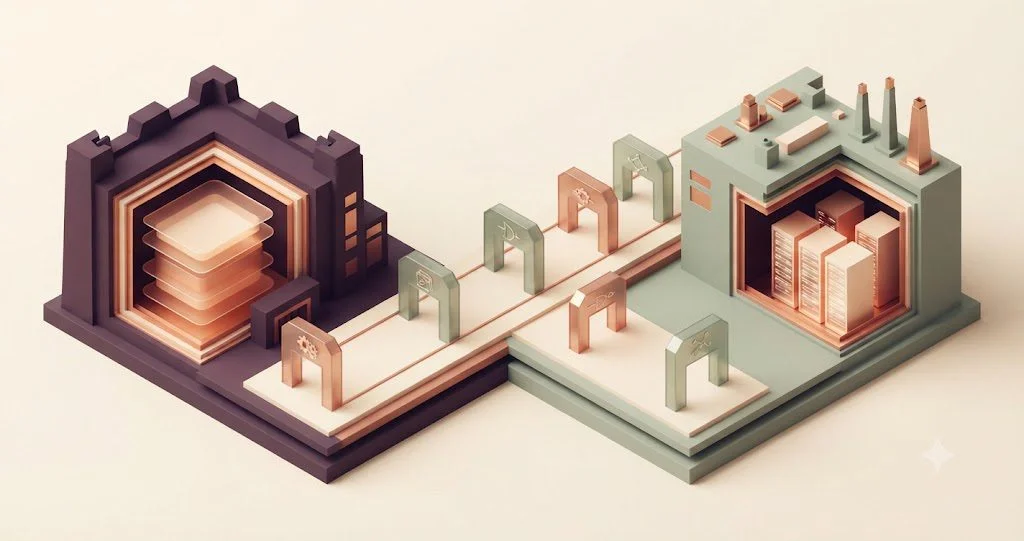
The Robius layer is the meaning of sovereign. This project does not remove dependence on American chips, networking, storage, or software. It aims to keep sensitive data, operating decisions, and system control inside the country or institution using them. Sovereignty here is control over the stack in operation, not isolation from the global supply chain.
The Announcement Is Older Than the Headline
The first thing to separate is the publication date from the announcement date. Aleria’s deployment plan was announced during NVIDIA GTC on March 19, 2026. The current ITP article gives the expansion new visibility, but it should not be presented as a new August contract or a newly completed installation.
That distinction matters because every large infrastructure story contains several different milestones: announced, ordered, delivered, installed, commissioned, and serving production workloads. The public material confirms the plan and describes existing Aleria infrastructure as operational. It does not provide a current commissioning date for the 28 UAE racks or a public list of workloads already running on that specific Vera Rubin capacity.
The company release also needs careful reading. Its lead gives 8,640 US Blackwell Ultra GPUs as the deployment figure and 16,000 as the planned scale. A later paragraph says the expansion “adds 16,000.” Robius is treating 16,000 as the target, not the present installed count, until Aleria publishes a clearer deployment update.
The wider policy backdrop has moved since March. The UAE’s latest AI chip-access change reduces friction for named approved entities and strengthens the country’s infrastructure position. It does not, by itself, prove the delivery status of Aleria’s separate deployment.
What 28 Vera Rubin Racks Would Mean
NVIDIA says each Vera Rubin NVL72 rack combines 72 Rubin GPUs with 36 Vera CPUs, plus high-speed networking and data-processing components. If Aleria receives the 28-rack configuration exactly as announced, the UAE installation would contain 2,016 Rubin GPUs and 1,008 Vera CPUs. That is a derived calculation from NVIDIA’s published rack specification, not a separate capacity figure reported by Aleria.
The number is significant, but rack count is not the same as usable sovereign capacity. The systems need power, liquid cooling, high-performance storage, network fabric, security controls, model software, operators, and a workload pipeline capable of keeping expensive compute productive. A silent rack waiting for data, approvals, or grid capacity is infrastructure on paper, not an AI factory.
That is why the UAE’s infrastructure advantage matters here. Compute only becomes useful when power, permits, cooling, financing, and secure operations arrive together. Aleria’s use of NVIDIA networking and DDN storage shows that the deployment is being framed as a complete data-center system rather than a shipment of standalone processors.
Sovereign Does Not Mean Vendor-Free
Aleria describes its platform as deployable on-premises or in a private cloud, with no external calls or shared compute. It also markets air-gapped delivery for environments that need zero internet connectivity. Those are company claims about architecture and delivery options, but they describe the practical idea behind sovereign AI more clearly than the slogan does.
A system can use NVIDIA processors, DDN storage, and globally developed software while still giving a UAE institution meaningful control over its data, administrative access, operating policies, and audit trail. The opposite is also possible. A server can sit physically inside the UAE while a foreign provider still controls critical updates, root access, telemetry, model behavior, or the route by which data leaves the environment.
So sovereignty is not a sticker attached to a local data center. It is a set of enforceable answers. Where does the data live? Who can administer the system? Who approves updates? Can external support access production? What happens when the vendor relationship ends? And can the customer move its models, logs, and data without rebuilding everything from zero?
This is the same strategic shift behind the UAE exporting its AI infrastructure playbook. The country is no longer only buying foreign capacity. UAE-based companies are trying to operate, finance, and export infrastructure models while remaining connected to the American technology stack.
The Blueprint Is Not the Production System
DDN and Aleria separately announced a sovereign AI factory reference architecture based on NVIDIA Vera Rubin DSX and the Omniverse DSX Blueprint. The goal is to simulate and validate power, cooling, network, storage, and operational behavior before and during deployment. That is valuable because failures in these systems are often physical and operational, not just software bugs.
But NVIDIA’s own DSX documentation contains an important boundary. The blueprint is an example for developers, not a turn-key production application, and it may require significant customization for a particular site and workload. DDN and Aleria call their combined solution production-validated, which may reflect additional engineering beyond NVIDIA’s baseline. Buyers still need to see the validation evidence for their own deployment.
The useful questions are therefore specific. Which failure scenarios were tested? Can the system continue through a storage, network, power, or cooling fault? Are administrative actions logged? Can an operator reconstruct which model, data set, policy, and software version produced an outcome? Is recovery tested, or merely described in the architecture?
The UAE-US Split Is Strategic
The announced structure places large Blackwell Ultra capacity in the United States and the future-generation Vera Rubin system in the UAE. That gives Aleria a two-market platform and may support resilience, customer proximity, and export growth. It also makes the geography of each workload more important, not less.
A workload described as sovereign because it must remain under UAE control cannot quietly rely on US capacity for inference, support, backups, or disaster recovery without examining the legal and operational consequences. The architecture needs to show which data, models, logs, and management functions stay inside each jurisdiction. “Across two continents” is a scale claim. It is not automatically a sovereignty design.
The commercial logic is easy to see inside the global AI infrastructure build. Compute demand is rising faster than many institutions can build secure capacity themselves. Aleria is positioning the UAE as both a protected home for sensitive workloads and a headquarters for an infrastructure business that sells beyond the country.
What Buyers Should Ask Before Calling It Sovereign
The label should follow the evidence. A government entity, bank, healthcare network, utility, or national enterprise should be able to answer the questions below before moving a sensitive workload into the environment.
| Area | Question to Resolve | Minimum Evidence |
|---|---|---|
| Status | Is the capacity announced, ordered, delivered, installed, commissioned, or serving production? | Acceptance records, commissioning date, available capacity, and named operational owner |
| Data | Do prompts, records, model inputs, logs, backups, or telemetry leave the approved jurisdiction? | End-to-end data-flow map, storage locations, retention rules, and external-call inventory |
| Control | Who holds root access, update authority, encryption keys, and emergency shutdown rights? | Named roles, key-management design, approval records, privileged-access logs, and revocation process |
| Dependencies | Which NVIDIA, DDN, integrator, cloud, network, and software services remain required? | Dependency register, support boundaries, replacement plan, and documented failure modes |
| Resilience | What happens when power, cooling, storage, networking, or a full site becomes unavailable? | Tested failover, recovery targets, backup design, spare capacity, and exercised incident plan |
| Exit | Can the customer move its data, models, policies, logs, and workloads to another environment? | Portable formats, export process, deletion evidence, transition support, and contract exit terms |
| Evidence | Which sovereignty, performance, security, and availability claims were independently tested? | Test reports, audit scope, workload benchmarks, incident history, and customer-specific acceptance criteria |
The Bottom Line
Aleria’s expansion is significant if it is delivered as described. A 28-rack Vera Rubin deployment would give the UAE serious next-generation capacity, while the US Blackwell build gives the company a larger current-generation base and a route to global customers.
The public evidence still supports a plan more clearly than a completed UAE installation. The exact commissioning date, production capacity, customer workloads, contract terms, and deployment-specific sovereignty controls are not publicly established in the sources checked. That does not make the project doubtful. It means the next article should be about evidence of operation, not another announcement.
The real Robius conclusion is simpler. Sovereign AI does not require a country to manufacture every processor, storage system, or software component itself. It requires control over data, administration, policy, audit, resilience, and exit. The rack is the visible part. The contract, architecture, and operating keys decide who is actually sovereign.
Sources
- ITP.net: Coverage that prompted this review of Aleria’s sovereign AI infrastructure expansion across the UAE and US. https://www.itp.net/ai-automation/aleria-expands-sovereign-ai-infrastructure-with-nvidia-across-uae-and-us
- Aleria: Official company announcement stating 8,640 NVIDIA Blackwell Ultra GPUs in the US, a target of 16,000, and 28 DGX Vera Rubin NVL72 racks planned for the UAE. https://www.linkedin.com/posts/aleria-ai_aleria-to-deploy-nvidia-blackwell-ultra-and-activity-7440651631513370624-KZaW
- Aleria: Official product and infrastructure page describing on-premises, private-cloud, air-gapped, and sovereign AI deployment claims. https://aleria.ai/
- NVIDIA: Official Vera Rubin NVL72 specifications covering 72 Rubin GPUs, 36 Vera CPUs, networking, and rack-scale architecture. https://www.nvidia.com/en-us/data-center/vera-rubin-nvl72/
- DDN: Official DDN and Aleria announcement for the Sovereign AI Factory reference architecture based on NVIDIA Vera Rubin DSX and Omniverse DSX. https://www.ddn.com/press-releases/ddn-and-nvidia-announce-dsx-factory-the-industrial-standard-for-sovereign-ai-infrastructure/
- NVIDIA Documentation: Official Omniverse DSX Blueprint guidance stating that the blueprint is an example and not a turn-key production deployment without customization. https://docs.omniverse.nvidia.com/dsx/latest/index.html
- The National: Independent UAE reporting on the Aleria-NVIDIA agreement, the meaning of sovereign AI, and the distinction between sensitive workloads and general cloud use. https://www.thenationalnews.com/business/2026/03/27/what-the-uaes-mega-deal-with-nvidia-means-for-its-ai-sovereignty/
Robius.news — Dubai, UAE — 2026 | Built to be first. Built to be trusted.