 UAE, UNFILTERED
Dubai Police Says Deepfakes Create a Second Problem: Real Evidence Becomes Easier to Deny
Dubai Police warns that better deepfakes do more than create convincing fakes. They can also make people distrust genuine video, audio and digital evidence.
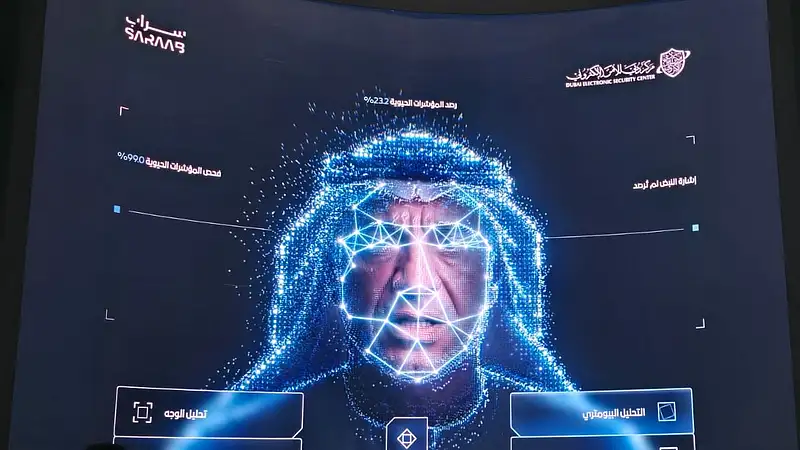
Deepfakes create a second security problem beyond convincing fakes: authentic evidence becomes easier for bad actors to deny.
UAE residents, businesses, investigators, security teams, courts and organisations that rely on video, audio or remote digital approvals.
No detector can establish authenticity in every case. Detection accuracy varies by media type, manipulation method and context.
Expect more focus on provenance, secure capture, cryptographic signatures and verification procedures alongside deepfake-detection models.
Verify high-impact requests through a separate trusted channel and preserve source, account, timestamp and transaction context rather than relying only on how convincing a video or voice sounds.
Deepfakes create an obvious problem: fake content can look real.
Dubai Police is warning about the reverse problem too.
As manipulated video, audio and images become more convincing, genuine material can become easier to dismiss.
That shifts the security challenge from “Can we detect a fake?” toward “Can we prove that authentic content is real?”
The threat is not only deception. It is doubt.
The Dubai Police Future Foresight Centre says advances in generative AI are making it easier to reproduce faces, voices and realistic digital scenes.
That can support fraud, impersonation, identity theft and misinformation.
But once the public knows convincing fakes exist, a second effect appears: authentic recordings can be challenged simply by claiming they were generated.
Researchers often describe this broader effect as the “liar’s dividend”. The existence of synthetic media gives people a plausible excuse to deny real evidence.
This matters more for police than a viral fake video
For an ordinary social-media user, a deepfake may be embarrassing or misleading.
For investigators, courts, companies and public authorities, digital content can be evidence.
A recording may be used to establish who said something, what happened at a location, whether a transaction was authorised or how an incident unfolded.
If every important recording can be challenged as synthetic, authenticity has to be demonstrated more systematically.
Detection tools are only one layer
Dubai has already been building technical tools for manipulated-content detection.
Robius previously examined DESC’s SARAAB deepfake detector and its reported 91% accuracy figure. The important point in that analysis was that a headline accuracy number does not tell us performance across every media type, model or real-world attack.
Dubai Police’s new study makes the same issue broader.
The future cannot depend on one detector deciding whether something is real.
Provenance becomes more important than appearance
If visual inspection becomes unreliable, systems need stronger ways to preserve the history of a piece of content.
That can include:
- trusted capture devices;
- cryptographic signatures;
- secure timestamps;
- metadata integrity;
- documented chain of custody;
- authenticated source accounts;
- independent corroboration.
None of those methods is perfect on its own.
Together, they make it harder for both fake content and false denial to succeed.
Residents need a different verification habit too
Robius previously published a practical guide to UAE deepfake warnings. The core advice remains useful: do not verify a request through the same channel that created the urgency.
If a family member appears in a video asking for money, call them separately.
If a senior executive appears to issue an unusual payment instruction, confirm it through an established company channel.
If an official-looking clip makes a financial claim, check the authority’s verified website or app.
The goal is not to become a forensic analyst. It is to move verification outside the manipulated content.
The new problem is harder for businesses
Companies increasingly rely on digital approvals, video calls, voice messages and remote identity checks.
That creates opportunities for impersonation attacks, but it also creates evidence problems after an incident.
A strong process should preserve more than the visible content. Businesses should retain logs, account identity, timestamps, approval records and transaction context where appropriate.
The more high-impact decisions depend on digital communication, the more important auditability becomes.
AI can help defend the same environment it destabilises
Dubai Police notes that AI can also support detection and digital-forensic analysis.
That creates an unusual security race.
Generation models improve the quality of synthetic media. Detection and provenance tools improve the ability to verify it.
Neither side is likely to achieve a permanent advantage.
That is why institutional procedure matters as much as model performance.
What should change in the way we treat digital evidence
The strongest future model is likely to shift from content-only verification to context verification.
Instead of asking only “Does this video look authentic?”, an investigator or organisation may need to ask:
- Where did it originate?
- Which device captured it?
- Has the file changed?
- Who had access?
- Does another source confirm the event?
- Is there a trusted chain from capture to review?
The Robius Read
Deepfake risk is often framed as a battle between fake media and detection software.
Dubai Police’s study points to a more difficult future.
When synthetic content becomes ordinary, trust itself becomes infrastructure.
The security challenge is no longer only stopping people from believing a fake. It is also stopping bad actors from convincing people that real evidence should not be believed.
That means verification has to move beyond what we can see and hear toward provenance, corroboration and auditable context.
Sources
- Dubai Police: Future Foresight Centre study on deepfakes and digital trust, 10 October 2026
- The National: Dubai Police warns deepfakes are becoming harder to detect
Checked 12 October 2026. The study is a foresight and risk-analysis exercise, not a claim that all current digital evidence has become unreliable.
Robius.news | Dubai, UAE | 2026 | Built to be first. Built to be trusted.