 UAE, UNFILTERED
Ras Al Khaimah’s China Mobility Deal Is a Plan for Pilots, Not a Flying Taxi Launch
RAKTA and China's SUTPC will study autonomous transport, AI traffic systems and low-altitude mobility. The next deliverable is a diagnostic report, not a confirmed public service.
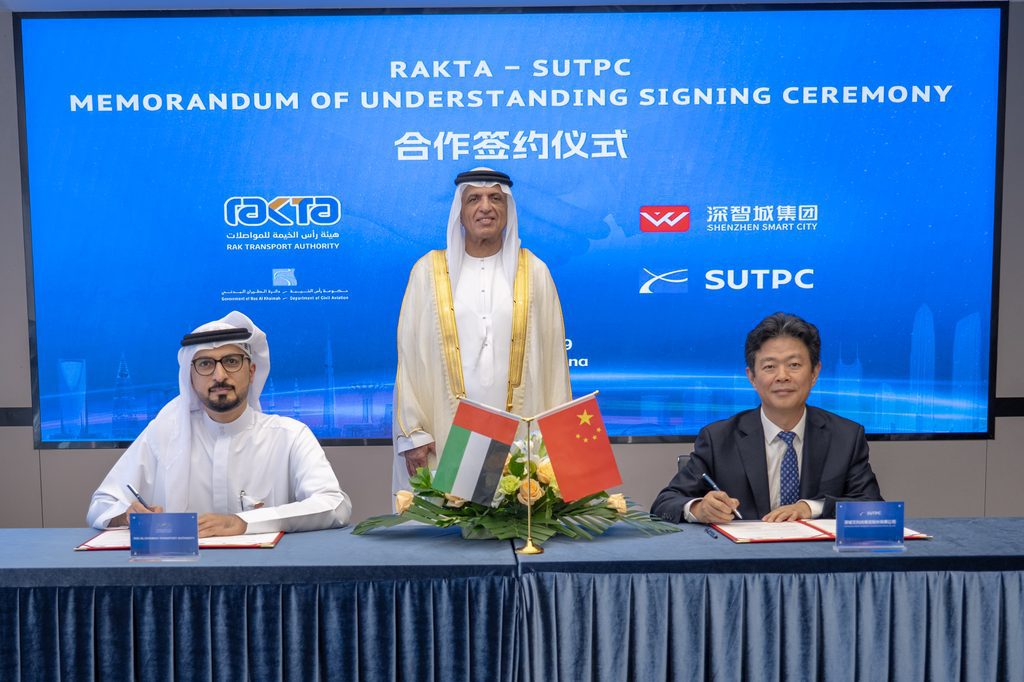
RAK is assessing AI-powered transport and low-altitude systems, but the new MoU is not a launch.
RAK residents, transport operators, tourism companies, autonomous-mobility suppliers and infrastructure investors.
No named pilot, operational permit or start date has been announced under the SUTPC agreement.
SUTPC will conduct site visits, assess needs and prepare a diagnostic report before specific projects are defined.
Follow RAKTA for named pilot routes, safety approvals and published performance measures before assuming availability.
Ras Al Khaimah has signed a smart-transport agreement with a Shenzhen technology company that covers everything from autonomous vehicles to drones. No new robotaxi or passenger aircraft service was launched by that agreement.
On 21 October, Ras Al Khaimah Transport Authority (RAKTA) announced a memorandum of understanding with Shenzhen Urban Transport Planning Center (SUTPC). The parties intend to explore AI-based transport operations, public transport optimisation, digital twins and low-altitude mobility, with technical site visits and a local needs assessment to follow.
The practical distinction is the next deliverable. SUTPC is expected to study Ras Al Khaimah’s transport requirements, produce a diagnostic report and then help the authority work toward defined projects. That is an early but meaningful planning step, not an operating permit, approved route or passenger launch date.
What was actually signed
The agreement creates a framework for cooperation across intelligent transport systems, autonomous mobility and what the partners call the low-altitude economy. That last phrase includes potential uses for near-ground airspace such as drone operations, aerial logistics and future passenger mobility. It does not mean all of those applications have been approved in Ras Al Khaimah.
RAKTA says SUTPC demonstrated TransPaaS, its next-generation transport operating system. The firm’s described capabilities include autonomous-vehicle management, unmanned-aircraft oversight, transport-energy coordination and AI-supported analysis.
A demonstration is not evidence that the whole platform will be procured or deployed locally. The authority says any eventual application will be based on the emirate’s needs. The partnership also includes specialised training, suggesting the goal is to build planning and operating capacity, not simply purchase a device or software licence.
The first question is which transport problem needs solving
Ras Al Khaimah does not need to copy Dubai’s transport system to gain value from mobility technology. Different travel patterns, tourism destinations, road geometry and density can make the right solution very different.
A sensible pilot might involve optimising a bus corridor, improving fleet dispatch, testing a controlled autonomous shuttle or coordinating a specific type of drone operation. Each would have different safety rules, cost structures and data requirements. The MoU does not name one as the approved first pilot.
That distinction is useful when compared with Dubai Mobility Labs and its 248 autonomous-vehicle test scenarios. Dubai has publicly described a validation environment where developers can run defined tests. RAKTA’s new agreement is at an earlier stage: determining the use cases and the local conditions before committing to a specific deployment.
A digital twin is only useful if its data stays current
One of the most concrete technical elements of the proposed cooperation is the possible use of digital twins. A transport digital twin attempts to reflect parts of a road and mobility network in a live or regularly updated computer model.
That can help planners test scenarios before changing physical infrastructure. But the output depends on the quality of the input: vehicle counts, trip patterns, signals, incident reports, roadworks, public transport schedules and geographic data. A model trained on another city’s traffic cannot simply be dropped into Ras Al Khaimah and assumed to predict local behaviour correctly.
The most valuable pilot might therefore begin with something less glamorous than driverless transport: better data integration, common measurement standards and a clear record of where demand is highest or congestion is most costly.
The aerial-mobility agreements are not interchangeable
RAKTA’s new China partnership sits alongside a more advanced agreement already announced in September. On 28 September, RAKTA and Skyports Infrastructure signed a definitive agreement to develop infrastructure for an advanced air mobility network. RAKTA said that programme envisaged four vertiports, with an initial focus on Al Marjan Island and Jebel Jais and commercial services targeted for the third quarter of 2027, subject to necessary conditions.
That is different from the SUTPC MoU. Skyports is linked to infrastructure development under a stated agreement and indicative service target. SUTPC is being engaged to examine smart transport and low-altitude applications, and its near-term next step is assessment. One should not be presented as proof that the other has launched.
Even the Skyports target does not mean passenger flights are guaranteed in 2027. Aircraft certification, operating approvals, viable routes, ground infrastructure, emergency procedures and demand all matter before commercial service can begin.
What autonomous mobility elsewhere in the UAE has already taught us
The distinction between tests, plans and services appears across the country. Robius has examined Dubai’s four-week driverless-pod trial at Bluewaters, which has a defined test environment, vehicle type and performance questions. We have also tracked Momenta’s interest in entering the Dubai robotaxi market, where interest itself is not the same as approval to operate.
RAKTA can avoid much of the confusion that follows high-profile mobility announcements by publishing the transition between stages. Residents should be able to tell whether a vehicle is a demonstration, a closed-course pilot, a limited public-road trial or a licensed passenger service. The evidence needed becomes more demanding at each stage.
How to judge the first Ras Al Khaimah pilot
The strongest near-term signal would be publication of SUTPC’s diagnostic findings and one named project with a defined objective. For example, if the priority is bus efficiency, the authority could publish a baseline and show whether waiting times, punctuality or service coverage improve. If the priority is low-altitude transport, it should identify who is responsible for airspace coordination and what safety approvals are required.
Useful questions for any announced pilot are straightforward:
- Where will it operate, and who can use it?
- What existing transport problem is it supposed to improve?
- Which agency is the regulator, operator and accountable owner?
- What data will be collected, who can access it and how long is it kept?
- What operational, safety and cost measures will decide whether it expands?
Those questions will become more important as the emirate links conventional ground transport with emerging aerial services. Without defined interfaces and ownership, ‘integration’ can become a slogan rather than an operational capability.
The Robius Read
RAKTA’s Shenzhen agreement is noteworthy because it links mobility planning, operational software, AI and low-altitude transport into one exploratory programme. The connection to earlier Guangdong cooperation also suggests a longer relationship rather than a one-day announcement.
But the value of the MoU remains prospective. The next useful evidence is a diagnostic report, a named pilot, its safety and cost assumptions, and eventual results. Ras Al Khaimah will have made more progress by solving one local transport problem well than by announcing five futuristic modes with no operating plan.
Sources
- RAK Transport Authority: Official RAKTA-SUTPC memorandum and next steps, 21 October 2026
- SUTPC: Company statement on the Shenzhen meeting and cooperation, 21 October 2026
- RAK Transport Authority: Separate Skyports definitive agreement, 28 September 2026
- Gulf News: Reporting on RAKTA-SUTPC partnership, October 2026
Checked 23 October 2026. The SUTPC memorandum does not itself announce a deployed pilot, service licence or operational start date.
Robius.news | Dubai, UAE | 2026 | Built to be first. Built to be trusted.