 UAE, UNFILTERED
Abu Dhabi Opened More Than the Model Weights
What does ‘open’ actually mean when an AI lab releases a model? The answer matters because the industry uses the same word for very…
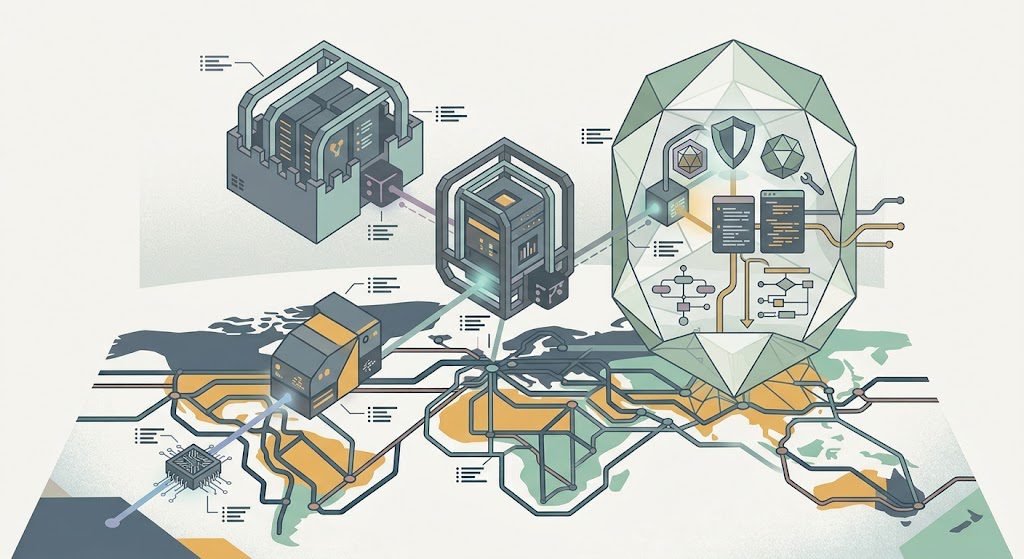
K2 Horizon gives UAE developers a model family with more published development artifacts than a typical open-weight-only release.
UAE developers, SME technology teams, researchers and organizations evaluating local or self-hosted AI should understand the difference.
Open artifacts do not make a model automatically cheap, secure, unbiased, compliant or suitable for a specific production workflow.
Independent benchmarks, reproducibility work and real deployments will show whether the transparency translates into practical advantage.
Pilot one narrow task with the smallest model that can meet the requirement, then compare quality, cost, privacy and operational control.
What does ‘open’ actually mean when an AI lab releases a model? The answer matters because the industry uses the same word for very different things. A downloadable set of model weights is useful. It is not the same as publishing the ingredients and process that created them.
MBZUAI’s Institute of Foundation Models has now released K2 Horizon, six models ranging from 0.9 billion to 375 billion parameters. MBZUAI says the release includes weights, code, training data and methodology. Reuters independently reported training data, code, methods and development checkpoints. That is the part worth paying attention to.
Six Models, Not One Flagship
K2 Horizon is a family rather than a single release. The official lineup spans 0.9B, 3.7B, 7B, 32B, 36B-A4B and 375B-A23B models. MBZUAI positions the smallest models for constrained or on-device environments and the larger models for local, on-premise and enterprise use.
Those deployment descriptions are the lab’s own positioning, not independent proof that every model will run well on every target device. Hardware, quantization, context length, workload and serving software all change the real requirement. The size range is still useful because it gives buyers more than one point on the control-versus-capability curve.
‘Open Weights’ Is Not the Same as Opening the Recipe
Model weights are the learned parameters produced by training. Releasing them lets other teams run or adapt a model without sending every request to the original provider. But weights alone do not tell a researcher exactly which data was used, how the training stages were constructed or which decisions produced the final model.
K2 Horizon goes further. MBZUAI says it released training data, code and methodology alongside the weights. Reuters also reported development checkpoints. That does not settle every philosophical argument about the definition of open-source AI, but it gives users more material to inspect than the phrase ‘open model’ normally guarantees.
| Question | Open-weight-only release | K2 Horizon as published |
| Can you obtain model weights? | Usually yes | Yes |
| Is training code necessarily published? | Not necessarily | MBZUAI says code is published |
| Is training data necessarily published? | Not necessarily | MBZUAI says training data is published |
| Are training methods/checkpoints visible? | Varies by release | Methodology is official; Reuters reports development checkpoints |
| Does this prove production fit? | No | No |
The Superlative Is the Least Useful Part
MBZUAI calls K2 Horizon the largest fully open model release in AI history. Robius is not using that claim as the headline. Proving a first, only or largest claim requires comparing a moving universe of releases that use different definitions of open. The useful facts are simpler and easier to verify.
There are six models. The largest is 375B-A23B. The release includes model weights plus additional development artifacts. Public model repositories are available. Those facts help a developer decide whether the project deserves evaluation. A global superlative does not make the deployment decision any easier.
Why This Matters for UAE Teams
The UAE has no shortage of access to frontier AI through cloud APIs. K2 Horizon changes a different part of the choice: how much of the model stack a team can inspect, host, adapt or keep closer to its own infrastructure. That can matter for cost, latency, privacy and operational control.
Our business guide to choosing an AI model argued that the most capable model can still be the wrong business choice. K2 Horizon reinforces that point because the family deliberately spans small and very large models. Teams can start from the workload instead of starting from the biggest model name.
The local-compute direction is already visible elsewhere. Meta’s earlier single-GPU agentic model release showed why smaller or more efficient models can expand who is able to run agentic systems locally. K2 adds a UAE-developed family to that operating question.
Transparency Helps, but It Does Not Replace Verification
More artifacts can make a model easier to study. They do not automatically make the model safer. A business still needs task-specific evaluations, security controls, data governance, prompt and tool permissions, monitoring and a fallback when the model is wrong. Training data visibility can help researchers ask better questions, but it is not a warranty.
Abu Dhabi’s wider AI ecosystem is also working on verifiability. We covered TII’s TRACE work on giving AI agents receipts because it attacks a neighboring problem: how an agent can show what information supported an action. Open model artifacts and verifiable agent behavior are complementary, not interchangeable.
The Robius Layer: Buy the Artifact List, Not the Adjective
The easiest mistake is to shop using labels. Open. Open source. Open weight. Local. Sovereign. Each word can hide a different bundle of rights, files and operational trade-offs. A procurement team should replace the adjective with a checklist: which weights, which code, which data, which license, which checkpoints and which deployment requirements are actually available?
That is the practical value of K2 Horizon. Even if another model eventually beats it on a benchmark, this release gives UAE teams a reason to ask vendors for a more precise artifact list. Once buyers start asking that question, ‘open’ becomes less of a marketing badge and more of a verifiable product property.
What to Test Before You Deploy
Start small. Choose a real task with a measurable answer, then compare one or two K2 sizes against the model you already use. Record output quality, latency, hardware cost and failure patterns. If data cannot leave your environment, test whether the local deployment path actually satisfies that requirement rather than assuming the word open solves it.
Then read the model card and license, inspect the published artifacts and decide who will maintain the stack. Self-hosting gives control, but it also moves more responsibility for updates, security and reliability onto your team. The best model is still the one that fits the workflow after those costs are counted.
Sources
- MBZUAI Institute of Foundation Models: Official K2 Horizon announcement with model sizes, release artifacts and availability details. https://mbzuai.ac.ae/news/mbzuais-institute-of-foundation-models-launches-k2-horizon-the-worlds-largest-fully-open-ai-models-in-history/
- Reuters: Independent reporting confirming the release of training data, code, methodologies and development checkpoints. https://www.reuters.com/world/middle-east/abu-dhabi-ai-institute-releases-fully-open-source-models-with-training-data-code-2026-09-03/
- Hugging Face / IFM: Public K2 Horizon model and dataset collection used to verify that the release artifacts are accessible. https://huggingface.co/collections/IFM/K2-Horizon
Robius.news — Dubai, UAE — 2026 | Built to be first. Built to be trusted.