 UAE, UNFILTERED
$6.8M Raised. $114M Valuation. The Missing Numbers Matter
AED 25 million went in. The company says the post-money valuation is AED 420 million. That gap is more interesting than the funding headline.…
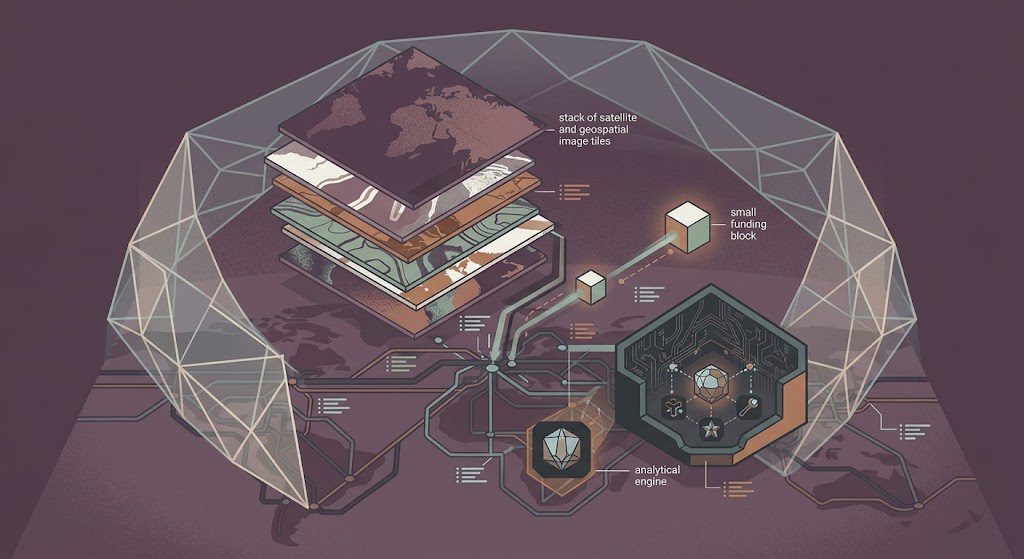
The disclosed seed capital is modest relative to the company-reported post-money valuation, so readers should separate a financing term from proof of commercial scale.
UAE startup founders, investors, geospatial-data buyers, government technology teams, space-sector observers, and enterprises assessing sovereign AI suppliers.
The funding disclosures do not publish revenue, contract value, named customers, ownership dilution or the investment instrument behind the reported valuation.
The strongest next evidence would be named deployments, independent performance benchmarks, repeatable commercial contracts and disclosed international customer adoption.
Treat the valuation as a financing term, then evaluate the company on product evidence, deployments, customers and measurable performance.
AED 25 million went in. The company says the post-money valuation is AED 420 million. That gap is more interesting than the funding headline.
UAE geospatial-AI company Stellaria, formerly Farmin, says it closed a $6.8 million seed round from angel investors at a $114.4 million post-money valuation. Wamda reported the same figures and said the money will support product development, hiring and deployments in the UAE and abroad.
The financing is a meaningful milestone. It is not proof of commercial scale. The public announcement does not disclose revenue, named customers, contract values, dilution or the investment instrument, so the valuation needs to be read as a deal term rather than a performance metric.
What Is Actually Verified
Stellaria says it closed an AED 25 million seed round backed by a group of angel investors at an AED 420 million post-money valuation. Wamda reported the same round as $6.8 million at a $114.4 million valuation.
The arithmetic is eye-catching. AED 25 million is about 6% of AED 420 million. But that ratio does not tell us how much ownership changed hands because the public announcement does not disclose the financing instrument, share price, dilution or other deal terms.
That is the first Robius distinction: valuation is a transaction term. It is not a revenue number, a customer count or an independent measurement of product performance.
The Company Has Moved Far Beyond Farmin
The company was previously known as Farmin. In 2019, The National profiled founder Ali Al Hammadi’s agriculture-focused use of artificial intelligence and satellite imagery, with support from the UAE Space Agency and Abu Dhabi’s Krypto Labs.
Stellaria now describes a much broader geospatial-intelligence platform. Its website presents managed SaaS, private-cloud and on-premise deployment options and markets the system for operational environments that can include maritime and infrastructure use cases.
That shift fits a broader UAE pattern in which the value moves from owning raw infrastructure to controlling the intelligence layer above it. Robius has explored a similar control question in our analysis of sovereign AI infrastructure.
The Product Claims Need Their Own Evidence
Stellaria’s website makes detailed claims about deployment footprints, audit controls, data residency and operational capabilities. Those are company statements. They are useful for understanding the product pitch, but they should not be confused with independent validation.
The current funding announcement does not name customers, publish contract values or disclose revenue. It also does not provide independent benchmarks for the platform’s geospatial models. None of that proves the claims are weak. It means the public evidence is incomplete.
The same discipline matters in space-related AI. Our piece on who controls the ground link for orbital AI focused on operational control rather than treating a bold technical vision as deployment proof.
Why the Market Is Still Interesting
Geospatial intelligence sits at a useful intersection. Satellites and sensors create enormous amounts of data, but operators still need software that can identify changes, prioritize anomalies and translate imagery into decisions quickly enough to matter.
For the UAE, potential buyers span sectors where location and infrastructure matter. The commercial opportunity is therefore plausible even without treating the valuation as validation.
Abu Dhabi is also applying advanced computing to operational problems outside the usual chatbot market. Robius recently covered the emirate’s work on quantum computing for water systems, another example of technology being pushed toward physical-world decision systems.
What Would Make the Valuation Easier to Judge
A named customer is more useful than another adjective. A disclosed multi-year contract is more useful than a broad market category. An independently reproduced benchmark is more useful than a model-performance claim on a company page.
Those are the signals that would let outside readers judge whether Stellaria is converting technical ambition into defensible commercial scale. Institutional investors in a future round would also add another visible layer of diligence, though institutional backing would still not prove product performance.
The company may already have work that cannot be disclosed, particularly if sovereign or security-sensitive deployments are involved. That is a fair caveat. It also means public readers should be careful not to fill the disclosure gap with assumptions.
The Robius Layer
The funding round is real, and the company’s evolution from agricultural satellite analysis into a broader geospatial-intelligence platform is worth watching. The reported valuation is also unusually large relative to the disclosed new capital.
The useful conclusion is not that the valuation is too high or too low. Public information does not support that judgment. The useful conclusion is that the next evidence should come from deployments, customers, contracts and independently measurable performance. Until then, $114.4 million is a financing headline, not a commercial verdict.
Sources
- Stellaria: Company announcement of the AED 25 million seed round at an AED 420 million post-money valuation and current product information – https://ae.linkedin.com/company/stellaria-ai
- Wamda: 25 August 2026 report on the $6.8 million seed round, valuation and stated use of funds – https://www.wamda.com/2026/08/uae-stellaria-secures-6-8-million-scale-geospatial-ai-platform
- Stellaria: Current product, deployment and governance claims – https://stellaria.ai/
- The National: 2019 profile of Farmin, founder Ali Al Hammadi and the company’s original agriculture and satellite-imagery focus – https://www.thenationalnews.com/business/technology/generation-start-up-emirati-venture-uses-ai-and-satellite-images-to-help-farmers-1.925653
This is not financial advice.
Robius.news — Dubai, UAE — 2026 | Built to be first. Built to be trusted.