 UAE, UNFILTERED
Military AI Is Taking Shape in Abu Dhabi
Twenty people is not an AI army. It may still be more important than a much larger defense announcement. The UAE and US are…
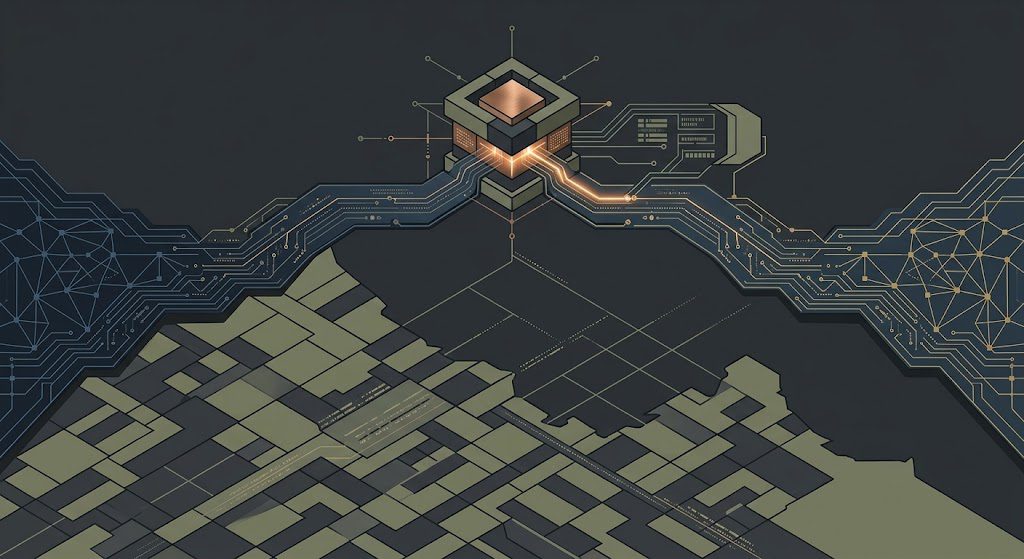
The UAE-US relationship is moving from occasional AI exercises toward a standing team designed to put military AI closer to real operational users.
UAE defense and technology companies, AI infrastructure providers, cybersecurity teams, policy researchers and businesses watching US-UAE technology alignment should care.
Public details remain limited on model custody, classified-data access, governance, procurement, technical safeguards and whether the team is fully operational.
Watch for a signed implementation agreement, confirmation of operational status and the first named capability or exercise conducted under Talon Synapse.
Treat this as a strategic alignment signal, not evidence that autonomous weapons or a specific AI system have been deployed.
Twenty people is not an AI army. It may still be more important than a much larger defense announcement.
The UAE and US are creating Task Force Talon Synapse in Abu Dhabi, bringing together about 20 specialists in AI, data and cybersecurity. CENTCOM says the team will work on intelligence support, critical-infrastructure protection and monitoring the regional security environment. The UAE Embassy in Washington said on August 21 that the task force had launched, while CENTCOM’s July 28 public release still describes the formal launch as coming in the following weeks.
The Launch Language Is Messy. The Agreement Is Real
CENTCOM announced on July 28 that it had reached an agreement with the UAE to establish what it described as the first bilateral task force focused on accelerating military AI applications.
The official US release said Talon Synapse was scheduled to formally launch in the coming weeks. It would be based in Abu Dhabi and staffed by approximately 20 American and Emirati personnel with expertise in AI, data and cybersecurity.
On August 21, the UAE Embassy in Washington posted that the two countries had launched the task force. Khaleej Times reported that update the next day.
Those statements are close but not identical. The safest reading is that the bilateral structure is now publicly activated from the UAE side, while CENTCOM has not yet published a newer release clarifying whether the team is fully operational. That is a status detail worth preserving rather than pretending the paperwork and operations are the same thing.
What Twenty Specialists Can Actually Do
A 20-person team is too small to build an entire military AI stack. That is not necessarily its purpose.
CENTCOM says the focus is integrating AI for intelligence support, critical-infrastructure protection and regional-security monitoring. DefenseScoop reported in July that the intent is to provide and integrate capabilities directly for military end users so tools can move into real operations faster.
That makes Talon Synapse look less like a model laboratory and more like an integration layer. The difficult work in defense technology is often not inventing an algorithm. It is getting data, security approvals, operators, procurement and existing systems to work together.
A small standing team with authority on both sides can shorten that path. If it works, its output may be process and interoperability as much as software.
This Did Not Start in 2026
The UAE and US have already tested AI and unmanned systems together. In February 2023, the UAE Navy and the US Navy’s Task Force 59 completed a bilateral exercise in the Arabian Gulf.
Five unmanned surface vessels collected imagery and video. The data was sent to shore, where AI platforms helped detect, identify and classify nearby vessels, according to the US Navy.
That exercise matters because it shows what ‘military AI’ can mean in practice. Not a humanoid robot choosing targets. Sensors collect more information than a human team can review quickly, and software helps sort the stream into something operators can use.
Talon Synapse takes that experimental relationship and gives it a standing institutional home.
Abu Dhabi Is the Strategic Part of the Announcement
The team is being placed in Abu Dhabi, not at a US base thousands of kilometers away. That brings the technical work closer to the regional environment, Emirati operators and the infrastructure the task force is meant to help protect.
It also lands during a broader shift in US-UAE technology access. Robius recently covered how the US moved the UAE into a more favorable export-control category for certain advanced technologies.
The Questions CENTCOM Has Not Answered Yet
The public mission areas are clear. The operating rules are not.
CENTCOM has not publicly detailed which models Talon Synapse will use, which vendors will participate, what data can cross between the two sides, how classified information will be handled, or who owns a model or workflow developed jointly.
Those are not small legal footnotes. AI performance depends on access to data. Military AI adds classification, export controls, cybersecurity, model security and chain-of-command questions on top.
Breaking Defense raised information-sharing as a central concern when the task force was first announced. DefenseScoop also reported in July that finalizing a memorandum of understanding was the first step toward the task force becoming fully operational.
Until newer official documentation fills those gaps, the right conclusion is limited: the structure is real, the mission is defined at a high level, and the technical governance remains largely private.
Military AI Does Not Automatically Mean Autonomous Weapons
The phrase ‘military AI’ can collapse very different systems into one frightening image. The announced Talon Synapse mission does not say the team is building autonomous weapons.
The named areas are intelligence support, infrastructure protection and regional monitoring. Those can involve classification, anomaly detection, sensor fusion, cyber defense, forecasting or decision support.
That does not remove the governance questions. It makes precision more important. Readers should judge the task force by what is actually deployed, how humans remain in command and what safeguards apply to the specific use case.
The UAE has also been taking visible positions on AI governance internationally. Robius covered the UAE’s message at the UN that governments cannot outsource responsibility for AI.
The Robius Insight: This Is a Governance Signal Before It Is a Technology Story
The most important thing Talon Synapse tells us today is not which model wins a benchmark. It tells us where the US is willing to build a permanent military AI relationship in the Gulf.
That has consequences beyond 20 specialists. It can shape which hardware is accessible, which security standards vendors have to meet, which data arrangements are acceptable and which companies can sit inside the trusted supply chain.
That is why the task force should be watched alongside AI chip access and defense-industry agreements, not as an isolated project.
The technical proof will come later. The first named capability, exercise or deployment will tell us whether Talon Synapse becomes a real operating engine or remains a high-level coordination cell.
For now, the shift itself is meaningful. The UAE and US have moved from testing AI together at sea to building a standing structure for military AI in Abu Dhabi. That is the story.
For the infrastructure side of the same relationship, see our sovereign AI analysis and our piece on how UAE-built AI infrastructure is moving outward.
Sources
- U.S. Central Command, Official July 28, 2026 release announcing Task Force Talon Synapse: https://www.centcom.mil/MEDIA/PUBLIC-RELEASES/Article/4557279/centcom-to-launch-1st-bilateral-ai-task-force-with-uae/
- Khaleej Times, August 22, 2026 report on the UAE Embassy launch update and the task force’s background: https://www.khaleejtimes.com/uae/uae-us-military-ai-task-force-talon-synapse-centcom?amp=1
- The National, July 28, 2026 report on the task force, staffing and stated mission: https://www.thenationalnews.com/future/technology/2026/07/28/uae-us-military-ai-task-force/
- U.S. Navy, February 20, 2023 official report on the first bilateral UAE-US unmanned systems and AI integration exercise: https://www.navy.mil/Press-Office/News-Stories/display-news/Article/3302779/us-uae-naval-forces-complete-first-ever-bilateral-unmanned-exercise/
- DefenseScoop, July 28, 2026 reporting on operational intent and the MOU status: https://defensescoop.com/2026/07/28/us-military-ai-task-force-united-arab-emirates/
Robius.news — Dubai, UAE — 2026 | Built to be first. Built to be trusted.