Scam or Legit?

Your Phone Rings. The Caller ID Says Your Bank. It Is Not Your Bank

UAE bank impersonation phone scam

UAE bank impersonation phone scam

Your Phone Rings. The Caller ID Says Your Bank. It Is Not Your Bank.

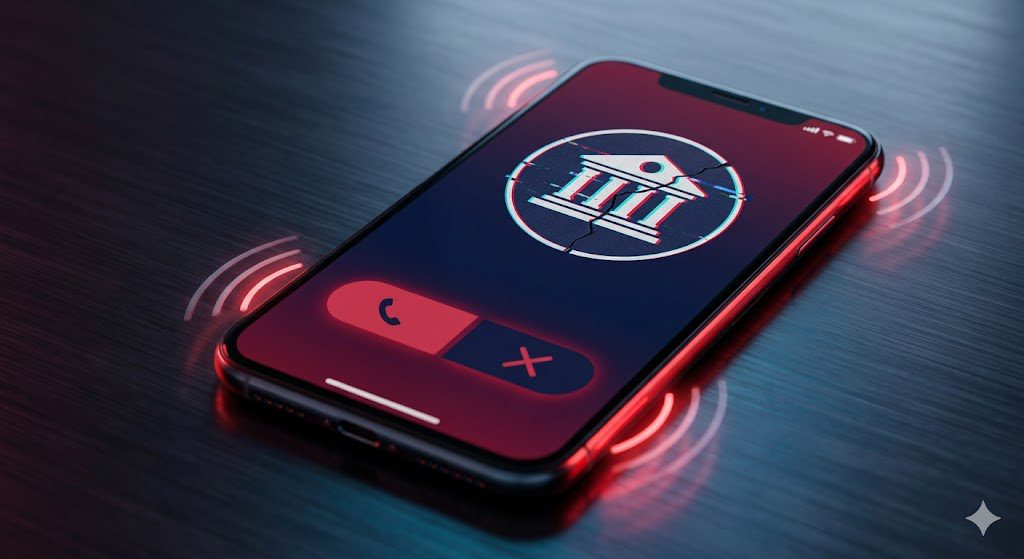
The caller knows your name. They may even reference a real recent transaction on your account. They tell you there has been suspicious activity and ask you to confirm a one-time password just sent to your phone, purely as a security check. The call sounds exactly like the bank’s own customer service team, because the script is modelled on it deliberately. The moment you read out that code, the fraudster uses it to authorize a transaction of their own, not yours.

VERDICT: Confirmed, ongoing scam pattern, officially named by UAE authorities, with a specific fraudulent number flagged publicly. This is called vishing, voice phishing, and UAE banks and police have issued repeated warnings throughout 2026. The UAE Ministry of Interior has specifically and publicly stated that calls from the number 70614213, or similar numbers, are fraudulent and have no connection to any government entity. The single rule that defeats every version of this call: no legitimate bank or government body will ever ask you to read out an OTP, a PIN, or a password, under any circumstance.

How the Call Actually Unfolds

Vishing works through a spoofed caller ID, technology that lets a fraudster display almost any name or number on your screen, including one that looks identical to your real bank’s official support line. The caller poses as a bank representative, a police officer, or a government official, and creates urgency immediately, your account has been compromised, a fine is overdue, your residency status needs urgent verification. Bankers and police both note the same pattern: the pressure to act immediately is the mechanism, not a side effect of it.

Once trust and urgency are established, the request comes. Sometimes it is a direct request to read out an OTP or PIN. Sometimes it is more subtle, asking you to confirm a push notification on your banking app, or to verify your card number to cancel a fraudulent charge that was never actually made. Citibank’s own published fraud guidance states this plainly: they ask for one code, they take everything. Once that code or confirmation is given, the fraudster completes their own transaction, often draining the account within minutes, and recovery after the fact is extremely difficult since funds typically move through multiple accounts and jurisdictions quickly.

The Specific Number Authorities Named

In a notable escalation, the UAE Ministry of Interior issued a direct public statement in 2026 confirming that calls originating from the number 70614213, or similar numbers, are not connected to any government entity and are part of an ongoing electronic fraud and identity theft scheme. Officials specifically warned that some of these calls falsely claim affiliation with a so-called Dubai Crisis Management group, a name fabricated entirely to sound official. Separately, Dubai Police issued a broader alert about a surge in fake calls posing as bank and government officials, urging residents not to share any confidential information no matter how genuine the caller sounds.

This pattern has also been seen to spike opportunistically around periods of regional tension, with scammers explicitly leveraging news events and public anxiety to make their fabricated urgency feel more plausible. Authorities flagged this specific exploitation directly in public warnings during periods of heightened regional news coverage in 2026.

Why This Has Gotten Harder to Spot

More than 90% of digital breaches in the UAE are now attributed to AI-powered phishing, according to legal and cybersecurity analysis published this year, and detection is becoming more difficult specifically because scammers are using AI tools to eliminate the typical warning signs, broken grammar, unnatural phrasing, mismatched details, that used to give these calls away. Some documented cases globally have used AI voice cloning to impersonate a specific bank employee’s actual voice, built from seconds of publicly available audio, though most UAE vishing cases still rely on script and spoofed caller ID rather than full voice cloning.

Fraud tied to phishing and impersonation cost the UAE an estimated AED 1.2 billion between 2021 and 2023 alone, according to legal industry analysis, and the broader category of phone and digital impersonation fraud has continued growing since.

The Rules That Actually Work

No legitimate bank, government body, or police department will ever ask you to read out an OTP, a PIN, a CVV, or a full password over the phone, under any circumstance, for any stated reason. That is the single rule that defeats nearly every version of this scam regardless of how convincing the caller sounds or how much real information about you they seem to have.

If a call creates pressure to act immediately, hang up and call your bank back using the number printed on the back of your card or listed on their official website, never a number the caller gives you or a number you call back from your recent calls list, since spoofed numbers can sometimes appear to ring back convincingly. Caller ID matching your bank’s real name proves nothing on its own, since that information is exactly what gets spoofed.

If you receive a call from 70614213 or a similar number claiming any government affiliation, the Ministry of Interior has confirmed directly that it is fraudulent. Do not engage, do not provide any information, and report it through Dubai Police’s eCrime platform or by calling 901.

Robius.news — Dubai, UAE — 2026 | Built to be first. Built to be trusted.
Shares:

Related Posts