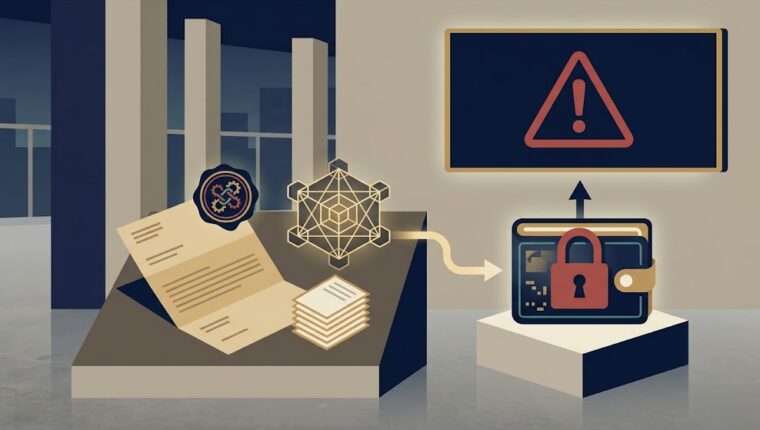

WhatsApp job scam UAE 2026.
It usually starts the same way. A message lands on WhatsApp from a number you do not recognize. Sometimes a UAE number. Often an international one. The profile picture is a corporate logo from a well-known UAE employer. Emirates NBD. DP World. MOHRE. Emirates Group. The message reads something like this.
“Hi, this is Ahmed from Emirates NBD HR. We came across your profile on LinkedIn. We have a Finance Manager role open, AED 22,000 per month, visa sponsored. Can you share your CV for review?”
You send the CV. Hours later, you get an offer letter on company-branded letterhead. Then comes the catch. A processing fee. An ATS optimisation fee. A visa deposit. Some small amount, AED 350 to AED 1,500, paid upfront to secure the role.
You pay. The role does not exist. The recruiter ghosts. The contact disappears.
Smishing attacks across the Middle East and North Africa surged 33% in 2025, according to Proofpoint, and UAE job seekers are the single largest target group. The WhatsApp job scam is the most active version of it. Here is the full anatomy, and the 30-second verification that stops it.
| VERDICT: Every WhatsApp job offer that asks you to pay anything is a scam. No legitimate UAE employer charges candidates fees of any kind. Not for visa processing, not for ATS optimisation, not for medical tests, not for English assessments, not for training, not for anything. The single verification step that ends every doubt is to check the company’s trade licence and MOHRE labour file. If the recruiter cannot give you a trade licence number and a registered company contact that matches, the offer is fake. |
How the Anatomy Works
The WhatsApp job scam has four stages, and each stage is designed to lower your resistance to the next one.
Stage one, the contact. An unsolicited message from a recruiter who claims to have found your profile online. The company is always well known. The pitch is always specific to your background. The number is almost always international, with +91, +92, and +44 the most common.
Stage two, the hook. They send a job description that matches you well, with a salary that is high but not impossible. AED 18,000 to AED 25,000 for mid-level roles. AED 35,000 plus for senior ones. Always tax-free. Always with housing or housing allowance mentioned.
Stage three, the credentialing fee. After you express interest, they introduce a small upfront cost. It is never framed as a job application fee, which would be a red flag. It is framed as something professional. An ATS compatibility check on your CV. A skills assessment. A pre-employment background check. A medical test prepayment. The amount is small enough to feel reasonable, usually AED 250 to AED 1,500.
Stage four, the escalation. Once you have paid the first fee, the scam either ghosts you immediately or escalates to a larger ask. Visa deposit. Bank account verification. Salary processing setup. Each ask is slightly larger than the last. The exit happens either when you stop paying or when they have extracted what they decided you were worth.
The whole sequence happens in days, sometimes hours. Speed is the scam’s main weapon.
The Five Brand Impersonations Running Right Now
Based on Dubai Police warnings, MOHRE alerts, and pattern analysis of reported cases in 2026, these are the five most-impersonated employer brands on WhatsApp job scams in the UAE.
Emirates NBD. Usually a Finance Manager or Relationship Manager role.
DP World. Usually a Logistics Coordinator or Operations Manager role.
Emirates Group. Usually a Cabin Crew or Customer Service role with the rumour of free flights.
MOHRE itself. Usually a “Government Sector Recruitment Drive” pitch.
ADNOC. Usually an Engineering Assistant or Project Coordinator role.
If you receive a WhatsApp message claiming to be from one of these employers, the probability that it is a scam is significantly above 90 %. None of these employers conduct first-contact recruitment via WhatsApp.
The 30-Second Verification
When you receive a job offer through any non-official channel, run these three checks before responding.
Check one, the trade licence. Every UAE company has a trade licence number. The recruiter or HR contact should be able to provide it on request. Cross-check it on the relevant emirate’s economic department portal. Dubai: ded.ae. Abu Dhabi: added.gov.ae. Sharjah: sedd.ae. If the licence does not return a match, walk away.
Check two, the MOHRE labour file. UAE employers that hire and sponsor visas are registered with MOHRE. The recruiter should be able to give you the company’s official MOHRE contact details. Cross-check by calling MOHRE on 600 590000. If the recruiter cannot provide this, walk away.
Check three, the email domain. Every legitimate UAE corporate recruiter writes from a corporate email domain. [email protected] is plausible. [email protected] is not. If the recruiter is communicating only on WhatsApp or from a Gmail, Outlook, or Yahoo address, walk away.
Three checks. Two phone calls. Thirty seconds total. They are the most valuable thirty seconds any UAE job seeker will spend in 2026.
What to Do If You Already Paid
If you have paid a fee to a WhatsApp recruiter and now suspect it was a scam, do these three things in order.
Stop communicating. Do not pay any refund processing fee they offer. That is a second-layer scam built on top of the first.
Report. Report to Dubai Police via the Dubai Police app or by dialing 901. Report also via the eCrime portal at ecrime.ae. Provide all WhatsApp screenshots, transfer receipts, and the phone numbers used.
Block and trace. Block the card or account you paid from. If you used a bank transfer to a UAE account, ask your bank to file a fraud trace. The Central Bank’s consumer protection function can sometimes recover the funds if the receiving account is still active.
Why This Scam Is Getting Worse, Not Better
Two structural reasons.
UAE expat hiring patterns have changed. Real recruiters now reach candidates on LinkedIn first and move to WhatsApp later in the process. That has normalised receiving a WhatsApp message from HR before formal contact. Scammers learned this and now sit at exactly that stage of the funnel.
And generative AI has made the fake offer letters indistinguishable. Two years ago, you could spot a fake offer letter from typos and inconsistent formatting. In 2026, scammers are generating company letterheads, HR signature blocks, and offer text that looks identical to a real one. The forensic signal has shifted from the document to the process. If the process is wrong, the document does not matter.
The Bottom Line
No UAE employer asks job candidates to pay anything. No exceptions. No small administrative fee. No ATS check. No background check deposit. No visa processing prepayment. None.
If a WhatsApp message arrives offering a UAE job and at any point money is requested, it is a scam. Run the three checks. Walk away if anything fails.
A real employer pays you. You do not pay them.
Sources
Gulf News: Dubai Police warn about fake part-time job scams, March 2026
Khaleej Times: MOHRE consumer warnings on fake job offers 2026
Proofpoint: MENA smishing surged 33 % in 2025
MOHRE official portal: mohre.gov.ae
UAE Federal e-Crime portal: ecrime.ae
Dubai Police Anti-Fraud Center, 2026 alerts
Robius.news — Dubai, UAE — 2026 | Built to be first. Built to be trusted.