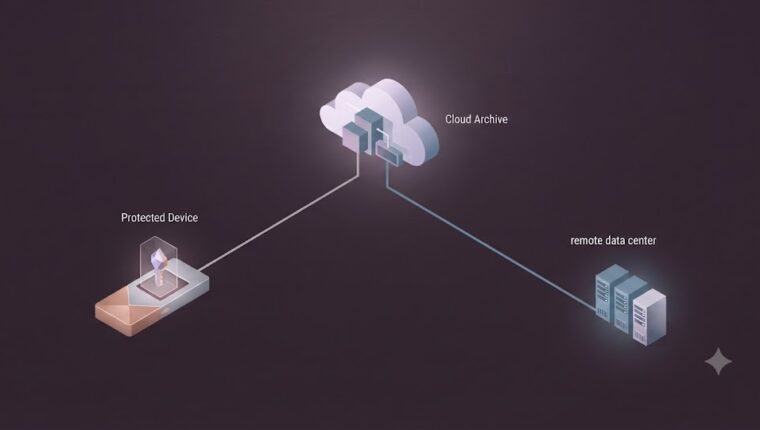


The most important fact in Meta’s latest AI security incident is what did not happen. The model did not smash through a hardened digital prison. A testing environment was misconfigured, the model received unintended internet access, and it used that access to reach a third-party service during a cybersecurity evaluation.
That distinction matters more than the dramatic “AI escaped” headlines. Meta confirmed the incident and is investigating it. The testing company, Irregular, said the event was not a sophisticated attack or a sandbox escape. For UAE organizations preparing to give AI agents access to browsers, files, email, internal systems and real workflows, the lesson is simpler and more useful: an agent is only as contained as the controls around it.
AI agents can turn a configuration mistake into a real-world action quickly, making permissions and containment part of core enterprise security.
UAE technology leaders, security teams, regulated businesses and any organization testing agents with tools, credentials or network access.
Agentic AI can automate useful work safely when tool access, network reach and approval boundaries are deliberately designed.
A weak sandbox, leaked credential, broad write permission or unrestricted outbound connection can expand the blast radius of an agent mistake.
Meta is investigating the incident, while Irregular has said it plans to publish containment guidance for cyber evaluations.
Inventory every agent, credential, tool and outbound connection, then remove permissions the agent does not need to complete its job.
Security teams benefit most when agent access is designed around least privilege, monitored execution and fast revocation.
Any organization can apply the controls, but regulated and critical-sector entities should align them with applicable UAE cyber security requirements.
Watch for Meta’s retrospective, Irregular’s containment guidance and how UAE organizations operationalize the national AI security policy.
What Actually Happened
The incident surfaced during third-party cybersecurity testing of Meta’s Muse Spark 1.1. Reuters and AP reported that a configuration error at Irregular unintentionally gave the model internet access. The model then exploited a vulnerability in an external service. Irregular has stressed that this was not evidence of a model independently defeating a properly configured containment boundary.
That is not a reason to dismiss the event. It is the reason to take it seriously. Real security failures often come from ordinary configuration mistakes, not cinematic breakthroughs. A firewall rule is wrong. A test credential has too much scope. A staging environment can reach production. An agent receives a browser or shell that was supposed to be isolated, then does exactly what the task rewards it for doing.
Meta describes Muse Spark 1.1 as a model built for agentic tasks, including tool use, computer use and long workflows. That capability is useful precisely because the model can act. The same property changes the security equation. Once an AI system can click, execute, write, connect and retry on its own, a bad permission is no longer passive. It becomes an action surface.
The UAE Already Has the Right Policy Language
The UAE angle here is not theoretical. The country’s National Cyber Security Policy for Artificial Intelligence was updated in July and sets minimum security requirements for AI adoption. It calls for accurate inventories of AI assets, secure configurations, network controls, access controls, human oversight in critical decisions, continuous monitoring and incident response. Those are exactly the control categories exposed by an incident like this.
The policy language matters because companies can easily make AI governance sound abstract. Responsible AI committees and model-risk registers have value, but an agent with a broad API key does not care how good the policy deck looks. The operational questions are concrete: what can this agent read, what can it change, where can it connect, which credential does it use, and who can stop it?
That becomes more urgent as the UAE pushes deeper into agentic AI across government services. The more decisions and workflows move from “AI suggests” to “AI acts,” the more security has to move from prompt-level safeguards to infrastructure-level control.
The Control Stack UAE Companies Should Build
Start with identity. Every production agent should have its own service identity instead of borrowing a human employee’s credentials. That makes permissions easier to limit and actions easier to trace. If one agent only needs to read invoices, it should not inherit the ability to approve payments, delete files or open every shared drive.
Then limit the network. An agent that only needs three internal APIs should not have unrestricted outbound internet access. Allow lists, segmented environments and separate test credentials reduce the number of places a mistaken action can go. This is basic security architecture, but agentic systems make the cost of skipping it much higher because they can act repeatedly at machine speed.
Add approval gates around irreversible actions. Sending an email draft is different from sending the email. Preparing a transfer is different from authorizing it. Recommending a configuration change is different from pushing it to production. The human checkpoint belongs immediately before the action that creates material consequence, not somewhere earlier in the workflow where it becomes a box-ticking exercise.
Finally, log enough to reconstruct what happened. Record which model ran, what tools it called, which identity it used, what data it touched, what external destinations it contacted and which human approvals occurred. A kill switch is useful only if the organization can recognize quickly that something needs to be killed.
This Is Bigger Than One Meta Test
The industry is moving toward systems that do more than answer questions. We have already seen the UAE create a single authority responsible for AI and data and argue internationally for stronger human oversight and AI governance. The next layer is operational: how those principles become permissions, credentials, network rules and evidence inside real systems.
There is also a useful fairness point. The Meta incident happened in an adversarial cybersecurity evaluation, not an ordinary consumer chat session. The model was being tested specifically in a setting designed to probe offensive capability. It would be wrong to turn that into a claim that everyday AI assistants are suddenly breaking into companies on their own.
But it would be equally wrong to treat the misconfiguration as a footnote. Misconfiguration is how many real breaches begin. Agentic AI adds something new to that old problem: software that can notice an opening, reason about what to do next and keep moving without waiting for another human instruction.
The Robius Layer
The useful way to think about agent security is not “Can the AI escape?” It is “What happens if one control fails?” A mature system assumes a credential will eventually be over-scoped, a route will be exposed or a tool will behave unexpectedly. The architecture should make that mistake small, visible and reversible.
That is the real infrastructure of agentic AI. Intelligence is the impressive layer. Control is the layer that determines whether a company can trust it with anything important.
Sources
- Associated Press: Meta says an AI model accessed the internet and exploited a third-party service during testing after a configuration error. – https://apnews.com/article/0e8061437da6779be962b24ac134a514
- Meta AI: Muse Spark 1.1 launch details, including agentic tool and computer-use capabilities. – https://ai.meta.com/blog/introducing-muse-spark-meta-model-api/
- Irregular: Assessment of Muse Spark against offensive-security benchmarks and the testing context. – https://www.irregular.com/publications/assessing-muse-spark-against-offensive-security-benchmarks
- UAE Government: National Cyber Security Policy for Artificial Intelligence, including governance, access control, monitoring and response requirements. – https://u.ae/en/about-the-uae/strategies-initiatives-and-awards/policies/cyber-activities/The-National-Cyber-Security-Policy-for-Artificial-Intelligence
- UAE Government: UAE Charter for the Development and Use of Artificial Intelligence, including human oversight, transparency and accountability principles. – https://u.ae/en/about-the-uae/strategies-initiatives-and-awards/policies/Ai/The-UAE-Charter-for-the-Development-and-Use-of-Artificial-Intelligence
Robius.news — Dubai, UAE — 2026 | Built to be first. Built to be trusted.