
SpaceX IPO UAE
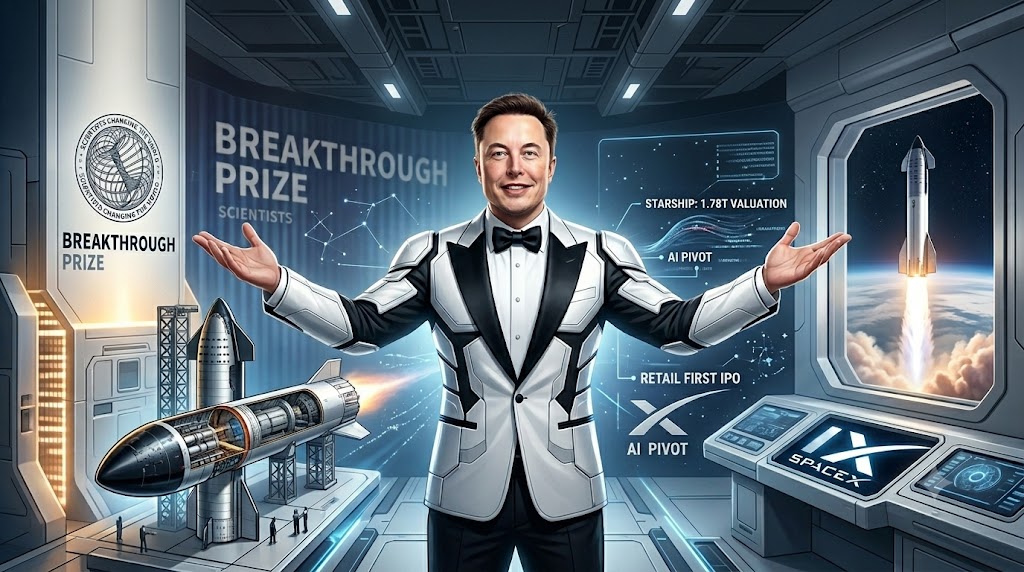
SpaceX is now a public company. It started trading on the Nasdaq today as SPCX.
The IPO raised $75 billion. That makes it the largest in market history. Saudi Aramco raised $29.4 billion in 2019. SpaceX cleared that by more than twice.
The company sold 555.6 million shares at $135 each. That prices SpaceX at roughly $1.77 trillion.
And it made Elon Musk the world’s first trillionaire. His 42% stake is now worth about $866 billion on paper. Forbes had him at $982.6 billion the day before. After the close, he crossed $1.1 trillion.
To put that in scale: US GDP in 2026 is around $32 trillion. One man’s net worth is now about 3.4% of that.
The IPO is the headline. But you do not run a satellite company or a sovereign fund. So here is the part that matters for someone living in the UAE.
First, Should You Actually Buy SPCX?
Yes, you can. SPCX trades on the Nasdaq. Any UAE brokerage with US market access can route the order. IBKR, Sarwa, Baraka, e& money. The same way you would buy Tesla or Nvidia.
Whether you should is the harder question. Here is the honest version.
SpaceX earned $18.67 billion in revenue last year. It is now valued at $1.77 trillion. That is about 95 times revenue. For comparison, Meta is valued at roughly 7 times its revenue.
So you are not buying a normal company. You are buying a bet. The bet is that Starlink keeps growing, that Starship works, and that Musk delivers on space-based data centres and Mars. Analysts call the gap between the price and the fundamentals the Elon premium. It is real, and it is large.
That is fine if you know what you are buying. It is dangerous if you think you are buying a safe blue-chip. The stock opened flat near $135 on day one, which tells you even the market is not sure yet. If you buy, treat it as a high-risk position, not a savings plan.
What the Sovereign Funds Will Do
ADIA and Mubadala hunt big global tech assets. SpaceX was hard to reach while it was private. You needed access to exclusive secondary share blocks.
Now it trades on the open market. So the funds can buy it directly, at size, whenever they want.
Will they pile in on day one? Probably not. Funds this large move slowly and buy on weakness, not on hype. Expect quiet accumulation over months, not a press release tomorrow.
One claim doing the rounds is worth a caution. Some coverage says UAE employees with vested SpaceX options will now cash out and pour money into Dubai property and luxury goods. Maybe a few will. But SpaceX has 22,000 staff worldwide, and the UAE-based slice is tiny. Do not expect this IPO to move Dubai real estate. That is a nice story with very little behind it.
The Starlink Angle Is the Real Local Story
This is where the IPO touches normal life in the UAE.
A $75 billion raise funds Starlink expansion. Starlink is already live in the UAE at AED 230 a month. More capital means faster rollout and more capacity.
Who benefits? Places normal internet cannot reach well. Oil and gas sites in the Western Region. Ships in UAE waters. Desert construction projects. Remote events. If your work depends on a connection where there is no fibre, this is good news.
For the average person in Dubai or Abu Dhabi with fast home internet already, the IPO changes nothing about your daily life. Your du or e& line is not getting cheaper because of this.
The Catch: Regulation and Export Rules
There are two real hurdles, and most hype coverage skips them.
First, spectrum. The TDRA controls which satellite services can operate here and on what frequencies. Foreign satellite internet does not get a free pass. The regulator decides the terms.
Second, US export law. Rocket and satellite technology falls under strict US controls called ITAR. Any UAE startup or university that wants to partner with SpaceX has to clear that wall first. It is slow, it is expensive, and it is the reason a lot of these partnership dreams stay dreams.
So when you read that local aerospace firms will land SpaceX joint ventures, treat it as a possibility, not a plan. The compliance cost alone rules out most small players.
The Bottom Line
The IPO is historic. The number is real. Musk is the first trillionaire, and that is a genuine moment in financial history.
But strip out the noise and here is what it means for you.
If you want to own a piece of SpaceX, you now can, through a normal UAE brokerage. Just understand you are paying 95 times revenue for a bet on the future, not buying a steady business.
If you run a remote operation, watch Starlink. That is the part of this story that will actually reach you.
If you are waiting for the SpaceX IPO to lift Dubai property or hand local startups easy contracts, do not hold your breath. Those claims sound good and prove little.
Do not buy the hype. Buy the facts, if you buy at all.
Robius.news — Dubai, UAE — 2026 | Built to be first. Built to be trusted.