

Saudi Arabia’s Public Investment Fund has launched a new digital platform designed to get cash to suppliers before their approved invoices are normally paid.
It is called Tawrid, and it has already started operations.
Tawrid is already operating as a digital supply-chain finance platform, but its current SAMA status is a Regulatory Sandbox permit rather than an unrestricted full-market licence.
Saudi suppliers, SMEs, procurement teams, banks, corporate buyers and fintech teams following supply-chain finance.
If adoption broadens, earlier settlement against approved invoices could improve working-capital flexibility for Saudi suppliers, especially SMEs.
The launch does not disclose pricing, supplier eligibility thresholds, average settlement times or financing volumes. Sandbox participation should not be described as a full licence.
Watch whether Tawrid expands beyond its launch partners, more banks join and SAMA authorises a broader operating model after sandbox testing.
Businesses considering the platform should verify current eligibility, financing terms and Tawrid’s live regulatory status before relying on the service.
Suppliers may gain earlier access to cash against approved invoices, while buyers and banks gain a digital route for financing working-capital needs.
Access depends on Tawrid’s current onboarding rules and participating buyers, suppliers and funders.
Pricing, supplier eligibility, settlement times, financing volumes, additional banks and any change in SAMA regulatory status.
But there is an important regulatory distinction in the launch: Tawrid is operating under a Saudi Central Bank Regulatory Sandbox permit. That is not the same thing as saying the company has received an unrestricted full-market licence.
What Tawrid actually does
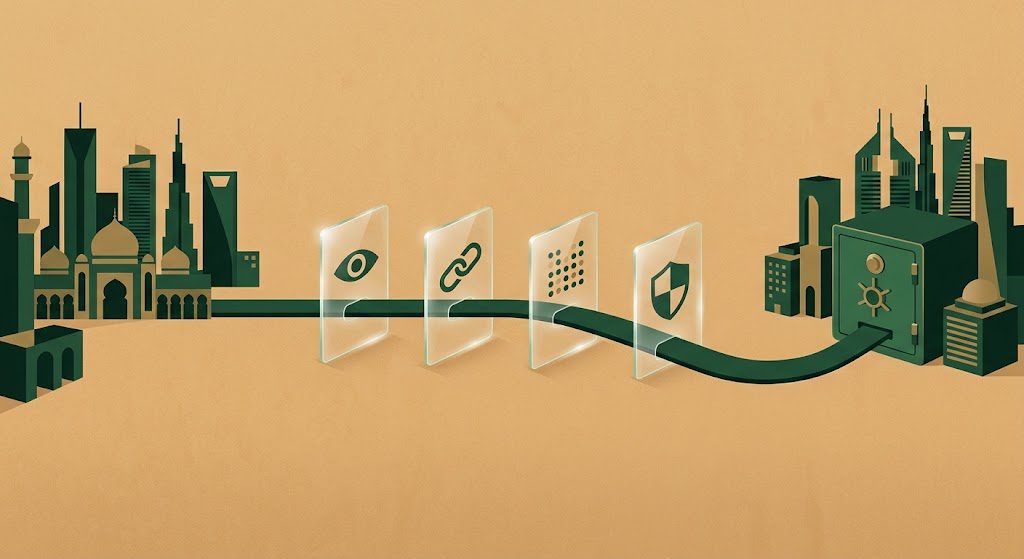
Tawrid connects buyers, suppliers and funders through a digital platform. PIF says its products include early settlement against approved invoices.
In practical terms, a supplier that has delivered goods or services can have money tied up while waiting for an approved invoice to reach its payment date. Supply-chain finance can bring that cash forward, helping the supplier manage working capital without waiting for the buyer’s normal payment cycle.
The platform also allows local banks registered on its network to engage with registered suppliers.
This is not a future pilot waiting to start
PIF’s September 20 announcement says Tawrid has already started operations.
It has also signed binding agreements with Gulf International Bank, Saudi National Bank and Banque Saudi Fransi, alongside ROSHN Group and Nesma & Partners.
That matters because the announcement is not simply a concept launch. There are already financial institutions and corporate counterparties connected to the operating model.
The SAMA Sandbox label needs context
PIF says Tawrid has obtained a permit from the Saudi Central Bank, or SAMA, to operate within its Regulatory Sandbox environment.
A regulatory sandbox is designed to let financial innovations operate and be tested within a supervised framework. So the correct description today is that Tawrid is permitted to operate in the sandbox — not that the announcement establishes an unrestricted licence for every form of supply-chain financing across the Saudi market.
That distinction is especially relevant because supply-chain finance itself is an area of active regulatory development in the Kingdom.
Why invoice timing matters to smaller suppliers
For a large buyer, a payment term can be an accounting process. For a smaller supplier, it can determine whether there is enough cash available for payroll, inventory or the next contract.
Tawrid’s model targets that gap by using an approved invoice as the basis for earlier settlement. PIF specifically says the platform is intended to strengthen the private sector, particularly small and medium-sized enterprises.
The economic effect will depend on details the launch does not yet disclose: financing costs, eligibility criteria, approval times, invoice limits and how broadly suppliers can access participating funders.
PIF is putting financing inside its supply-chain strategy
The platform also fits PIF’s broader push to increase private-sector participation in its projects and portfolio-company ecosystem.
Instead of treating supplier development only as procurement, Tawrid adds a financing layer. Registered suppliers can potentially gain earlier access to cash while banks gain a digital route into approved commercial transactions.
That makes the platform more interesting than another fintech front end. The test is whether it materially shortens the cash-conversion cycle for companies actually supplying Saudi buyers.
What is still missing
PIF has disclosed how the model works at a high level and named several counterparties, but it has not published a public pricing schedule, supplier eligibility thresholds, average settlement times or expected financing volumes.
Those numbers will determine how useful Tawrid becomes beyond its launch partners.
It will also be worth watching what happens after the sandbox phase: whether SAMA authorises a broader operating model, whether more banks join, and whether suppliers outside the PIF ecosystem gain meaningful access.
The bottom line
Tawrid is already operating, with three named banks and two corporate groups in binding agreements, and its core proposition is straightforward: turn approved invoices into earlier liquidity for suppliers.
The regulatory label should stay precise. It has a SAMA permit to operate in the Regulatory Sandbox. That is evidence of supervised operation — not shorthand for an unrestricted full licence.
Sources
Checked 21 September 2026. Regulatory status was cross-checked against SAMA’s own Regulatory Sandbox announcement: Tawrid is permitted to test its supply-chain finance solution in the sandbox; Robius found no basis to describe that permit as an unrestricted full-market licence.
Robius.news — Dubai, UAE — 2026 | Built to be first. Built to be trusted.