

Updated 10 September 2026: UAE eInvoicing is no longer simply “coming.” Businesses can already begin onboarding through Ministry-accredited channels, the formal pilot started on 1 July 2026 with selected taxpayers, and the Ministry of Finance now lists 50 accredited service providers.
For most SMEs below the AED 50 million revenue threshold, the key statutory dates are now clear: appoint an Accredited Service Provider by 31 March 2027 and implement the Electronic Invoicing System by 1 July 2027.
| THE ROBIUS READ: Your accounting or ERP software is only one part of UAE eInvoicing. An in-scope business needs an Accredited Service Provider for the regulated exchange/reporting layer. PDFs, Word documents, images, scans and ordinary emailed invoices are not eInvoices under the Ministry’s definition. But do not confuse “not an eInvoice” with “all PDFs are already illegal today.” Mandatory dates are phased. Check your revenue wave and transaction scope, select an accredited ASP, then make sure your software can exchange the required structured invoice data with that provider. |
What an eInvoice Actually Is
The Ministry of Finance defines an eInvoice as structured invoice data issued and exchanged electronically between supplier and buyer and reported electronically to the Federal Tax Authority.
A PDF created in accounting software and emailed to a customer is digital, but it is not an eInvoice for this system. The Ministry explicitly excludes unstructured formats such as PDF, Word documents, images, scanned copies and emails from the eInvoice definition.
That distinction matters when your mandatory phase begins or when you adopt voluntarily. It does not mean every ordinary PDF invoice in the UAE became invalid on 1 July 2026.
Your Software Needs to Work With an Accredited Service Provider
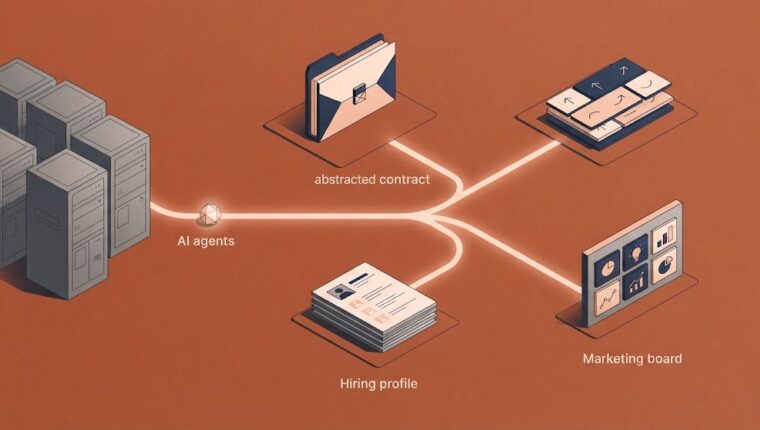
For businesses within the eInvoicing system, the Accredited Service Provider is the network and compliance layer between the business systems and the structured exchange/reporting framework.
Your software therefore needs a practical path to send and receive the data your ASP requires. That can be a native integration, API, connector or another supported workflow agreed between the business, software provider and ASP.
Do not buy an accounting package simply because its marketing page says “eInvoicing ready.” Ask which UAE-accredited ASP it connects to, whether inbound invoices are supported as well as outbound, who performs PINT-AE transformation and validation, and what happens when an invoice fails.
The Current Rollout Dates
| Group | Appoint ASP by | Mandatory implementation |
|---|---|---|
| Annual revenue equal to or above AED 50 million | 30 October 2026 | 1 January 2027 |
| Annual revenue below AED 50 million | 31 March 2027 | 1 July 2027 |
| Government entities in scope | 31 March 2027 | 1 October 2027 |
The first-wave ASP deadline was extended from 31 July to 30 October 2026 by Ministerial Resolution No. 66 of 2026. The later SME and government dates remain important and should not be described as merely “around 2027.”
Pilot and Voluntary Onboarding Are Not the Same Thing
The original table labelled 1 July as a “voluntary pilot (anyone).” That combines two separate developments.
The Ministry’s rollout decision says the Pilot Programme commenced on 1 July 2026 with a selected group of taxpayers. Separately, the Ministry announced on 21 April that businesses could use EmaraTax to select an accredited ASP, enter into a commercial agreement and begin their eInvoicing journey.
So an SME can prepare and potentially adopt voluntarily without pretending it was automatically part of the formal pilot cohort.
The Scope Is Broader Than VAT Registration
The current Ministry framework applies to in-scope persons conducting business transactions in the UAE regardless of VAT-registration status, subject to statutory exclusions.
Business-to-consumer transactions are currently outside the mandatory eInvoicing rollout. B2B and B2G transactions are core in-scope categories, and government transaction flows have their own phase.
Do not use the AED 375,000 VAT-registration threshold to decide whether eInvoicing applies. It is a different legal test.
Your Large Customer Does Not Automatically Rewrite Your Statutory Date
The old article said an SME supplying a large company might effectively need compliant eInvoices before the SME’s own phase because the large customer goes first. That was too strong.
The mandatory rollout is phased by the person subject to the implementation timetable. A customer entering its mandatory phase does not by itself rewrite the supplier’s statutory implementation date.
A large customer may still create a commercial reason to adopt earlier — for example by preferring suppliers who can exchange structured invoices — but that should be described as a customer/implementation requirement, not as the tax authority moving your legal deadline forward.
The Provider Market Is No Longer Waiting for Accreditation
As of 9 September 2026, the Ministry’s official page lists 50 Accredited Service Providers with accreditation numbers.
That changes the software-buying conversation. In June it was reasonable to ask whether a proposed provider would eventually achieve full accreditation. Today you can verify whether a provider already has an accreditation number on the Ministry’s live list.
Do not rely on “approved,” “Peppol ready” or “UAE compliant” in a sales deck when the Ministry publishes the actual accredited list.
What Your SME Software Needs to Do
- Create clean structured invoice data: legal names, identifiers, addresses, line items, tax fields and transaction data need to be reliable.
- Connect to your chosen ASP: confirm the supported technical route and responsibilities.
- Handle outbound and inbound invoices: the system is not only about sending invoices.
- Surface failures: users need to know when an invoice or tax-data submission fails validation.
- Preserve records: make sure the accounting trail and eInvoice status can be reconciled.
- Support your real transaction mix: VAT/non-VAT, credit notes, advance payments, B2B/B2G and other relevant scenarios should be mapped before launch.
What Not to Assume About Implementation Time or Cost
The old guide gave a generic 12–16 week implementation timeline and suggested fixed SME setup services already started at a few thousand dirhams. Robius did not have a methodology supporting those as universal benchmarks.
Implementation time depends on data quality, ERP/accounting setup, transaction complexity, ASP integration, testing and internal approval. Pricing depends on provider, volume, integration and support.
Compare written proposals from accredited providers rather than budgeting from an unsourced archive estimate.
What to Do Now
- Confirm your revenue wave and transaction scope.
- Check the Ministry’s live accredited-ASP list.
- Ask your accounting or ERP vendor which accredited ASP integrations are live today.
- Audit customer, supplier and tax/master data.
- Map how credit notes, corrections and inbound invoices will work.
- If you are in the AED 50 million-and-above wave, prioritise the 30 October 2026 ASP appointment deadline now.
The Bottom Line
The useful core of the old article remains: UAE eInvoicing is not “email a nicer PDF,” and your accounting software is not the whole compliance architecture.
The September version is more concrete. The network is operational, the formal pilot is underway, 50 ASPs are accredited, and the SME deadline is not “around July 2027”: it is 31 March 2027 to appoint the ASP and 1 July 2027 to implement for the below-AED-50-million wave.
Prepare against the Ministry’s current dates and accredited list — not an old software article’s estimates.
Sources
• UAE Ministry of Finance — eInvoicing portal: current eInvoice definition, transaction model, legislation and official programme information — mof.gov.ae
• UAE Ministry of Finance — Accredited Service Providers: current accredited list, updated 9 September 2026 — mof.gov.ae
• UAE Ministry of Finance, 29 September 2025: scope, pilot and phased implementation dates — mof.gov.ae
• UAE Ministry of Finance, 10 May 2026: extension of the first-wave ASP appointment deadline to 30 October 2026 — mof.gov.ae
• UAE Ministry of Finance, 21 April 2026: businesses can select an accredited ASP through EmaraTax and begin onboarding — mof.gov.ae
Checked 10 September 2026. eInvoicing rules, exclusions and provider status can change. Verify the current Ministry portal for your entity and obtain tax advice for complex scope questions.
Robius.news — Dubai, UAE — 2026 | Built to be first. Built to be trusted.