AI romance scam UAE 2026
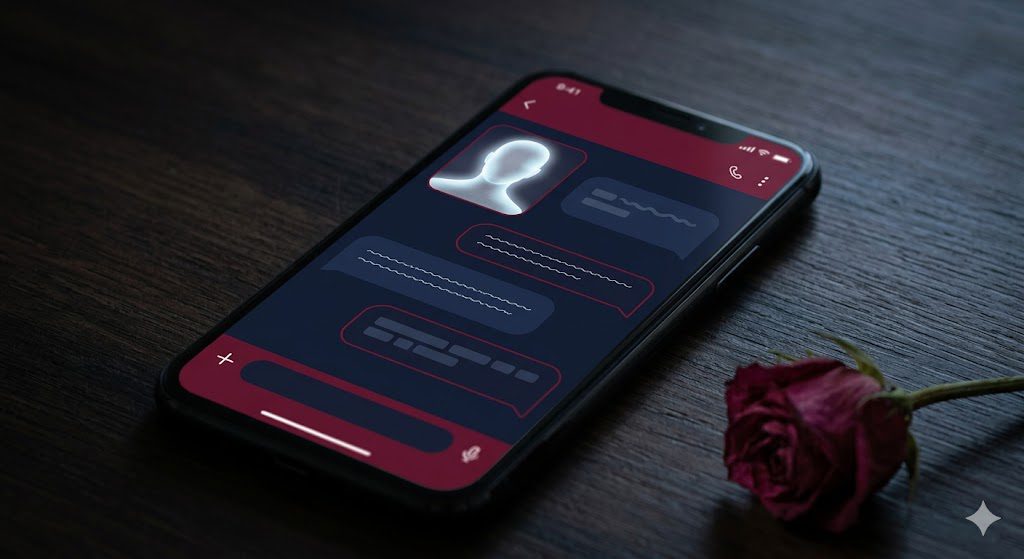
He messages every morning at the same time. Good morning, he writes, hope you slept well. He says he is on a construction project in Doha, sometimes Riyadh, sometimes a US base nobody can quite name. He sends a voice note that sounds tired but warm. Weeks pass. He never quite manages a video call, but he sends photos, and once, when she pushed, a short clip of himself walking through what looks like a work site. He is patient. He is kind. He asks about her day before he asks about anything else.
He does not exist. None of it does, not the voice, not the face, not the work site. It was built, by a person or increasingly by a system, to produce exactly this feeling, for exactly long enough.
| VERDICT: AI-powered romance scams are now an industrialized global business, and the UAE is both a target market and a documented base of operations. A joint FBI, Chinese and Dubai Police operation raided nine fraud centres inside the UAE in April 2026, arresting 276 people and freezing more than $701 million in cryptocurrency tied to exactly this kind of scheme. The technology has erased almost every old way of checking if someone is real. Five questions still catch it every time, and they are below. |
The Model, in Plain Terms
This is called pig butchering, a blunt translation of a Chinese phrase describing the patient fattening of a target before the financial slaughter. A scammer, or now often a coordinated team running dozens of fake profiles at once, builds trust over weeks or months. No money is asked for at first. The relationship comes first, deliberately, because the longer and warmer it runs, the larger the eventual loss.
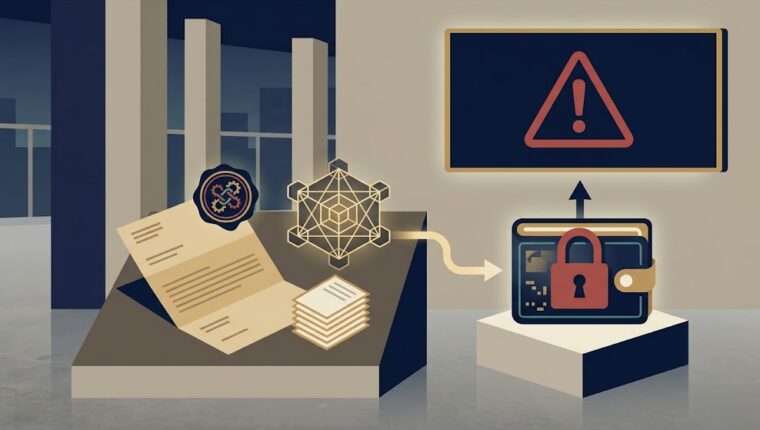
Then comes the pivot. Not a request for cash, which feels needy and risks suspicion, but an opportunity. A trading platform. A crypto tip from a wealthy uncle, a mentor, a friend who already made money on it. The target invests a small amount and sees it grow, because the platform is fabricated to show exactly that. They invest more. The fabricated balance keeps climbing. Then, when the target tries to withdraw, the platform finds a reason it cannot happen, and the relationship usually goes quiet shortly after.
This is the model Khaleej Times documented in detail in the regional press this year, describing how scam centres scrape public social media profiles for photos, life details, and emotional cues, then tailor an approach built specifically around what a target seems to want and need. References to plausible Gulf cities and plausible expat job titles, construction, oil, defence contracting, lend the story exactly the kind of credibility that makes a target stop asking questions.
What AI Actually Changed
Every step above existed before generative AI. What changed in the last two years is the labour cost of running it at scale, and the quality of the illusion at every step.
A convincing profile photo used to require stealing someone else’s pictures, which a reverse image search could expose. Now it is generated from nothing, a face that has never existed and therefore cannot be found anywhere else online. A voice note used to require a real human voice. Modern cloning tools need only a handful of seconds of someone else’s audio to produce a believable substitute, and fully AI-generated voices need none at all. Video calls, long considered the gold standard of verification, are now spoofable in real time with consumer-grade tools, which is why the engineer in Doha always has a reason the video will not quite connect.
Security researchers now describe a fully AI-enabled version of this scam where every phase, the opening message, the months of warm conversation, the introduction of the investment opportunity, and the final request, can run without a human operator at any point. The old constraint on this kind of fraud was always the time one person could spend grooming one victim. That constraint is gone.
The UAE Numbers
Erin West, the California cybercrime prosecutor who founded Operation Shamrock to fight this specific category of fraud, estimates that crypto-enabled romance schemes now move as much as $10 billion globally every year. Interpol’s 2026 Global Financial Fraud Threat Assessment put total financial fraud losses worldwide at $442 billion in 2025, describing the trend as the industrialisation of fraud, driven specifically by artificial intelligence and cross-border criminal coordination. The same assessment found AI-enhanced fraud schemes are now 4.5 times more profitable than traditional ones.
The dating and romance sector in particular now carries a 6.35% identity fraud rate, tied for the highest of any industry tracked, level with financial services itself. Security firms blocked more than 17 million dating scam attempts globally in the final quarter of 2025 alone, a 19% increase on the year before. None of those figures count the attempts that succeeded.
And the UAE is not only a market for this fraud. It has been a documented operating base for it. The April 2026 raids, run jointly by the FBI, China’s Ministry of Public Security, and Dubai Police, hit nine fraud centres operating inside the country, leading to 276 arrests and the freezing of more than $701 million in cryptocurrency, with the operation specifically targeting pig-butchering schemes and related charges filed as far away as San Diego.
Why So Few People Report It
Survey data from AARP found that 55% of romance scam victims never report what happened to them, and the reason given most consistently is shame. Victims frequently describe being told by the people they finally confide in, including in some cases the authorities, that handing over the money was their own choice, which only deepens the silence. That silence is precisely what allows the same schemes to keep running.
If this has happened to you or someone close to you, the useful response is not embarrassment. These operations are run by organised, well-funded criminal groups using purpose-built psychological and technical tools specifically engineered to be convincing. Falling for one is not a verdict on anyone’s judgment.
The Five Questions That Still Work
Despite everything AI has changed, a small number of checks still expose almost every version of this scam within minutes.
Ask for a live video call, on your terms, at a time of your choosing, and watch what happens if they ask you to do something simple mid-call, like turn your head or hold up a hand. Real-time deepfake video still struggles to track unscripted movement convincingly.
Ask why the relationship cannot move toward meeting in person, even months from now, even tentatively. A real person can engage with a real future. A fabricated one will always find a reason the plan keeps slipping.
Search their name and photo across other platforms and look for a digital footprint with real history, tagged friends, old posts, anything that took years to build. A scam profile, however polished, is usually shallow and recent.
Treat any mention of a trading platform, a guaranteed return, or a friend who made money on crypto as the end of the conversation, not the beginning of an opportunity. This is the one universal tell across every version of this scam, regardless of how the relationship started.
And ask yourself plainly whether the relationship has ever cost you money, however small, however framed as temporary or as an investment rather than a gift. The first payment is never the real one. It is a test of whether you will make a second.
Sources
• Khaleej Times: AI-driven romance scams surge in Middle East, victims face emotional toll — https://www.khaleejtimes.com/business-technology-review/love-lies-and-algorithms-how-ai-is-fuelling-romance-scams-in-the-middle-east
• The Next Web: The global scam economy hit $442 billion in 2025, and AI is making it worse — https://thenextweb.com/news/global-scam-economy-442-billion-ai-fraud-yahoo-boys
• GRASS: AI dating scams in 2026, how deepfakes and chatbots are invading dating apps — https://grass.camp/en-US/blog/ai-dating-scam-deepfake-why-meet-in-person
• Norton: What Norton’s insights reveal about AI dating scams 2026 — https://us.norton.com/blog/online-scams/ai-online-dating-scams
• Interpol: 2026 Global Financial Fraud Threat Assessment
• AARP: February 2026 survey on romance scam reporting and victim shame
If you suspect fraud, report via Dubai Police eCrime (ecrime.ae) or call 901.
Robius.news — Dubai, UAE — 2026 | Built to be first. Built to be trusted.