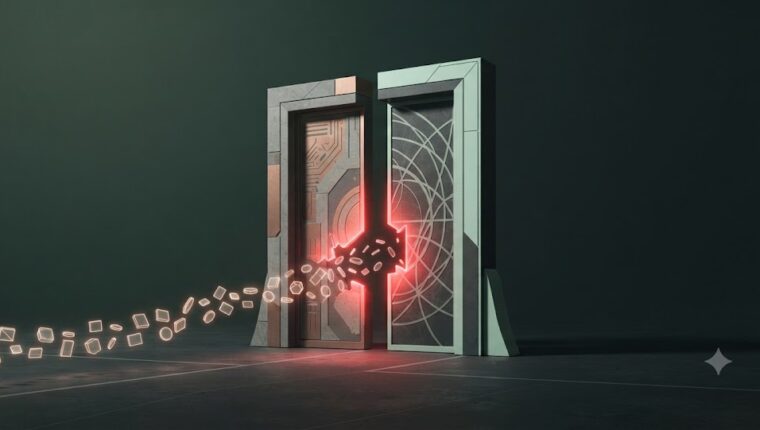

The internet makes perfect copies cheap. That is the whole problem NFTs were trying to solve.
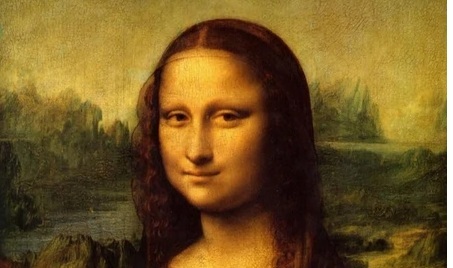
Imagine someone creates a digital token linked to an image of the Mona Lisa. You can still save the image, send it to a friend, print it, or use it as your wallpaper. None of that tells you who owns the token. The blockchain can.
That sounds like ownership. Sometimes it is. But the word hides several different things: control of a token, provenance of that token, rights to the artwork, copyright, access to a file, and the right to resell. Buying one does not automatically give you the rest.
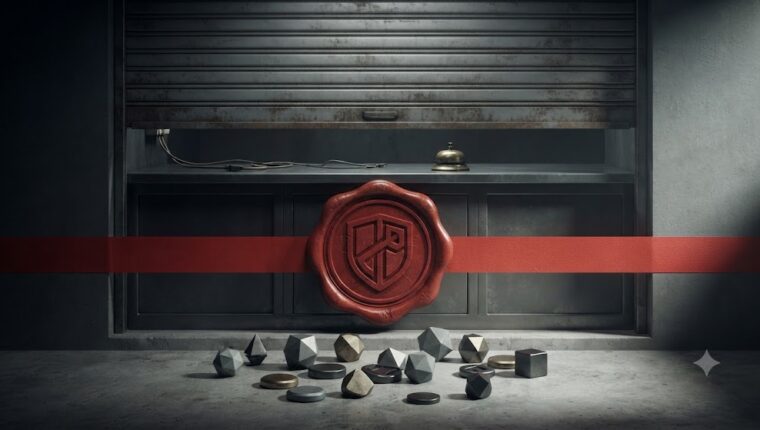
T H E R O B I U S V E R D I C T CAUTION: Owning an NFT proves control of a token. It does not automatically give you the artwork, the copyright, or proof that the seller had the rights they claimed. Before paying, verify the issuer, the rights attached to the token, where its metadata and media are stored, and whether any regulatory claim is real. A blockchain can preserve a record. It cannot make a false claim true. |
The Mona Lisa Test
The Mona Lisa is useful because everyone already understands the difference between the painting and a photograph of it.
If someone gives you a museum postcard of the Mona Lisa, you own the postcard. You do not own the painting. If someone sends you a JPEG of the painting, you possess a copy of the file. You still do not own the painting.
An NFT adds another layer. It can create a unique token with a public ownership history. On Ethereum, the ERC-721 standard gives each token a contract address and token ID, and a contract can expose who currently owns that token. That part is real and technically verifiable.
But the token is not automatically the artwork. It is better understood as a digital record that may point to an asset and may come with rights defined elsewhere.
What the Blockchain Can Prove
A properly implemented NFT can answer a few useful questions.
It can show that a specific token exists. It can show which wallet currently controls it. It can show transfers between wallets. It can also expose metadata through a token URI if the contract implements the standard metadata extension.
That is valuable. Provenance matters in collecting, ticketing, gaming, membership, and any system where a unique digital item needs a traceable history.
But the blockchain only proves what was written into that system. It does not independently prove that the person who minted the NFT was the original artist, had permission to use the work, or had legal rights to sell anything beyond the token itself.
That is why a polished marketplace page is not enough. Our Scam or Legit? investigations use the same principle with financial platforms: verify the underlying claim, not the branding around it.
What the NFT shows | What it does not automatically show |
A specific token exists | The minter created the artwork |
Which wallet controls the token | The buyer owns copyright |
The token’s transfer history | The linked file will stay online forever |
A token URI or metadata record | The metadata is truthful |
A smart-contract rule | The project is licensed, regulated, or low-risk |
Why “Write-Only Database” Is the Wrong Phrase
The old description of blockchain as a “write-only database” is catchy, but technically it is the wrong phrase.
A blockchain must be readable. Otherwise nobody could verify balances, ownership, transaction history, or contract state. ERC-721 itself includes functions that let software query a token owner and, when supported, its metadata URI.
The better shorthand is append-only or tamper-resistant ledger. New transactions are added to the chain, while accepted history is designed to be difficult to rewrite. That is very different from a database you can write to but never read.
The distinction matters because vague language makes NFTs sound more mysterious than they are. Strip away the buzzwords and you are looking at a token, a public transaction history, some smart-contract rules, and usually a link to metadata.
The Image May Live Somewhere Else
Here is where many NFT explanations become misleading.
The image itself does not have to live on the blockchain. In a common ERC-721 setup, the token returns a tokenURI. That URI can point to a JSON file containing the name, description, and another URI for the image.
OpenZeppelin’s own ERC-721 documentation shows exactly this pattern. It also notes that metadata stored off-chain can potentially change if the developer controls the server behind it.
Some projects use IPFS or encode metadata directly on-chain. Those approaches can reduce certain dependencies, but they are not universal. A buyer should never assume that “on the blockchain” means every pixel of the artwork is permanently stored there.
Ask where the metadata lives. Ask where the image lives. Ask whether either location can be changed. Those questions are far more useful than asking whether the NFT is “decentralized.”
Ownership Is Not Copyright
This is the most important consumer point in the entire article.
WIPO has warned about widespread confusion around what NFT buyers actually acquire. In many cases, the buyer gets the token and associated metadata, not copyright in the underlying work.
Copyright is a separate legal right. It can be transferred or licensed, but that normally depends on the terms of the transaction and the law that applies. The NFT itself does not magically perform every legal transfer a buyer may imagine.
So if a project says you can use the art commercially, read the license. If it says you own the IP, find the actual legal terms. If there are no terms, do not fill the gap with assumptions.
Anyone can also create a token that points to material they did not create. A blockchain can preserve a false claim just as efficiently as a true one. Immutability does not turn bad information into good information.
What This Means in Dubai
There is another layer for UAE buyers: regulation.
VARA regulates virtual assets and virtual-asset activities across Dubai’s mainland and free zones, except the DIFC. Its current Virtual Asset Issuance Rulebook, effective from June 19, 2025, separates issuance into Category 1, Category 2, and exempt virtual assets.
The current exemptions are narrow. VARA identifies non-transferable virtual assets and redeemable closed-loop virtual assets as exempt categories. There is no blanket rule saying that anything described as an NFT or digital collectible sits outside the framework.
That does not mean every NFT purchase is a regulated investment. It means the label “NFT” tells you almost nothing about the legal treatment on its own. The structure, transferability, issuer, distribution, rights, and activity around the token matter.
If a seller is pitching an NFT as an investment, a yield product, or access to a financial opportunity, slow down. The same five-minute checks we use before funding a trading account or crypto exchange are useful here too: identify the legal entity, verify regulatory claims on the regulator’s own site, and understand who actually holds your money.
A real example of why this matters is BitOasis and its documented VARA licensing history. That kind of verification is stronger than a badge, a logo, or a line on a marketing page.
Five Checks Before You Buy an NFT
First, check who minted it. A famous image does not make the token official. Look for a verifiable creator or issuer whose identity exists outside the marketplace listing.
Second, check what you are buying. Token ownership, commercial rights, copyright, membership benefits, and access rights are different things. Read the terms.
Third, check where the asset lives. If the token points to metadata or an image hosted elsewhere, understand what happens if that server disappears or the URI changes.
Fourth, check the platform and payment route. If meaningful money is involved, use the same skepticism you would use with any crypto platform. Our guide to spotting a well-dressed AI investment scam applies for the same reason: a polished interface is not evidence of legitimacy.
Fifth, check the exit. Is there a real market for the token, or only a seller telling you one will exist? Scarcity only matters when other people want the scarce thing.
The Bottom Line
NFTs can be useful. A public token history can prove control of a specific digital token in a way a copied JPEG cannot.
But that is the beginning of the ownership question, not the end.
The token can be genuine while the claim around it is misleading. The blockchain can be real while the artwork is copied. The transaction can be permanent while the image link is fragile. And the buyer can own the NFT without owning the copyright.
So use the Mona Lisa test. Separate the token from the artwork, the artwork from the copyright, and the marketing claim from the evidence.
If those four things still line up after you check them, then you know what you are actually buying.
Sources
• WIPO: Non-fungible tokens (NFTs) and copyright — https://www.wipo.int/en/web/wipo-magazine/articles/non-fungible-tokens-nfts-and-copyright-42365
• Ethereum Improvement Proposals: ERC-721: Non-Fungible Token Standard — https://eips.ethereum.org/EIPS/eip-721
• OpenZeppelin: ERC-721 documentation and metadata example — https://docs.openzeppelin.com/contracts/5.x/erc721
• VARA: Virtual Asset Issuance Rulebook, current version effective 19 June 2025 — https://rulebooks.vara.ae/rulebook/virtual-asset-issuance-rulebook
• VARA: Guidance on exempt virtual asset issuance categories — https://rulebooks.vara.ae/rulebook/i-guidance-topic-0
• ICAEW: Blockchain and crypto asset taxonomy questions, including the Mona Lisa NFT ownership thought experiment — https://www.icaew.com/technical/technology/webinars-and-publications/webinars/blockchain-webinar-1-questions
This is not financial advice.
Robius.news — Dubai, UAE — 2026 | Built to be first. Built to be trusted.