

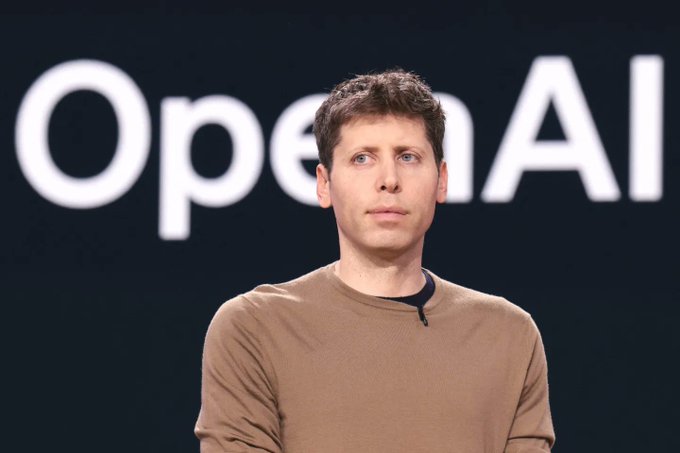
In January 2025, Sam Altman made two claims that were easy to turn into a dramatic headline: OpenAI was “confident” it knew how to build AGI as traditionally understood, and AI agents might begin to “join the workforce” during 2025.
The old Robius article treated that as something close to a roadmap. It was not. It was a prediction and a statement of confidence from OpenAI’s CEO.
By 2026, OpenAI’s public milestones have become more concrete and therefore easier to evaluate.
The 2025 claim was broad
Altman’s January 2025 “Reflections” post said OpenAI believed the first AI agents could join the workforce and materially change company output. He also said the company was turning its attention beyond AGI toward superintelligence.
Those statements did not define a test that an outside observer could use to declare AGI achieved. “Join the workforce” can describe anything from an agent handling a bounded software task to a system performing most of a human job with little supervision.
OpenAI’s 2026 target is narrower
On September 6, 2026, OpenAI said it had reached its internal goal of an automated research intern. The company defined that as a system able to carry out well-defined research tasks under human direction, including tasks that could take a skilled researcher a few days.
That is a much more useful claim than simply saying “AGI is near.” It specifies the kind of work, the level of supervision and the approximate human effort being compared.
OpenAI says its next goal is an automated AI researcher working under human supervision, with a target of March 2028. That remains a company target, not a completed capability.
The company structure changed too
The old article described OpenAI as shifting toward a for-profit model. That wording is now incomplete.
OpenAI completed a recapitalization in October 2025. The OpenAI Foundation, its nonprofit, remains in control of the for-profit business. The for-profit is now OpenAI Group PBC, a public benefit corporation.
That does not settle the broader debate about incentives, governance or concentration of power. It does mean the current legal structure is more specific than “OpenAI became for-profit.”
OpenAI’s current plan
In June 2026, OpenAI described three main goals: build an automated AI researcher, accelerate economic and scientific progress, and make what it calls a “personal AGI” broadly available.
The same plan says powerful systems should remain steerable, accountable and connected to human control. Those are OpenAI’s stated goals and design principles. They are not guarantees about how future systems will behave or how broadly the benefits will actually be distributed.
The Robius takeaway
AGI is still a slippery headline because definitions move and organizations use the term differently.
A better way to track progress is to ask what tasks the system can complete, how long those tasks take a skilled human, how much supervision is required, what failure modes remain and whether the capability is deployed outside a controlled environment.
“Automated research intern” gives us something measurable. “Superintelligence is coming” does not.
Source: Sam Altman, Reflections, January 2025 — https://blog.samaltman.com/reflections
Source: OpenAI, Built to benefit everyone, October 28, 2025 — https://openai.com/index/built-to-benefit-everyone/
Source: OpenAI, Built to benefit everyone: our plan, June 8, 2026 — https://openai.com/index/built-to-benefit-everyone-our-plan/
Source: OpenAI, Research acceleration: The view inside OpenAI, September 6, 2026 — https://openai.com/index/research-acceleration-view-inside-openai/
Robius.news — Dubai, UAE — 2026 | Built to be first. Built to be trusted.