
Malaysia’s Digital Asset Innovation Hub is no longer just a policy discussion.
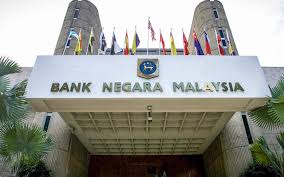
Bank Negara Malaysia established the hub in June 2025 as a controlled environment for testing digital-asset and blockchain use cases. By 2026, it had moved into concrete pilots involving ringgit stablecoins and tokenized deposits.
What is being tested?
Bank Negara said three initiatives had been onboarded for 2026. Standard Chartered Malaysia and Capital A are exploring ringgit stablecoins for business-to-business settlement. Maybank is testing tokenized deposits for payments. CIMB is testing tokenized deposits for settlement of tokenized securities.
Those pilots focus mainly on wholesale and institutional use cases, including domestic and cross-border settlement.
A sandbox is not a license
This is the part consumers should not skip. Admission to the Digital Asset Innovation Hub does not mean Bank Negara has approved a product for unrestricted public sale.
The hub is a controlled testing and co-creation environment. Bank Negara says participants still need to comply with applicable rules, including anti-money-laundering requirements, foreign-exchange policies and other regulatory expectations.
Why the pilots matter
The important shift is from “tokenization might improve finance” to specific experiments with tokenized money and settlement.
Those experiments can help regulators answer practical questions about who issues the token, what backs it, how redemption works, how settlement finality is handled, what happens during a failure and which legal rights a holder actually has.
The Robius takeaway: when a central bank launches an innovation hub, the headline is not “crypto approved.” The useful question is what is being tested, by whom, under which controls, and whether the pilot ever becomes a production service.
Primary sources: Bank Negara Malaysia Digital Asset Innovation Hub; BNM 2026 pilot update.
Robius.news — Dubai, UAE — 2026 | Built to be first. Built to be trusted.