 UAE, UNFILTERED
Al Ansari Is Testing Voice AI in Its App. The Real Boundary Is When the AI Can Move Money
Al Ansari Exchange is testing voice AI in its mobile app and exploring agentic AI. In a regulated remittance business, the important boundary is between helping a customer…
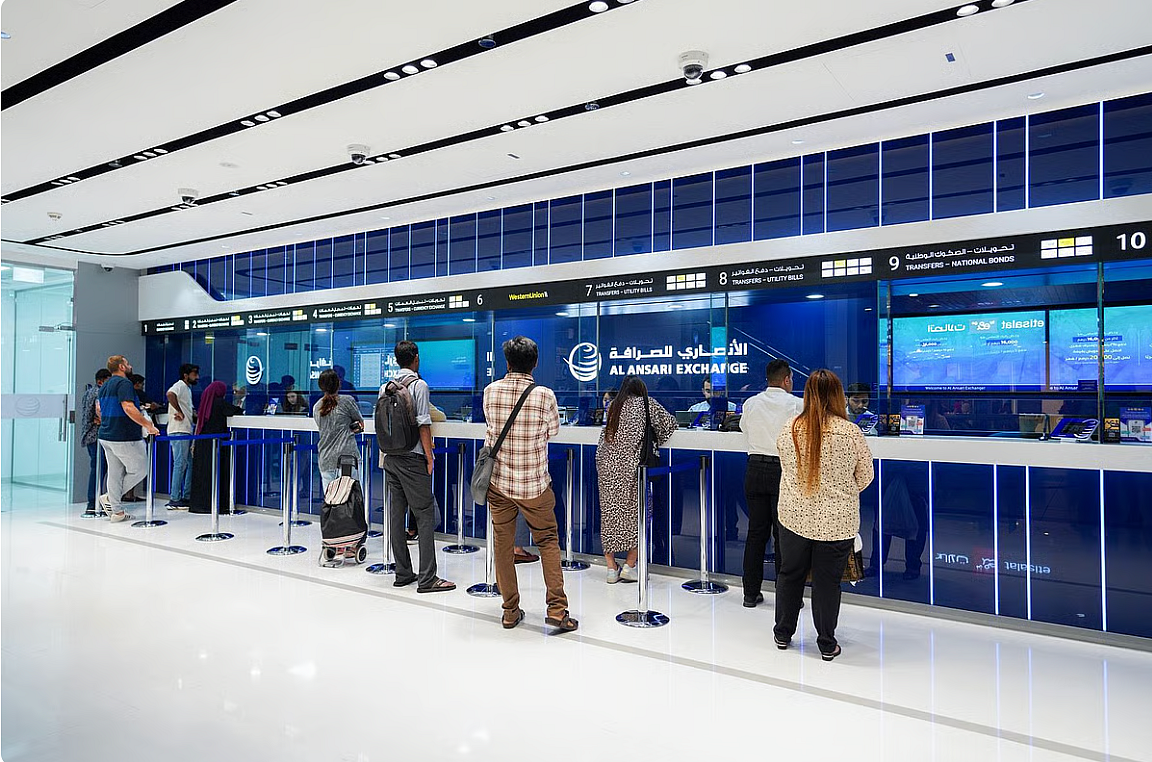
Voice AI is moving into a regulated remittance app, where the boundary between helping a customer and acting on their behalf has direct financial consequences.
UAE remittance customers, fintech teams, compliance officers, banks, payment providers and businesses deploying AI into regulated financial workflows.
Al Ansari has not disclosed autonomous transaction execution, model provider, data-retention rules or the specific permissions future agentic AI may receive.
Watch whether the company expands AI from assistance into transaction preparation, compliance workflows or customer-approved financial actions.
Treat financial AI by permission level. Ask whether it is informing, recommending, preparing or actually executing a financial action.
Al Ansari Exchange is testing voice AI inside its mobile app.
That sounds straightforward.
A customer speaks. The app helps them navigate services and complete routine tasks.
The more interesting part is what comes next.
Al Ansari Financial Services says voice AI is a stepping stone toward more advanced applications, including agentic AI.
In a remittance business, that changes the governance question immediately.
Voice assistance and financial agency are not the same thing
A voice interface can help a customer find a service, understand a process or move through a menu.
An agent can potentially do more.
It can interpret an instruction, access account information, select a destination, prepare a transaction or trigger another workflow.
The closer the system gets to moving money, changing customer records or making a compliance decision, the less acceptable it becomes to blur assistance and action.
Al Ansari says the current focus is routine support
The company says voice AI has been implemented in its app to help customers navigate services and complete routine tasks more easily.
It also says customers should still have access to human customer service when personal assistance is needed.
That is the right boundary for an early deployment.
The company has not said that the AI can autonomously approve or execute remittances.
It has not said that the system can bypass normal verification, compliance or payment controls.
The regulated-finance layer is where this gets serious
Al Ansari operates inside a regulated financial environment.
That means any future agentic system would have to coexist with requirements around customer identification, sanctions screening, anti-money-laundering controls, transaction monitoring and record keeping.
An agent that makes a process faster cannot simply remove those controls.
The better design is to automate low-risk steps while preserving auditable approval points around higher-risk actions.
Compliance is also one of the areas Al Ansari is evaluating
Al Ansari Financial Services says it is assessing how AI could accelerate internal processes, including compliance functions.
That could be useful.
Compliance teams deal with large volumes of customer records, transaction alerts and repetitive review work.
AI can help prioritise, summarise and surface patterns.
But a model that flags a customer is not the same as a human investigator concluding that the customer should be blocked or reported.
The difference should remain explicit.
Dubai is deliberately pushing companies toward agentic AI
Al Ansari is one of 11 Dubai-based companies that pledged to integrate agentic AI into their operations under a programme supported by Dubai Chambers.
The group also includes Emirates, DP World, Dubai Islamic Bank, Aster DM Healthcare and others.
Robius previously examined Dubai’s wider push to train companies in agentic AI. The harder part was never the training. It was deciding which workflows should actually be delegated and who remains accountable when an agent acts.
Remittances create a clear permission hierarchy
A useful way to think about financial agents is by permission level.
- Level 1: explain services and answer questions.
- Level 2: prepare information, calculate fees or pre-fill a transaction.
- Level 3: recommend a route, provider or transfer option.
- Level 4: submit a transaction after explicit customer confirmation.
- Level 5: initiate or execute transactions autonomously under standing rules.
Each level requires more trust, stronger logging and clearer recovery if something goes wrong.
The customer should always know when the AI is only suggesting
Financial interfaces can become confusing when an assistant speaks confidently.
A customer may interpret a recommendation as an official instruction.
That makes wording important.
The system should distinguish between:
- information;
- recommendation;
- required regulatory action;
- customer-approved transaction;
- automated internal workflow.
Digital growth gives Al Ansari a reason to test this now
Al Ansari says digital channels accounted for 27% of the total value of remittances in 2025, up from 23% in 2024.
That gives the company a growing digital customer base on which new assistance tools can have meaningful impact.
It also means mistakes can scale quickly.
A feature that confuses one branch customer affects one interaction. A bad automated decision inside an app can affect thousands.
Dubai’s cashless shift raises the stakes
Dubai’s cashless transactions index has now reached 90.1%.
That does not mean cash has disappeared, but it does mean more financial activity is moving through digital channels.
As digital payments become normal, the customer interface becomes part of the control environment.
Robius’s analysis of the government-bill discount scam showed why legitimate payment channels can still sit inside a fraudulent chain. Secure transactions require more than a genuine app or portal.
What Al Ansari has not said yet
The company has not published a detailed feature list for the voice AI system.
It has not disclosed the underlying model provider, which data the assistant can access, whether conversations are retained, or what future agentic permissions are being considered.
It also has not announced autonomous remittance execution.
Those are the details Robius would want before treating this as more than a voice-assistance deployment.
The Robius Read
Voice AI inside a remittance app is not especially radical.
Agentic AI inside a remittance business could be.
The important design boundary is simple: the more directly an AI system can affect money, customer identity or compliance status, the more explicit its permissions and human controls need to become.
For Al Ansari, the strongest version of this strategy would make low-risk tasks easier while keeping high-impact financial actions visible, confirmable and reversible.
Sources
- Al Ansari Exchange: Voice AI and agentic AI testing, 15 October 2026
- Emirates News Agency: Al Ansari Exchange tests AI in mobile app, 15 October 2026
Checked 19 October 2026. Al Ansari has disclosed voice AI testing and interest in agentic AI, but has not announced autonomous transaction execution.
Robius.news | Dubai, UAE | 2026 | Built to be first. Built to be trusted.