 UAE, UNFILTERED
Dubai Is Testing Driverless Pods at Bluewaters. The Four-Week Trial Has to Prove More Than the Technology
Dubai has started a four-week Glydways trial at Bluewaters. The real test is whether small autonomous pods on dedicated guideways can solve first and last-mile travel at lower…
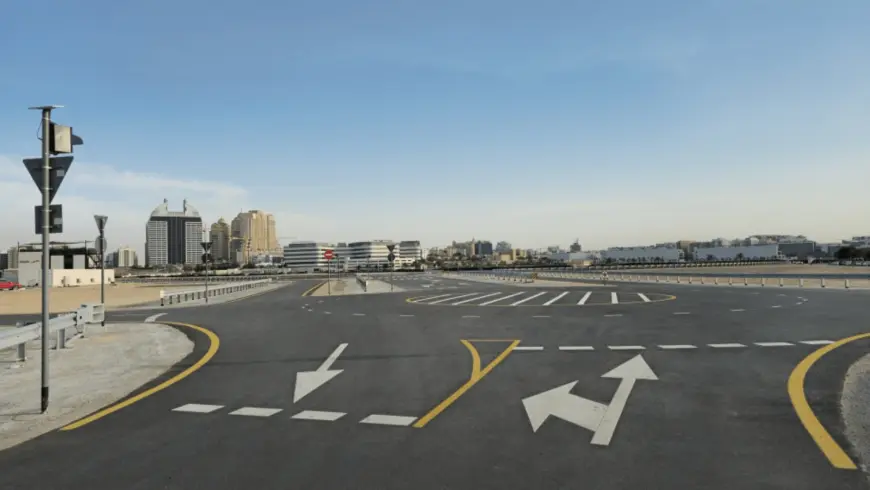
Glydways tests a different autonomous-mobility model: small driverless vehicles on dedicated guideways rather than autonomous cars mixing with normal traffic.
Dubai commuters, transport planners, property developers, autonomous-mobility companies and investors in first and last-mile infrastructure.
The 20,000-passenger capacity and major cost-saving claims are network-level projections. A four-week Bluewaters pilot does not prove citywide economics or scalability.
RTA will assess safety, reliability, journey time, autonomous-driving readiness, passenger experience and operational efficiency before considering wider routes.
Treat proposed routes and cost claims as hypotheses until RTA publishes trial results and approves a wider network.
Dubai has moved Glydways from an agreement into a live four-week trial at Bluewaters.
The vehicles are small, autonomous and electric. They carry four to six passengers, travel on dedicated guideways and can operate at speeds of up to 50km/h.
That is the visible technology.
The harder question is whether the system can solve a transport problem Dubai already knows well: how to move people between major public-transport nodes and the places they actually want to reach without building another heavy rail line or adding more cars to the road.
This is not another robotaxi test
Glydways looks superficially similar to a driverless taxi because passengers sit in a small autonomous vehicle.
The operating model is different.
The vehicles do not mix with normal road traffic. They run on narrow dedicated guideways that can be built at ground level or elevated. The system is designed for direct, on-demand trips rather than a conventional bus route with fixed stops and timetables.
That distinction matters because Dubai is testing several autonomous mobility models at the same time. Robius has also tracked Momenta’s interest in Dubai’s already crowded robotaxi market, where the challenge is autonomy on normal roads rather than dedicated infrastructure.
Robius recently examined Dubai Mobility Labs and its 248-scenario test programme for driverless vehicles. Those tests focus on autonomous vehicles operating in road environments. Glydways is testing a dedicated-network model where the infrastructure is designed around the vehicle.
The first and last mile is the real target
RTA has repeatedly framed Glydways as a first and last-mile solution.
That problem is simple to describe and expensive to solve.
A Metro station can be close to a destination on a map but still feel inconvenient if the final kilometre requires a taxi, a long outdoor walk, a shuttle or a private car.
Dedicated pod systems try to fill that gap without requiring the capacity or cost of a full rail line.
RTA has previously studied a 2.8km route linking National Paints Metro Station with Bluewaters, as well as connections serving Jumeirah Village Circle, Dubai Festival City, Business Bay and Mohammed Bin Rashid City.
Those remain proposed routes. The Bluewaters trial is not confirmation that the wider network has been approved.
The capacity claim needs context
RTA says the system can transport more than 20,000 passengers per hour in both directions.
That number is based on the network operating multiple small vehicles at very short headways, including virtual platoons of more than 10 vehicles with intervals of less than one second.
It should not be read as the capacity of one pod or one short Bluewaters test track.
The useful question is whether that theoretical network capacity can be sustained safely while vehicles merge, stop, board passengers and recover from faults.
The cost claim is even more important
RTA says Glydways could reduce capital costs by up to 90% and operating costs by up to 70% compared with other transport modes.
Those are potentially transformative claims.
They are also broad claims.
RTA has not published a Dubai-specific cost comparison showing which transport modes are being used as the benchmark, what land and guideway costs are included, or how maintenance, control systems and stations are treated.
The four-week pilot will not answer every cost question, but it should provide better evidence about the operational assumptions behind them.
What the four-week trial should measure
RTA says the pilot will assess safety, reliability, journey time, autonomous-driving readiness, communication and control systems, passenger experience and operational efficiency.
For Robius, the most useful evidence would include:
- average journey time and variance;
- vehicle availability;
- service interruptions and recovery time;
- boarding and dwell time;
- passenger wait time;
- how the system handles disabled vehicles or blocked guideways;
- energy consumption per passenger journey;
- performance under heat, dust and heavy visitor demand.
Dedicated infrastructure is both the strength and the trade-off
Keeping the pods away from normal traffic removes many of the hardest problems facing robotaxis.
The vehicle does not have to negotiate every lane change, delivery truck, unpredictable pedestrian or aggressive driver on a normal Dubai road.
But the dedicated guideway creates another requirement: infrastructure has to be built wherever the service goes.
That makes route selection critical.
A system can be technologically excellent and still fail economically if guideways are expensive to place, difficult to integrate into dense areas or serve corridors without enough demand.
Bluewaters is a controlled place to test, not proof of citywide readiness
Bluewaters offers a relatively contained environment with predictable destinations, heavy visitor traffic and a clear need for short-distance movement.
That makes it a sensible pilot location.
It also means results should not be overgeneralised.
Operating a pod system at Bluewaters is different from running one through Business Bay, across complex junctions or beside major Metro interchanges.
The next evidence should therefore come from increasingly difficult operating environments, not simply a longer version of the same demonstration.
The Robius Read
Glydways is interesting because it sits between two familiar transport models.
It is more flexible than fixed rail, but more infrastructure-dependent than a robotaxi.
The four-week Bluewaters trial should therefore be judged on a practical question: does dedicated autonomy create enough reliability and cost advantage to justify building guideways through the places where first and last-mile demand is strongest?
If the answer is yes, Dubai may have another transport layer to integrate with Metro and bus networks. For residents, that would sit alongside the transport functions already concentrated in the RTA Dubai app and wider mobility stack.
If the answer is no, the trial will still be useful because it will show where the economics or infrastructure assumptions break.
Sources
- The National: Dubai launches four-week Glydways trial at Bluewaters, 11 October 2026
- RTA: Glydways automated transit network agreement and proposed routes
Checked 12 October 2026. The Bluewaters trial is active, but proposed wider routes remain under study.
Robius.news | Dubai, UAE | 2026 | Built to be first. Built to be trusted.