 UAE, UNFILTERED
Dubai Replaced Its App Championship With AI Agents. That Shift Is the Story
Dubai has replaced the Create Apps Championship with a global AI Agents competition. The change says more about where software is heading than the AED2.5 million prize pool.
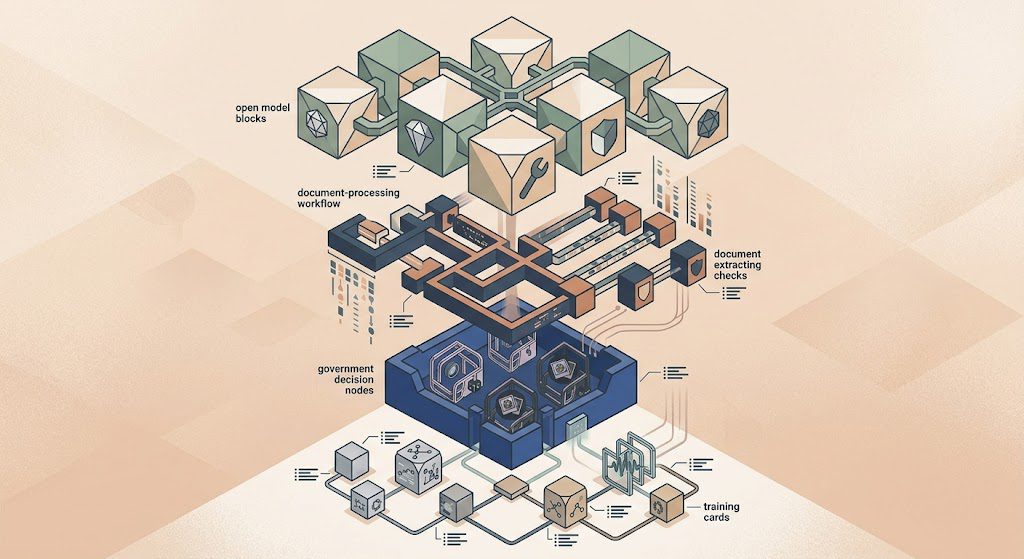
Dubai is shifting its innovation programme from interfaces people click to agents that can perform parts of a workflow on their behalf.
UAE founders, developers, SMEs, government-service teams, students and investors following agentic AI.
Agent demos can hide reliability, permission and governance problems. The real test begins when systems act on live data and real users.
Registration closes in December 2026, followed by prototype submissions, judging and the harder question of which finalists reach real deployment.
Judge agent products by the actions they can take, the permissions they require, their failure handling and whether users can understand and reverse decisions.
Dubai has replaced its app-development championship with an AI-agents championship.
The prize pool is more than AED2.5 million.
That is not the most interesting number.
The bigger signal is that a programme built around making apps is now being rebuilt around autonomous systems that can complete tasks, make decisions within a workflow and potentially act on a user’s behalf.
The old competition had already proved the app model
The Create Apps Championship was not a small experiment.
Across three editions, it attracted 15,564 applications from 153 countries, contributed to the development of 1,700 prototypes and supported the launch of more than 140 applications.
The third edition alone drew 9,754 entries.
Dubai could have simply run a fourth edition.
Instead, it changed the object being built.
Apps organise actions. Agents can perform them
An app normally gives the user an interface for completing a task. The user opens it, chooses what to do and moves through the steps.
An AI agent can work differently. It can interpret a goal, break it into smaller tasks, use tools or data and continue through a workflow with less direct instruction.
That does not make every agent autonomous in the science-fiction sense. Most useful systems will operate inside defined permissions and constraints.
But the interaction model changes. The software is no longer only waiting for clicks.
Dubai is making the same shift inside government
The competition is not happening in isolation.
Dubai Future Foundation has also launched an Agentic AI for Government Services Accelerator involving Dubai Centre for Artificial Intelligence, Digital Dubai and Dubai Electronic Security Center.
The programme is designed to help government entities prototype and deploy agentic services around real public-service challenges.
Robius explained the resident-level implications earlier in our guide to agentic AI in UAE government services. The core change is that software can begin managing parts of the process rather than simply displaying the process to the user.
The championship is designed around problems, not demos
The new Create AI Agents Championship is open to technical and non-technical participants, with no minimum age requirement. Entrants can submit an idea, prototype or early-stage minimum viable product. Existing businesses can enter a new agent capability, but fully commercialised products are not eligible.
Participants compete across four categories:
- Societal AI Agent;
- Personal AI Agent;
- Business AI Agent;
- Youth AI Agent.
Each category winner receives AED550,000. One of the four also receives the AI Agent of the Year title and AED1 million.
Registration closes in December 2026. Entrants must submit a working prototype, pitch deck and demo video.
What changed from the app era
The programme description places unusual emphasis on three things: identifying a priority problem, testing the impact of the proposed agent and exploring whether it can become a scalable product or service.
That is important because “AI agent” has become an easy label to attach to ordinary automation.
A useful competition should force teams to answer harder questions:
- What decision can the agent make?
- What tools can it access?
- What happens when it is uncertain?
- Which actions require human approval?
- How is success measured beyond a demo?
Dubai is also trying to build the user base around agentic AI
Robius previously examined Dubai’s plan to train 14,000 companies in agentic AI.
Training, competitions and government deployment programmes now point in the same direction. Dubai is not treating agents only as a technology category. It is trying to build developers, companies and public-sector use cases around them at the same time.
The harder problem starts after the prototype
Apps can fail visibly. A button does not work, a page crashes or a service is unavailable.
Agents can fail more subtly. They can misunderstand a goal, choose the wrong tool, act on outdated information or complete a task correctly but for the wrong reason.
That makes governance part of product design.
Dubai’s government accelerator says opportunities will be assessed through readiness, governance, security and integration requirements. The competition will need the same seriousness if winning prototypes are expected to become real products.
What should we watch after the awards
The competition will be easy to judge superficially by entries, prize money and polished demos.
The more useful measures will come later:
- how many finalists become operating companies;
- how many agents are deployed with real customers;
- how much human work they actually remove;
- how often they require correction or escalation;
- whether users understand what the agent is allowed to do.
The Robius Read
Dubai replacing an app competition with an AI-agent competition is a small institutional decision with a larger message behind it.
The previous software model was built around interfaces. The next one is being built around delegated action.
The interesting question is not whether Dubai can produce thousands of agent prototypes. Its app programme already proved it can attract developers at scale.
The harder test is whether those agents can move from impressive demos into trusted systems that do useful work without hiding complexity from the user.
Sources
- Emirates News Agency: launch of the Create AI Agents Championship
- Dubai Future Foundation: Agentic AI for Government Services Accelerator
- Dubai Future Foundation: agentic AI accelerator deployment framework
Checked 9 October 2026. Registration for the Create AI Agents Championship is open, with submissions due in December 2026.
Robius.news | Dubai, UAE | 2026 | Built to be first. Built to be trusted.