 UAE, UNFILTERED
The UAE’s New Cyber Resilience Centre Is Not Supposed to Be a Showroom
The UAE Cyber Security Council and SCC Middle East are building a Centre of Excellence around practical testing, specialist capability and UAE-made cyber technology. The useful part is…
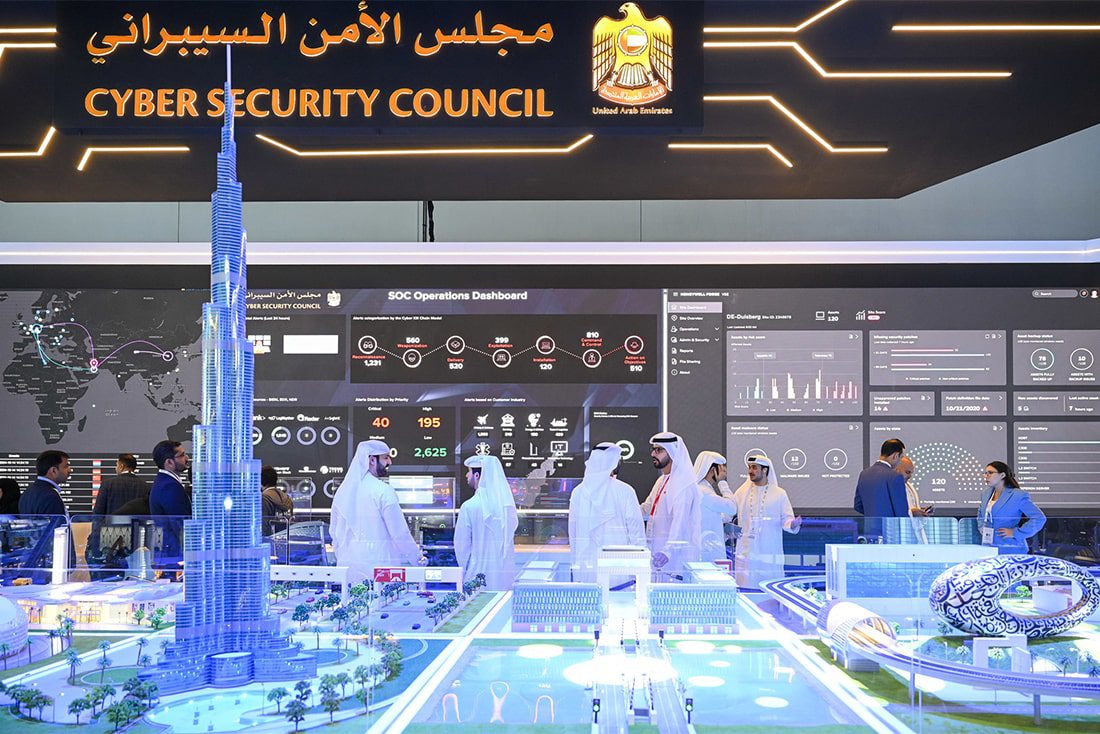
The centre is designed around testing and deployment, not just showcasing technology, which addresses a common gap between cyber products and real operational environments.
UAE government entities, critical-infrastructure operators, enterprise security teams, cyber startups and technology vendors.
No opening date, budget, participant list or programme capacity has been disclosed yet. The value will depend on actual labs, customers and deployed outcomes.
Watch for the centre’s location, launch date, first lab programmes, incubated companies and technologies that move from testing into production.
Treat the centre as an evidence opportunity: look for published validation results, live use cases and named deployments rather than partnership announcements alone.
The UAE is getting another cybersecurity centre.
The interesting part is that the people behind it are explicitly saying it should not become a showroom.
The UAE Cyber Security Council and SCC Middle East have announced plans for a Centre of Excellence for Cyber Resilience and Trusted Technology. The centre is intended to bring government entities, enterprises, technology partners and specialists into one environment where emerging technologies can be tested against real operational requirements.
The centre has three jobs
The programme is structured in three phases.
Phase one focuses on national capability: executive learning, practical labs and specialist development across AI, cloud, data, cybersecurity and critical national infrastructure.
Phase two is an incubator for UAE-developed cyber technology, where local companies can test and validate products against real-world requirements.
Phase three is commercial: selected technologies are intended to connect with international customers, ecosystems and market opportunities.
That sequence matters because it links skills, validation and deployment instead of treating them as separate programmes.
The hard part is not finding technology
SCC Middle East CEO Daniel Valle described the problem clearly in the launch announcement: there is no shortage of technology. The harder question is how to prove that the right technologies work in the environment where they will actually be used.
That is an important distinction for the UAE.
The country already has a dense cybersecurity market, government programmes, international vendors and a growing number of local technology companies. The bottleneck is often evidence. A government entity or critical-infrastructure operator needs to know whether a product works under realistic conditions, how it integrates with existing systems and what happens when something fails.
A serious centre should make those questions testable.
This fits a wider shift from cyber products to cyber infrastructure
Robius has been tracking a broader UAE trend: security is moving deeper into the infrastructure layer.
When e& UAE placed managed hosting behind its NOC and SOC, the interesting part was not simply the hosting product. It was the attempt to combine local infrastructure, monitoring and operational control.
Our analysis of Rannah, the UAE-hosted secure-communications prototype, showed the same demand from another angle: sensitive digital systems increasingly need evidence of where data is handled, how communications are protected and who controls the operating environment.
The new Centre of Excellence sits in that same space. Its value will depend on whether it can help organisations test those claims before technologies reach production.
Testing matters more as AI enters critical systems
The centre’s scope includes AI, cloud, data and critical national infrastructure rather than treating cybersecurity as a standalone discipline.
That matters because the UAE is adding more connected systems at the same time that its threat profile is rising.
Microsoft’s 2026 Digital Defense Report placed the UAE among the world’s most targeted countries for cyber activity. Robius recently examined why the UAE’s rising cyber exposure still often comes back to familiar weaknesses such as identity, exposed systems, known vulnerabilities and weak authentication.
A new AI system does not remove those weaknesses. It can create more identities, integrations, data flows and dependencies that need to be secured.
The startup layer could be the differentiator
Phase two is potentially the most distinctive part of the centre.
Cybersecurity startups often face a credibility problem. Large organisations want evidence that a product works in a realistic environment before trusting it with sensitive systems, but the startup needs access to those environments to build the evidence.
A credible test-and-validation layer could shorten that gap.
The strongest outcome would be more than a certificate or demo day. It would be a documented path from lab test to pilot, from pilot to production, and from local deployment to an exportable reference case.
What should count as evidence
The centre has not yet published a validation framework. When it does, Robius will be looking for more than participation numbers.
Useful evidence would include:
- named technologies entering the labs;
- clear test criteria;
- realistic operational scenarios;
- documented security or resilience findings;
- named pilots with government or enterprise customers;
- technologies that progress into production use;
- export or international customer outcomes from the third phase.
Those measures would tell us whether the centre is reducing the gap between innovation and trusted deployment.
What still needs proof
The announcement does not yet include a launch date, location, budget, participating government entities, lab capacity or the first companies entering the programme.
There is also no published framework for how technologies will be assessed or what level of validation a company must achieve before being introduced to international customers.
Those omissions do not make the initiative weak. They define the evidence that should come next.
The Robius Read
The UAE does not need another room full of cybersecurity demos.
It needs places where technologies can fail safely, prove what they can do and build evidence before they reach critical systems.
If this Centre of Excellence delivers that, the important output will not be how many companies participate.
It will be how many technologies move from lab testing into trusted production use, with enough evidence behind them that a buyer can understand why they should be trusted.
Sources
- Emirates News Agency: UAE Cyber Security Council and SCC Middle East announce Centre of Excellence, 6 October 2026
- Microsoft: Digital Defense Report 2026
Checked 7 October 2026. The centre has been announced, but its launch date, budget, location, validation framework and first participants have not yet been disclosed.
Robius.news | Dubai, UAE | 2026 | Built to be first. Built to be trusted.