

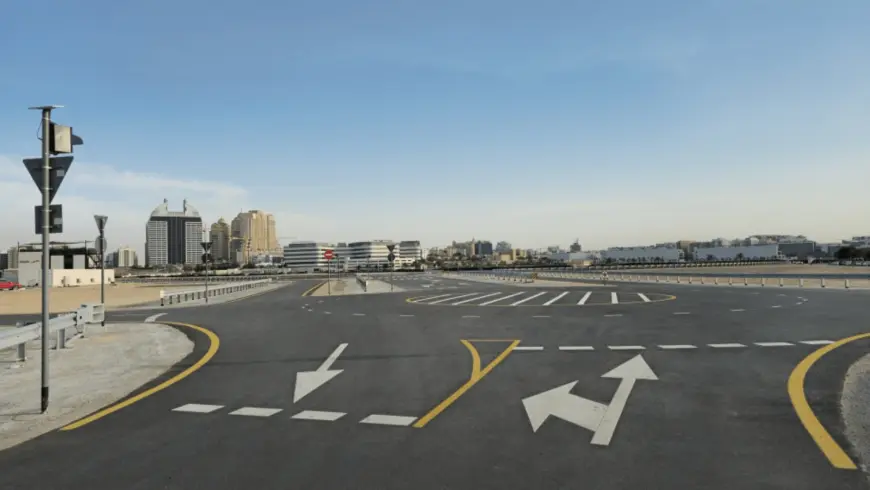
Dubai has opened a dedicated proving ground for autonomous vehicles at Dubai Silicon Oasis, giving self-driving systems a place to fail safely before they are allowed to fail on a public road.
That distinction is what makes Dubai Mobility Labs more important than another robotaxi announcement. The new facility combines controlled tracks with a public-road testing route towards Al Qudra and supports 248 test scenarios. RTA says systems from WeRide, Pony.ai and Tesla have already been tested there. But the launch does not mean those vehicles are automatically approved for commercial passenger service across Dubai. Testing, validation, certification and operational permission remain separate stages.
Dubai now has dedicated local infrastructure for controlled and open-road autonomous-vehicle validation before wider deployment.
UAE mobility operators, autonomous-driving developers, transport investors, technology suppliers and residents tracking robotaxi deployment.
A local proving ground can reduce testing friction and strengthen Dubai as a regional validation base for autonomous mobility.
Passing defined scenarios cannot reproduce every real-world edge case, and testing or certification does not by itself equal unrestricted commercial approval.
RTA, DEKRA and developers can use the facility to test, validate and certify systems before broader road deployment decisions.
Treat testing at Dubai Mobility Labs as evidence of validation activity, not proof of commercial operating approval.
Which systems progress from proving-ground tests to public-road permission, commercial operations and disclosed safety performance.
For residents and mobility companies, the practical change is infrastructure: Dubai now has a local environment designed to examine how autonomous systems sense, decide and respond before wider deployment. The next evidence to watch is not how many brands visit the site, but which systems graduate from testing into regulator-approved operations, under what conditions, and with what safety record.
Dubai Mobility Labs adds the missing layer between a demo and a deployment
Autonomous-vehicle headlines tend to compress several very different stages into one word: “testing.” A vehicle driving around a closed course is not the same as a vehicle operating on public roads, and neither is the same as a commercial service carrying paying passengers.
Dubai Mobility Labs is designed to connect those stages more systematically. According to RTA and Dubai Integrated Economic Zones Authority, the facility at Dubai Silicon Oasis includes dedicated test tracks, a multi-purpose testing area and access to real-world testing on public roads extending towards Al Qudra. The full ecosystem covers 248 scenarios.
Of those, 195 can be run in the multi-purpose area. RTA says 143 scenarios were included in the core design and another 52 were added later. They are intended to test functions such as environmental sensing, automated decision-making, interaction with other road users and responses to changing traffic or surrounding conditions.
That matters because Dubai is no longer starting from zero. Robius has already covered how driverless taxi services have moved from pilots into real passenger operations in Dubai. A permanent proving ground gives the regulator and developers a repeatable place to test the next vehicle, software version or operating model before expanding it onto the road network.
What 248 scenarios can tell Dubai — and what they cannot
A controlled proving ground is useful precisely because developers can recreate difficult situations instead of waiting for them to happen by chance. Junction behaviour, pedestrian crossings, lane changes, obstacles, road markings and changing traffic conditions can be repeated until engineers have enough evidence to understand how a system behaves.
The facility also includes three supporting light-industrial units and three 60 kW electric-vehicle chargers, according to RTA. Those details sound minor next to the autonomous-driving pitch, but they show the site is intended as an operating test environment rather than a ceremonial track.
There is still an important limit. Passing a defined test scenario does not prove that an autonomous vehicle can handle every edge case on Dubai’s roads. Real streets contain combinations of human behaviour, weather, construction, unusual vehicles and ambiguous situations that are difficult to reproduce exhaustively. That is why the public-road component matters — and why public-road testing itself still should not be confused with unrestricted commercial approval.
The strongest interpretation of the new lab is therefore not “Dubai has solved autonomous driving.” It is that Dubai is building a more formal evidence pipeline for deciding when autonomous-driving technology is ready to move to the next stage.
DEKRA’s role makes this more than an RTA test track
RTA has appointed Germany-based testing and inspection group DEKRA to operate Dubai Mobility Labs for its first three years. DEKRA separately describes the site as its fifth proving-ground location globally and says the Dubai facility extends its ability to validate advanced driver-assistance and autonomous-driving systems under extreme climate conditions.
That external operating role is useful because autonomous mobility needs more than a willing city and ambitious vendors. It needs repeatable test methods, documented procedures and evidence that can be compared across systems.
It also creates a commercial proposition for Dubai Silicon Oasis. Vehicle manufacturers, autonomy developers, startups and research teams can potentially use the emirate not only as a launch market but as a validation environment. That fits a wider Dubai pattern: the emirate has increasingly paired technology adoption with controlled testing and regulatory infrastructure. The recently launched construction-technology regulatory sandbox applies a similar logic in a different sector — test emerging systems against real requirements before changing the rulebook or scaling deployment.
The 25% target needs careful reading
RTA links the new facility to Dubai’s Smart Self-Driving Transport Strategy, which targets 25% of mobility journeys in the emirate being autonomous by 2030. That is a policy target, not a claim that one quarter of private cars will be driverless.
The distinction matters because autonomous mobility in Dubai includes multiple transport modes. The Dubai Metro has long operated without onboard drivers, while road-based autonomy is now expanding through taxis and other vehicle programmes. The UAE Government’s strategy page also frames the target across transportation rather than private-car ownership alone.
For consumers, the more immediate question is what the testing infrastructure does to the pace of road deployments. Competition is already forming among autonomy providers, as Robius examined in its UAE robotaxi market analysis. A local proving ground can reduce logistical friction for testing, but it does not eliminate the regulator’s responsibility to decide where, when and how a system can operate.
That is also why RTA’s claim that the facility is the “smartest integrated ground-testing” site of its kind in the Middle East should be treated as RTA’s characterisation, not an independently established regional ranking. Robius found no published comparative methodology that would allow that superlative to be independently verified.
Dubai’s road strategy is becoming a technology strategy
Dubai’s transport build-out is happening on two tracks at once. One is physical capacity: new corridors, junctions and road links. The other is a technology layer built around automation, data and new operating models.
The difference is visible when the Mobility Labs launch is read alongside Dubai’s new Fourth Corridor road programme. One project adds conventional road capacity; the other tries to establish how future vehicles will be tested before they use that network. They solve different constraints, but both affect how quickly Dubai can absorb population and mobility growth.
There is also a resident-facing digital layer. RTA increasingly mediates transport through software, from parking and licensing to journey services. Robius’s RTA Dubai app review shows how dependent everyday mobility has already become on digital infrastructure. Autonomous vehicles push that dependency further: sensing, maps, remote operations, software updates, communications and testing evidence become part of the transport system itself.
What businesses and residents should watch next
For autonomous-driving companies, the most useful signal will be whether Dubai Mobility Labs shortens the path from controlled validation to public-road permission without weakening safety scrutiny. Faster testing is valuable only if the evidence produced is good enough for regulators to make better decisions.
For investors and technology suppliers, watch who actually uses the facility beyond the three companies already named by RTA. A growing pipeline of vehicle makers, sensor suppliers, mapping companies and autonomy developers would show that the lab is becoming regional infrastructure rather than a single-city test site.
For residents, the key milestone is narrower: which tested systems receive permission to carry passengers or goods, where they can operate, whether a safety driver is required, and how incidents are reported. A vehicle appearing at Dubai Mobility Labs should not be read as confirmation that a commercial launch is imminent.
There is one more metric worth watching: operational evidence after deployment. Test scenarios can establish readiness; millions of kilometres in mixed traffic reveal reliability. RTA reported in August that its robotaxi programme had exceeded four million kilometres and recorded 7,613 passenger trips. As fleets expand, comparable disclosure on interventions, incidents, service areas and operating conditions would make it easier to judge whether Dubai’s autonomous-mobility programme is scaling safely rather than simply scaling quickly.
The Robius read
Dubai Mobility Labs is infrastructure for evidence. Its value is not the track itself, and not the list of global companies that have already driven on it. The value is whether Dubai can turn controlled testing into a credible, repeatable route towards public-road approval.
The facility gives RTA, developers and testing specialists a common environment for finding weaknesses before a system reaches residents. It also gives Dubai another lever in the competition to attract autonomous-mobility companies that need places to validate products in demanding climate and road conditions.
But the launch should not be over-read. Testing is not certification; certification is not necessarily a commercial operating licence; and a successful trial is not proof of universal safety. The useful story starts now: which systems pass, which fail, what regulators require next, and whether the resulting deployments build a safety record strong enough to justify Dubai’s 2030 ambitions.
Sources
- Government of Dubai Media Office / RTA — Dubai Mobility Labs launch, 27 September 2026
- Emirates News Agency — RTA and DIEZ launch Dubai Mobility Labs, 27 September 2026
- DEKRA — Dubai Mobility Labs proving ground and operating role
- The National — Dubai autonomous-vehicle testing facility, 27 September 2026
Checked 28 September 2026. RTA’s “smartest integrated ground-testing” description is an attributed claim; Robius found no published regional comparison methodology supporting an independent superlative.
Robius.news — Dubai, UAE — 2026 | Built to be first. Built to be trusted.