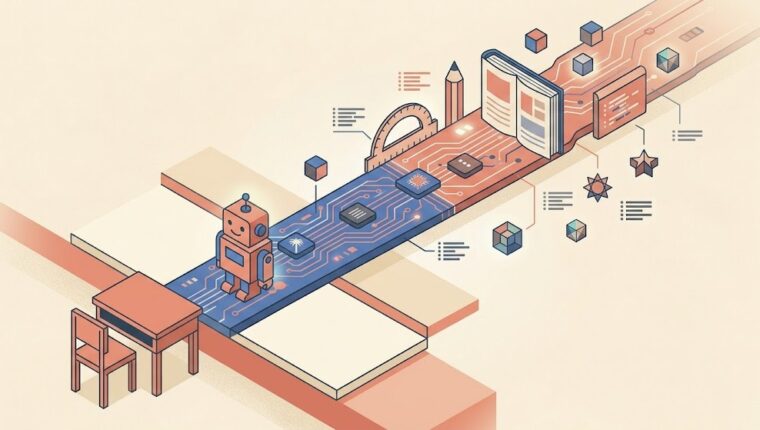

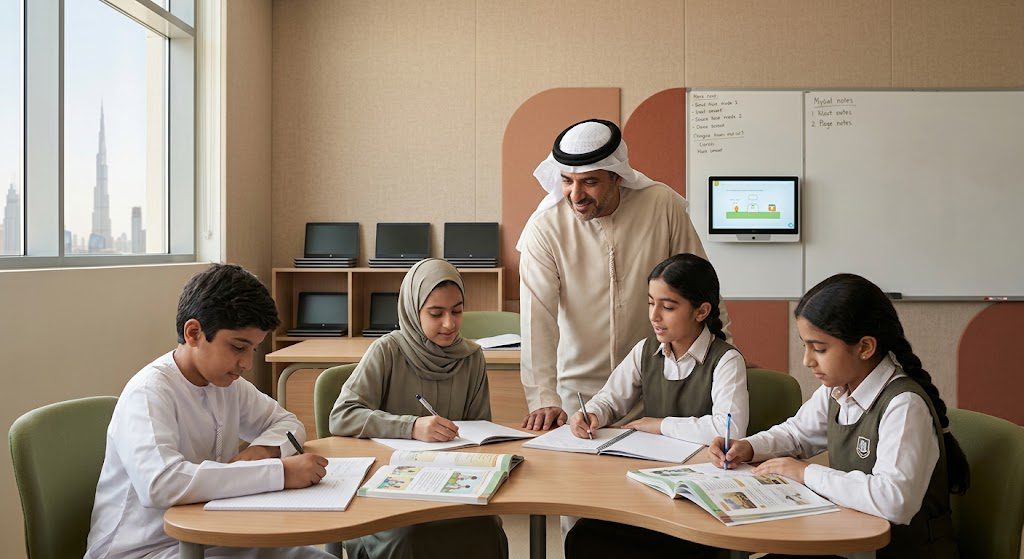
The new UAE Grade 6 laptop rules are now in force in public schools: students are arriving without their laptops from September 14.
Read that headline too quickly and it sounds like the UAE has reversed its push into digital education. It has not. The new rule is narrower: Grade 6 students in the general and advanced streams are being told to keep laptops at home during the school year under a new Guide to Reducing the Use of Digital Tools in Learning.
Grade 6 public-school students are moving away from routine laptop use in class, but digital learning still remains available for targeted home tasks. Parents need the distinction to plan correctly.
Parents and guardians of Grade 6 students in UAE public schools, teachers and families following the country's changing digital-learning rules.
The policy creates a real test of whether reducing default screen use can improve attention, discussion and written work without losing useful digital access.
Robius did not locate a centrally published Ministry copy of the new Grade 6 guide in this reporting session. Implementation details should therefore be confirmed with the student's school.
The no-laptop classroom measure starts September 14 and is reported to continue through the academic year, while teachers can still direct specific home-based digital tasks.
Keep the Grade 6 laptop at home unless the school instructs otherwise, check which subjects still require digital access and follow the school's current written communication.
Grade 6 students may benefit from more textbook, handwriting and direct classroom interaction while retaining digital tools when a learning task actually requires them.
The reported measure applies to Grade 6 students in general and advanced streams in UAE public schools. Do not assume it automatically applies to every other grade or private-school curriculum.
Watch for Ministry publication of the guide, school-level implementation details, changes for other grades and evidence on whether reduced classroom screen use improves learning outcomes.
Textbooks, notebooks, classroom discussion and direct teacher interaction take a larger role during the school day. Technology remains available as a supporting tool, including specific home-based learning tasks when teachers or subjects require it.
What the UAE Grade 6 Laptop Rules Actually Change
Public-school administrations informed parents that Grade 6 students in the general and advanced streams should no longer bring laptops to school from September 14 and for the remainder of the academic year.
Reporting on the new guide says the measure applies to Grade 6 in Cycle 2 schools and is intended to reduce routine dependence on digital devices during classroom learning.
The practical shift is visible: more use of printed textbooks, handwritten notes, class discussion and direct interaction with teachers rather than a laptop sitting open through the school day.
The Laptop Stays Home. Digital Learning Does Not Disappear
This is the important caveat. The guide does not eliminate technology from Grade 6 education.
Emirates 24|7 reports that laptops remain available at home and can be used for targeted educational tasks depending on the subject, platform and teacher instructions. Gulf News similarly reports that technology will continue to be used selectively rather than as the default classroom tool.
So “laptop ban” describes what students may bring into the classroom. It does not describe the whole learning model.
This Sits Beside the UAE’s AI Curriculum, Not Against It
The timing can look contradictory because the UAE is simultaneously expanding AI education. It recently approved implementation of the national AI curriculum across public and private schools after the earlier public-school rollout.
But our updated guide to the UAE AI curriculum already shows why those policies can coexist. Teaching students about AI, algorithms, ethics and digital systems does not require a personal laptop to be open in every lesson.
The Ministry has also been combining AI, design, innovation and computer science into a broader Artificial Intelligence and Technology subject. In our look at that curriculum change, the central question was what students actually learn and how it is assessed — not how many hours they spend looking at a screen.
The Generative-AI Rule Is Separate Again
There is another school technology rule parents should not mix into this one.
Current Ministry guidance on generative AI restricts direct use for students under 13 or below Year 7, while older students face controlled-use rules around approved tools, supervision, privacy and academic integrity. We separated those rules in our UAE school AI age-rule explainer.
The new Grade 6 device measure is about reducing routine use of digital tools during learning. The generative-AI framework is about what AI tools students may use and under what conditions. They overlap in the classroom, but they are not the same policy.
Why the Distinction Matters for Parents
A parent hearing “no laptop” needs different information from a parent hearing “no digital learning.” The first changes what goes into the school bag. The second would change the curriculum and access model.
The evidence available today supports the first interpretation for Grade 6 public-school students: the device remains at home, while digital platforms and technology can still be used for specific learning requirements.
That also means families should not assume the laptop is suddenly unnecessary. If teachers continue assigning home activities through approved platforms, the device still has a role — just a more deliberate one.
What Parents Should Check This Week
- Confirm whether your child is covered by the Grade 6 general or advanced public-school rule.
- Keep the laptop at home unless the school gives a specific instruction otherwise.
- Check which subjects still require home access to approved digital platforms.
- Ask how assignments previously completed on the device will now be handled in class.
- Do not assume rules for Grade 6 automatically apply to every other grade or every private-school curriculum.
School-level implementation notices matter here. If your school gives instructions that are more specific than a general news report, follow the current school communication and ask the administration when anything is unclear.
The Robius Layer
The UAE is not choosing between books and technology. It is changing where technology sits in the learning process for one specific grade.
For Grade 6 public-school students, the default classroom is becoming less device-dependent. The digital layer is still there when the lesson actually needs it.
That is a much more interesting education experiment than a blanket laptop ban. The thing worth watching now is whether less screen time produces better attention, stronger handwriting and discussion, or simply moves more digital work into the home.
Sources
- Gulf News, September 13, 2026: Guide to Reducing the Use of Digital Tools in Learning, Grade 6 scope and classroom changes — Gulf News
- Emirates 24|7, September 13, 2026: public-school Grade 6 implementation from September 14, general and advanced streams, and continued targeted home use — Emirates 24|7
Checked 14 September 2026. Robius did not locate a central public Ministry copy of the new Grade 6 guide in this reporting session, so school communications should be treated as the operational reference for individual families.
Robius.news — Dubai, UAE — 2026 | Built to be first. Built to be trusted.