 UAE, UNFILTERED
Banque Misr UAE Has Not Been Cut Off Yet
The phrase “cut off from the U.S. financial system” sounds final. In Banque Misr UAE’s case, it is not final yet. On August 28,…
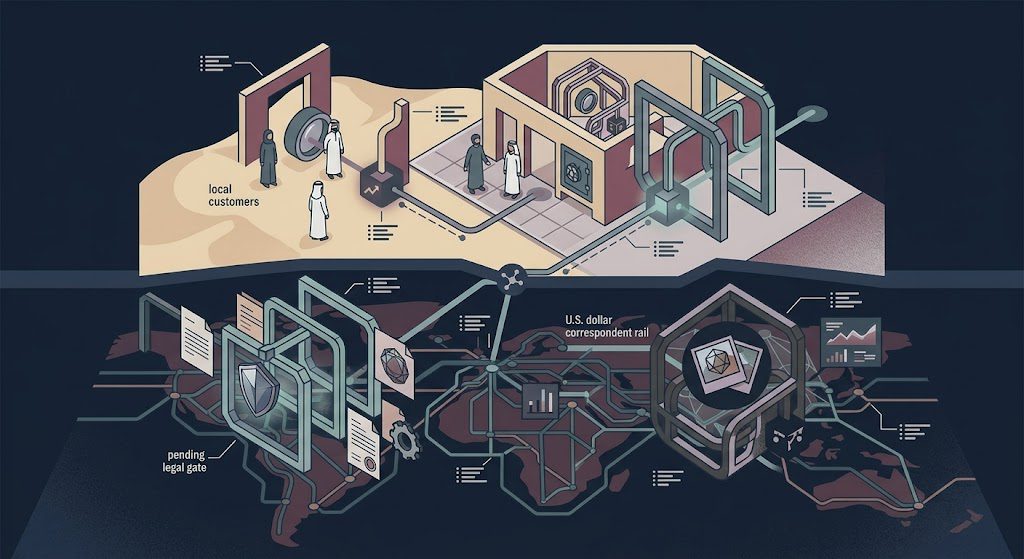
The U.S. proposal could disrupt Banque Misr UAE’s access to dollar correspondent banking, but it has not yet become a final rule.
Banque Misr UAE customers, UAE companies using the bank for dollar payments, treasury teams, importers, exporters and compliance teams.
FinCEN has made serious allegations, while Banque Misr says it is reviewing the notice and continues to serve UAE customers under current rules.
FinCEN’s proposal enters a formal comment process, while CBUAE conducts a forensic lookback and considers options if a final U.S. measure is imposed.
If you rely on Banque Misr UAE for dollar payments, ask the bank how current transfers are being handled and keep alternative settlement options documented.
The phrase “cut off from the U.S. financial system” sounds final. In Banque Misr UAE’s case, it is not final yet.
On August 28, the U.S. Financial Crimes Enforcement Network proposed a rule that would prohibit U.S. financial institutions from opening or maintaining correspondent accounts for Banque Misr UAE and require controls against indirect processing through foreign correspondent accounts. The Central Bank of the UAE responded a day later with a special and urgent examination of the bank’s UAE branches.
Those are serious steps. They are also different steps. A proposed U.S. correspondent-banking restriction is not the same thing as a final rule, a freeze of UAE customer deposits, or an immediate cancellation of a UAE banking license.
What the U.S. Actually Did
FinCEN issued a Notice of Proposed Rulemaking, or NPRM, and found Banque Misr UAE to be a financial institution operating outside the United States of primary money laundering concern. The proposed special measure would target correspondent-banking access to U.S. financial institutions.
The legal detail matters. The U.S. Treasury says the public comment period closes 30 days after the NPRM is published in the Federal Register. A proposal can become a final rule, change during the process, or fail to become final. Robius is therefore not describing Banque Misr UAE as already cut off under a completed Section 311 rule.
Treasury alleges that Banque Misr UAE processed about $1.8 billion for 103 companies linked to Iranian shadow-banking networks between January 2024 and June 2026. Those are U.S. government allegations, not findings by a UAE court or a completed CBUAE enforcement process.
What a Final Rule Would Change
If FinCEN finalizes the measure as proposed, U.S. financial institutions would be prohibited from opening or maintaining a correspondent account for Banque Misr UAE. They would also need reasonable controls designed to prevent foreign correspondent accounts from being used to process transactions involving the UAE operation.
That matters because correspondent banking is part of how a bank reaches foreign currencies and overseas financial institutions. Losing U.S. correspondent access can make dollar clearing and international settlement materially harder even when the bank continues to exist and operate in its home market.
That is why the distinction in our UAE SME bank-rules guide matters here too. A bank can remain subject to CBUAE rules while a separate foreign authority changes the rails available for cross-border transactions. Regulation is layered, not interchangeable.
CBUAE Has Opened Its Own Examination
The UAE response is not passive. CBUAE said it will conduct a special and urgent examination, including a forensic and in-depth lookback over the period referenced by the U.S. authorities, with particular focus on transactions involving companies named in the U.S. statement.
CBUAE also said it is studying the available options for the bank’s status if the U.S. special measure is ultimately imposed. Any decision will take Banque Misr UAE’s obligations to customers into account. That means the UAE regulator is examining both the conduct question and the practical consequences of a possible final U.S. restriction.
The bank remains inside the UAE regulatory perimeter. CBUAE’s public register lists Banque Misr as a foreign conventional retail bank in Dubai, and Banque Misr’s current UAE terms state that the UAE operation is licensed by the Central Bank.
The Bank Says UAE Services Continue
Banque Misr issued its own clarification on August 29. It emphasized that the U.S. action is an NPRM, said it is reviewing the information and assessments in the notice, and said it plans to communicate with the U.S. Treasury and submit a response through the regulatory process.
The bank also said the action is limited to its UAE branch and does not extend to Banque Misr operations in Egypt or other countries. It said the UAE branch continues to provide banking services under applicable rules and procedures.
That language should be read with the same precision Robius used when explaining why in-principle CBUAE approval is not a final license. A regulatory stage can be serious without being the final state.
What Customers Should Check Now
For an ordinary customer, the first mistake would be to treat the U.S. announcement as proof that accounts are frozen or the bank has lost its UAE license. Robius found no such CBUAE announcement as of August 30.
Customers who only use local dirham services may see no immediate change. Customers and businesses that rely on U.S. dollar transfers, correspondent-bank routes, trade payments or international settlement have a more direct reason to ask the bank how current transactions are being processed and what contingency arrangements exist.
The recent Saudi-to-UAE transfer-delay story is a useful reminder that payment risk is not only about whether money was sent. Correspondent banks, compliance checks and routing can determine when money actually arrives.
The Robius Layer
The most useful fact in this story is not the loudest accusation. It is the regulatory sequence.
FinCEN has made a formal finding and proposed a severe special measure. CBUAE has launched an urgent examination. Banque Misr has said it will respond and continues UAE services. None of those facts cancels the others.
The next article should be written when one of those states changes: a Federal Register publication starts the formal comment clock, FinCEN issues a final rule, CBUAE publishes an examination outcome, or Banque Misr changes customer access. Until then, “proposed” is not a soft word. It is the legally accurate one.
Sources
- FinCEN: August 28 notice proposing a Section 311 special measure against Banque Misr UAE and defining the correspondent-banking restriction – https://www.fincen.gov/news/news-releases/fincen-proposes-rule-would-revoke-banque-misr-uaes-correspondent-banking-access
- U.S. Treasury: Official allegations, scope of the Banque Misr UAE action and the 30-day public-comment framework after Federal Register publication – https://home.treasury.gov/news/press-releases/iran-s-access-uae-banks-targeted-under-operation-economic-outcast/
- Central Bank of the UAE: August 29 statement ordering a special and urgent examination and explaining the regulator’s next-step review – https://centralbank.ae/en/news-and-publications/news-and-insights/press-release/statement-regarding-branches-of-banque-misr-operating-in-the-uae/
- Banque Misr: Bank response describing the action as an NPRM and stating that UAE services continue under applicable rules – https://banquemisr.com/ABOUT-US/News/Clarification-regarding-of-Banque-Misr-UAE
- Reuters: Independent reporting on the U.S. action, Banque Misr response and CBUAE examination – https://www.reuters.com/world/middle-east/egypts-banque-misr-reviews-us-iran-sanctions-notice-uae-central-bank-launches-2026-08-29/
This is not financial advice.
Robius.news — Dubai, UAE — 2026 | Built to be first. Built to be trusted.