 UAE, UNFILTERED
Starlink Was Already Licensed. So What Changed?
Starlink was already licensed in the UAE. That is why Friday’s announcement deserves a second read, not another launch headline. On August 28, TDRA…
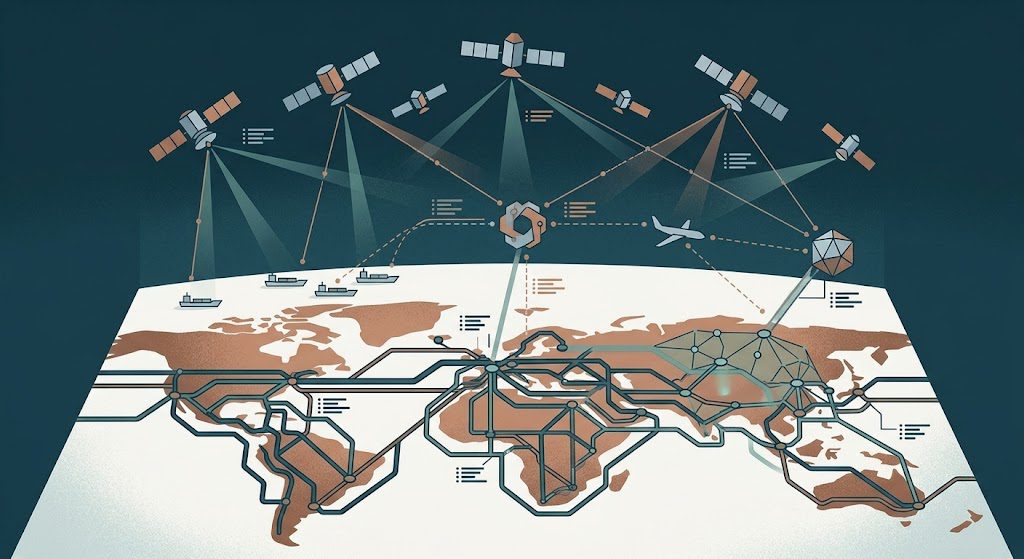
The new license strengthens the UAE satellite-connectivity framework, but TDRA has not publicly explained how it relates to Starlink’s existing 2024 license.
UAE internet users, logistics operators, aviation and maritime companies, remote-site operators, infrastructure teams, and anyone assessing Starlink as a resilience layer.
The August 2026 announcement does not state whether the new license replaces, amends, expands, or sits alongside license No. 2 of 2024.
The useful next evidence is the operative 2026 license text, effective dates, service conditions, and any TDRA clarification on its relationship with the 2024 license.
If you are buying Starlink for resilience, check the current service terms and support path rather than treating the regulatory announcement as a product guarantee.
Starlink was already licensed in the UAE. That is why Friday’s announcement deserves a second read, not another launch headline.
On August 28, TDRA said it granted Starlink Satellite Communications LLC a new 10-year General Space Services License covering a public satellite communications network and broadband satellite internet services across the UAE.
But TDRA also still publishes a separate Starlink Satellite Internet Services license issued in 2024 and valid until June 2034. The new release does not explain how the two records fit together. That gap is the story.
Starlink Was Already Licensed in the UAE
The first thing the new announcement leaves out is history. TDRA already publishes license No. 2 of 2024, a Satellite Internet Services license granted to Starlink Satellite Communications Services L.L.C for ten years from June 12, 2024 to June 11, 2034.
That 2024 license authorized the company to install, operate and manage a public telecommunications network and provide the services specified in the license. Robius already covered the practical consumer side in our Starlink UAE review.
That matters because the August 2026 release should not be read as the first moment Starlink became legally present in the UAE. The regulatory story is more specific: TDRA has now announced a General Space Services License with a fresh ten-year term, using broader public language about the role of satellite connectivity in national infrastructure.
The New License Uses Broader Infrastructure Language
TDRA says the 2026 license authorizes Starlink Satellite Communications LLC to establish, operate and manage a public satellite communications network and provide broadband satellite internet services in the UAE. The regulator says the license adds a space-based layer alongside fibre-optic and 5G networks.
The release also names maritime and aviation transport, energy, logistics and emergency response as sectors that can benefit from stronger resilience and continuity. That framing is more strategic than a simple home-internet announcement.
For households, the practical question is still whether satellite broadband solves a real connection problem. Our earlier analysis on who should actually pay for Starlink in the UAE remains the useful consumer test.
What TDRA Has Not Explained
TDRA’s August 28 press release does not publicly explain the legal relationship between the newly announced General Space Services License and the published 2024 Satellite Internet Services license. Robius found no statement in the release saying the earlier license was cancelled, replaced or extended.
That means the safe wording is not that Starlink suddenly received its first UAE approval. It is that TDRA announced a new ten-year space-services license while a separate ten-year Starlink license from 2024 remains publicly available on the regulator’s website.
This distinction is not paperwork for paperwork’s sake. Different license instruments can define different services, rights, technical conditions or regulatory obligations. Until the operative 2026 text is public, readers should not invent the missing relationship.
The Bigger Story Is Network Resilience
TDRA’s own explanation points toward redundancy. Fibre and 5G remain the core terrestrial layers. Satellite connectivity adds another route when geography, mobility or disruption makes the terrestrial path harder to use.
That same ground-versus-space question matters as computing itself moves toward orbit. Robius recently examined why the UAE ground link still matters for orbital AI infrastructure. Connectivity policy is becoming part of the same infrastructure stack.
The result is a more useful way to read Friday’s announcement. Starlink is not replacing the UAE’s fibre and mobile networks. TDRA is explicitly positioning satellite broadband as an additional layer that can widen reach and improve continuity.
The Robius Layer
The headline is not that Starlink has finally arrived. Robius has already documented live UAE availability, pricing and use cases. The new question is what the 2026 license changes inside an existing regulatory relationship.
The next piece of evidence should therefore be regulatory, not promotional: the license document, its effective date, the exact service scope and an explanation of how it interacts with the 2024 license. Until that appears, the right conclusion is important but incomplete.
Sources
- TDRA: 28 August 2026 announcement of a 10-year General Space Services License for Starlink and its role in national network resilience – https://tdra.gov.ae/en/media/press-release/2026/new-press-release
- TDRA: license No. 2 of 2024, Satellite Internet Services license, effective 12 June 2024 to 11 June 2034 – https://tdra.gov.ae/-/media/About/regulations-and-ruling/EN/Starlink-License–EN.ashx?t=Starlink+License
- The National: Independent reporting on the 28 August 2026 Starlink license announcement – https://www.thenationalnews.com/news/uae/2026/08/28/uae-grants-musks-starlink-10-year-license-to-provide-satellite-internet-services/
Robius.news — Dubai, UAE — 2026 | Built to be first. Built to be trusted.