 UAE, UNFILTERED
OpenAI Says It Can Watch for Abuse Without Keeping Your Data. Anthropic Still Wants 30 Days
The next enterprise AI fight is not about a benchmark. It is about whether the model provider needs to keep your conversations in order…
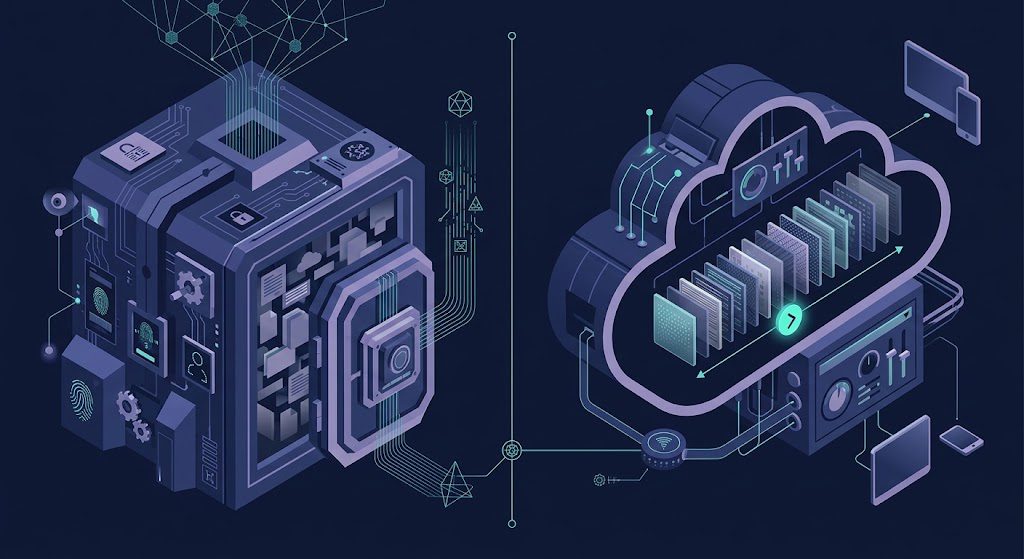
Data retention is becoming part of the safety architecture of frontier AI, not just a privacy setting buried in procurement paperwork.
UAE banks, healthcare firms, law practices, government suppliers, regulated companies, CIOs, security teams, and API buyers.
OpenAI's new system is still being tested, while Anthropic's planned changes have not yet fully rolled out.
OpenAI plans broader rollout and a technical white paper; Anthropic is expected to give customers more control over storage location later this year.
Put a data-retention column next to price, latency, and accuracy in every enterprise AI model comparison.
The next enterprise AI fight is not about a benchmark. It is about whether the model provider needs to keep your conversations in order to keep everyone safe.
Anthropic plans to keep a 30-day retention requirement for business customers using its most capable models, while giving enterprises more control over where that retained data lives. OpenAI, meanwhile, is testing a system it calls Private Safety Processing that it says can identify misuse patterns while preserving Zero Data Retention for eligible enterprise and API customers.
Those are two different answers to the same technical problem. Dangerous activity can unfold across many prompts over time. The question is whether the provider needs readable customer content to spot the pattern.
Anthropic Still Wants 30 Days
Reuters reported on August 20 that Anthropic plans to let enterprise customers keep retained data on their own cloud infrastructure while still requiring 30 days of retention for business customers using its most powerful Fable and Mythos models and future frontier models.
The company has said the retention is intended to help detect sophisticated attacks that can span multiple requests. Reuters said Anthropic has been coordinating the new system with more than 100 customers, including Salesforce.
That is a meaningful privacy improvement if the customer controls the infrastructure. It does not remove the retention requirement itself.
OpenAI Is Testing a Different Architecture
Axios reported that OpenAI is testing Private Safety Processing with early enterprise and API customers. The design is intended to detect dangerous patterns across related interactions while preserving Zero Data Retention protections.
OpenAI says the system can send a narrowly defined safety signal without exposing the underlying prompts or responses. Axios reported that customer data can remain on customer-controlled infrastructure or be stored with encryption keys controlled by the customer.
The system is not a general consumer ChatGPT feature. Axios says the current design is aimed at eligible enterprise and API customers, with a broader rollout and technical white paper planned.
Zero Data Retention Already Has Fine Print
OpenAI’s current API documentation says eligible approved customers can use Zero Data Retention or Modified Abuse Monitoring. With ZDR, customer content is excluded from abuse-monitoring logs for eligible endpoints, but some tools and application-state features can still have separate storage requirements.
That distinction matters. A procurement team should never reduce the question to one checkbox called zero retention. Endpoint behavior, files, tools, background processing, caching, and third-party connectors can change what is stored and where.
It is the same reason our Best AI Model business guide tells companies to buy the workflow, not the model name. Privacy follows the whole architecture too.
The UAE Angle Is More Concrete Than It Looks
OpenAI’s current platform documentation includes the United Arab Emirates as an API data-residency region for supported services. The documentation says using the UAE region requires additional approval and a Zero Data Retention amendment, with ae.api.openai.com used for regional requests.
That gives UAE enterprise buyers a practical procurement path, but only if the exact endpoint and feature they want is supported under the selected retention controls.
For regulated organizations, the right question is not simply whether a vendor has UAE data residency. It is whether your specific model, endpoint, tool, logging mode, and safety system stay inside the agreed posture.
Safety and Privacy Are Pulling in Opposite Directions
The safety argument is understandable. A single prompt may look harmless. A sequence of prompts over several days can reveal reconnaissance, escalation, or a coordinated attack. Providers want enough context to detect the pattern.
The privacy argument is equally real. A bank, hospital, law firm, or government contractor may be unable or unwilling to let a model provider retain raw prompts containing customer, patient, privileged, or classified information.
Our AI sandbox analysis showed what happens when capability and control move at different speeds. Data-retention policy is another layer of the same control problem.
The Procurement Question Just Changed
For years, enterprise buyers asked whether providers trained on their data. That question is still important. It is no longer enough.
Now ask how long raw content is retained, who can read it, where it is stored, who controls encryption keys, which safety metadata survives after content deletion, and whether a high-capability model changes the retention rules compared with a lower-capability one.
As our AI agent spending guide argues in a different context, technical limits are stronger than policy wishes. The same is true for data. Contract the boundary and test the architecture.
The Robius Layer
OpenAI and Anthropic are not simply choosing different privacy policies. They are exposing a deeper design trade-off in frontier AI.
As models become capable enough to create serious security risk, providers want longer context to monitor misuse. Enterprise customers want less provider visibility, not more. The winning architecture will be the one that can satisfy both sides without asking buyers to take the vendor’s word for it.
For UAE enterprises, that means model selection is becoming an infrastructure and governance decision. The smartest model may lose the contract if its safety system requires a data posture the customer cannot accept.
Sources
• Reuters: Anthropic enterprise retention changes, 30-day requirement, customer-controlled cloud option, and customer testing – https://www.reuters.com/business/anthropic-plans-change-enterprise-data-retention-policy-source-says-2026-08-20/
• Axios: OpenAI Private Safety Processing, early testing, safety-signal design, and ZDR positioning – https://www.axios.com/2026/08/19/openai-previews-zero-retention-safety-system-as-anthropic-requires-data-logs
• OpenAI Platform: Current data controls, Zero Data Retention limits, and UAE API data residency requirements – https://platform.openai.com/docs/models/default-usage-policies-by-endpoint
• Anthropic: August 2026 risk report and current frontier-model safety context – https://www-cdn.anthropic.com/f61d49fa5596956a5dec75fea0e973bf6a6a8378/Redacted%20Risk%20Report%20August%202026%20.pdf
Robius.news – Dubai, UAE – 2026 | Built to be first. Built to be trusted.