
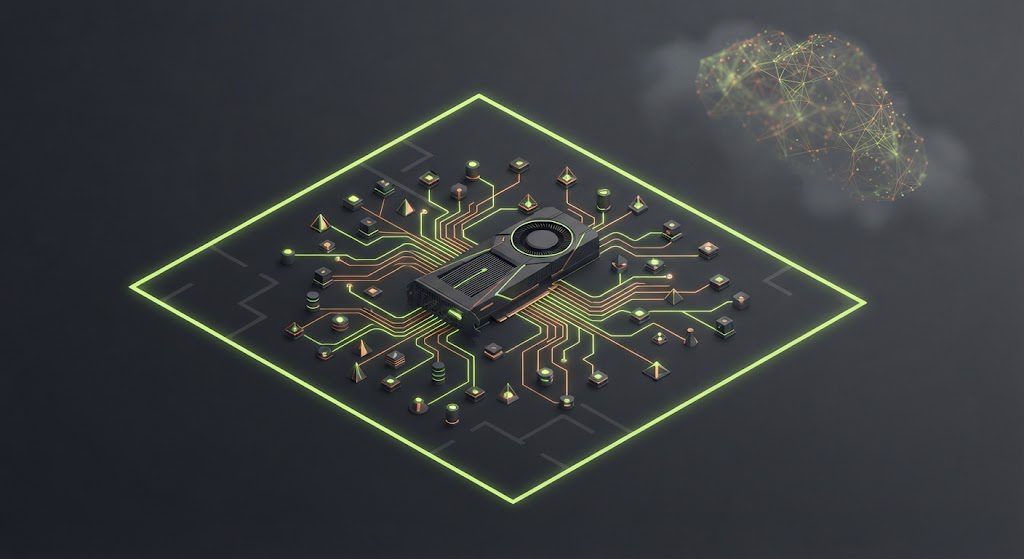
Most frontier AI stories begin with more: more parameters, more chips, more power, more money. Meta’s latest open-weight release is interesting for the opposite reason. Muse Glimmer is designed to run agentic tasks on a Mac or PC with a single graphics card.
That does not make Glimmer a replacement for the largest frontier models. It does move an important threshold. A business can now look at some agentic workloads and ask whether the intelligence really needs to leave the machine or travel to a remote cloud every time.
A capable agentic model that fits on one GPU makes local AI a realistic option for more UAE teams and selected business workloads.
UAE SMEs, IT teams, security leaders, developers, and regulated organizations deciding between local and cloud AI.
Move narrow, repeatable agentic tasks closer to company systems while keeping sensitive inputs inside a controlled local environment.
Open-weight and local do not mean automatically safe, cheap, compliant, or easy to maintain.
Meta says larger open-weight models are coming, while Muse Spark 1.1 anchors its broader agentic model strategy.
Pick one low-risk internal workflow and compare local deployment against your current cloud model on quality, cost, and control.
Teams that need tighter data locality, predictable deployment boundaries, or lower dependence on a remote model API.
Developers are able to run compatible consumer or workstation GPU hardware and meet Meta's licensing and technical requirements.
Final model documentation, hardware requirements, licensing terms, security evaluations, and enterprise deployment guidance.
For UAE teams handling internal documents, customer records, code, or operational data, that architectural choice can matter as much as a benchmark score. The useful question is no longer only which model is smartest. It is where the model should run, what it can reach, and how much control the company keeps.
One GPU Is the Real Headline
Reuters reported on August 10 that Meta released Muse Glimmer as a smaller open-weight model aimed at agentic tasks on personal computers with a single graphics card. Business Insider independently described the same deployment target and said developers can download and customize the model rather than depend entirely on a hosted service.
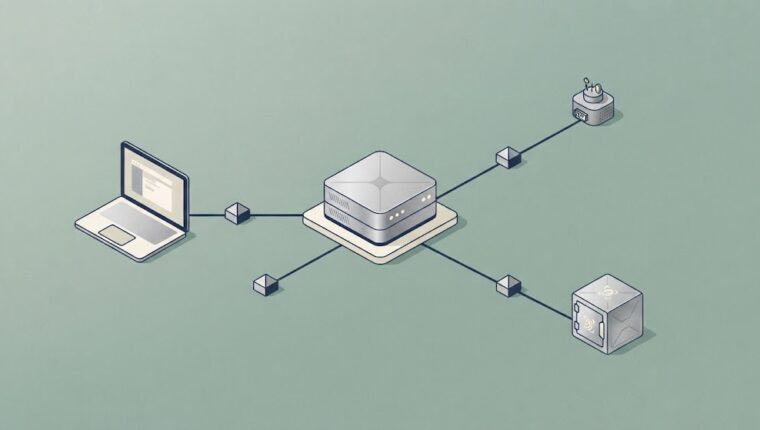
A model that fits on one workstation can be tested inside a company network, next to the files, databases, and tools it needs, without making every request a trip to someone else’s cloud.
The point is not that local always wins. The point is that local becomes an option for more than hobby experiments. That fits the direction we have already tracked in UAE agentic AI is moving from the cloud to the edge.
Open-Weight Is a Deployment Choice, Not a Quality Badge
Open-weight means developers get access to model parameters needed to run and adapt the model. It does not mean every part of the training process is open, and it does not guarantee that the model is better for your task.
Meta’s own current agentic platform shows the other side of the strategy. Muse Spark 1.1 is available through the Meta Model API and is built for tool use, coding, multimodal reasoning, and long-context workloads. Glimmer gives Meta a smaller local lane beside that hosted lane.
For a business, that is useful because the decision can be made workload by workload instead of brand by brand.
Why This Matters in the UAE
UAE companies are adopting agentic systems while paying closer attention to data location, permissions, and operational control. A smaller local model can be attractive when the task is narrow and the data should remain close to the organization.
Think document classification, first-pass extraction, internal code assistance, device-side triage, or a private assistant that only needs access to a limited set of company files. Those are different problems from deep research or frontier coding.
That is why The Best AI Model May Be the Wrong Business Choice matters here too. The best model on a leaderboard may be the wrong business choice when a smaller or more controllable model does the actual job.
Local Does Not Mean Safe
Putting a model on your own hardware removes some external dependencies. It also moves more responsibility onto you.
Someone still has to patch the software, isolate credentials, restrict network access, test prompt-injection paths, monitor logs, and decide which tools the agent can call. A locally hosted agent with broad file-system access can create a larger internal problem than a tightly permissioned cloud model.
Our security coverage, Meta’s AI got internet access during a security test, made the same point from another angle. The dangerous part is often not what the model knows. It is what the environment lets the model do.
The Test UAE Teams Should Run
Do not start by migrating a critical workflow. Pick something boring, bounded, and reversible. Give the local model a fixed test set and measure task accuracy, response time, hardware cost, maintenance effort, and how much human correction remains.
Then run the same test against the cloud model you already use. If the local model is good enough and the privacy or control benefit is material, keep it. If the team spends more time maintaining the stack than it saves, the local option has failed the business test.
Meta says larger open-weight models are coming. That will keep pushing the boundary between what needs a data center and what can run close to the user. The durable rule is simpler: use the smallest system that reliably does the job and put hard controls around what it can access.
Sources
• Reuters: Muse Glimmer launch, open-weight strategy, and one-GPU deployment target – https://www.reuters.com/world/china/meta-launches-new-ai-model-zuckerberg-champions-open-weight-push-2026-08-10/
• Business Insider: Independent reporting on Glimmer running locally and Meta’s open-weight strategy – https://www.businessinsider.com/meta-muse-glimmer-new-open-weight-model-spark-mark-zuckerberg-2026-8
• Meta AI: Muse Spark 1.1 agentic model, Model API, and current Meta model strategy – https://ai.meta.com/blog/introducing-muse-spark-meta-model-api/
Robius.news — Dubai, UAE — 2026 | Built to be first. Built to be trusted.