 UAE, UNFILTERED
If You Used Sora, Export It Now
If you ever made a video in Sora, do you still have the original file somewhere you control? That is now the practical question.…
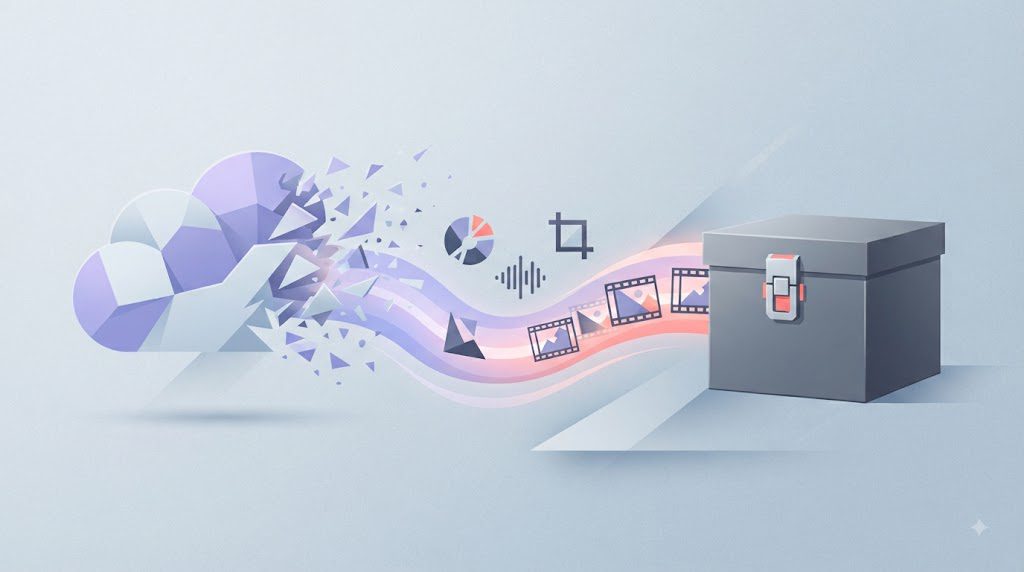
Sora content stored only inside OpenAI’s discontinued product can disappear permanently after the export period.
UAE creators, agencies, marketing teams, developers and anyone who generated or stored work in Sora.
OpenAI has not promised that every workflow, project structure or API dependency can be reproduced elsewhere.
The Sora API is scheduled to shut down on September 24, 2026, after the consumer product already closed in April.
Export Sora content now, save important source assets and prompts separately, and remove Sora from any production workflow before September 24.
If you ever made a video in Sora, do you still have the original file somewhere you control? That is now the practical question. OpenAI shut down the Sora web and app experiences on April 26, and its current support guidance says data associated with Sora will be permanently deleted after any final export window has passed.
The company is telling users to export their content as soon as possible. Developers have a second deadline: the Sora API is scheduled to be discontinued on September 24, 2026. For UAE creators, agencies and teams that used Sora as part of a real workflow, this is not just product news. It is a reminder that cloud AI tools are rented infrastructure, not your archive.
What OpenAI Has Confirmed
OpenAI’s current support page is unusually direct. The Sora web and app experiences are already gone. Users can still export content through the Sora sunset page, and OpenAI says it will email users before a final export window if it is able to offer one. After Sora is discontinued and that period passes, the company says data associated with Sora use will be permanently deleted.
There is no need to guess at the developer timeline either. OpenAI lists the Sora 2 models as legacy or deprecated in its API documentation, and the help center gives September 24 as the date the Sora API will be discontinued. If an internal tool, client workflow or automated content pipeline still calls the video endpoint, there is now a fixed date to remove that dependency.
OpenAI also says purchased ChatGPT or Sora credits can still be used for Codex. That is useful, but it does not turn Codex into a replacement for Sora. The company’s discontinuation guidance does not promise a direct migration path for Sora projects, so teams should not wait for a one-click substitute that may never arrive.
Why This Matters to UAE Creators
Sora was available broadly wherever ChatGPT was available during its rollout, and OpenAI’s supported-country lists include the UAE. That means there are UAE users who treated it as more than a demo. Social teams used generated clips for concepts. Agencies experimented with storyboards. Developers built around the video API. Independent creators may have work sitting only inside a cloud account they stopped checking months ago.
The timing also lands while access to advanced AI is becoming more conditional in other ways. We recently covered how OpenAI’s free research program filled its first cohort quickly, and how access to frontier models can be shaped by institutional rules, geography and policy. Sora adds a different risk: product continuity.
The useful distinction is between access and ownership. You may have paid for the tool. You may have created the work. But if the only usable copy lives inside the vendor’s interface, your practical control over that work depends on the vendor continuing to operate the product.
The Five-Minute Export Check
OpenAI’s own instruction is to visit the Sora sunset page and select Export. You will receive an email when the export is ready. Do that first, before reorganizing anything else. The goal is simply to get a vendor-independent copy of what OpenAI still makes available to you.
- Export your Sora content now instead of waiting for a final-window email.
- Save finished videos in your own cloud storage or local archive with filenames that make sense outside Sora.
- Keep source images, audio, client assets and important prompts in the same project folder if they matter to future edits.
- For agency work, retain the approval trail and rights or consent records that belong with the finished asset.
- For API workflows, identify every Sora endpoint, model alias and automated job before the September 24 shutdown date.
None of this is glamorous. That is why it is easy to postpone. But data portability usually becomes urgent only after a product closes, an account is locked or an export deadline is already close. OpenAI is giving notice here. Use it.
Do Not Confuse “Deleted by OpenAI” With “Deleted Everywhere”
One point is worth keeping clear. OpenAI says it will delete data associated with your use of Sora after the shutdown and export period. That does not mean copies you already downloaded disappear from your own devices, client drives or other platforms. It also does not erase legal or contractual responsibilities attached to content you choose to keep.
For business users, the cleaner practice is to decide what should be retained and why. Keep finished assets you need. Keep supporting files that make them usable. Remove redundant material you have no reason to hold. The shutdown is a good opportunity to turn an accidental pile of AI experiments into an intentional archive.
The Bigger AI Vendor-Risk Lesson
AI product churn is becoming normal. Models appear, access rules change, products merge, and some services disappear. We saw a similar dependency question when government restrictions affected access to advanced OpenAI models. The cause was different, but the operational lesson is the same: if a tool is critical, your workflow needs an exit plan.
The same applies when a competitor launches something better. Our Google I/O 2026 breakdown showed how quickly capabilities can move between platforms. Teams should be able to switch because a better tool arrives, not be forced into a crisis because an old one disappears.
A simple rule works: keep your originals, keep your key instructions, know which API calls your systems depend on, and never let a creative platform become the only place where the final work exists.
The Bottom Line
Sora is already closed as a consumer product. The API has a September 24 end date. OpenAI says associated Sora data will ultimately be permanently deleted after the export period. Those facts are enough to act now.
If your Sora account contains work you would be upset to lose, export it today. The strongest AI tool is still a bad archive if somebody else controls the off switch.
Sources
- OpenAI Help Center: Official Sora discontinuation timeline, export instructions, deletion policy and credit guidance. – https://help.openai.com/en/articles/20001152-what-to-know-about-the-sora-discontinuation
- OpenAI: Original Sora availability and subscription information, now marked as discontinued. – https://openai.com/index/sora-is-here/
- OpenAI API: Current Sora 2 model page showing legacy and deprecated status. – https://developers.openai.com/api/docs/models/sora-2
- OpenAI API: Current Sora 2 Pro model page showing legacy and deprecated status. – https://developers.openai.com/api/docs/models/sora-2-pro
Robius.news — Dubai, UAE — 2026 | Built to be first. Built to be trusted.