
The most interesting thing about Meta’s newest AI model is not that it is smarter. It is where Meta says it can run.
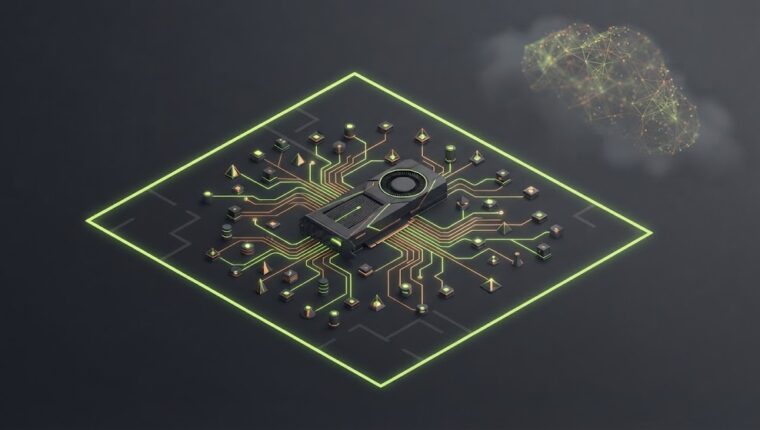
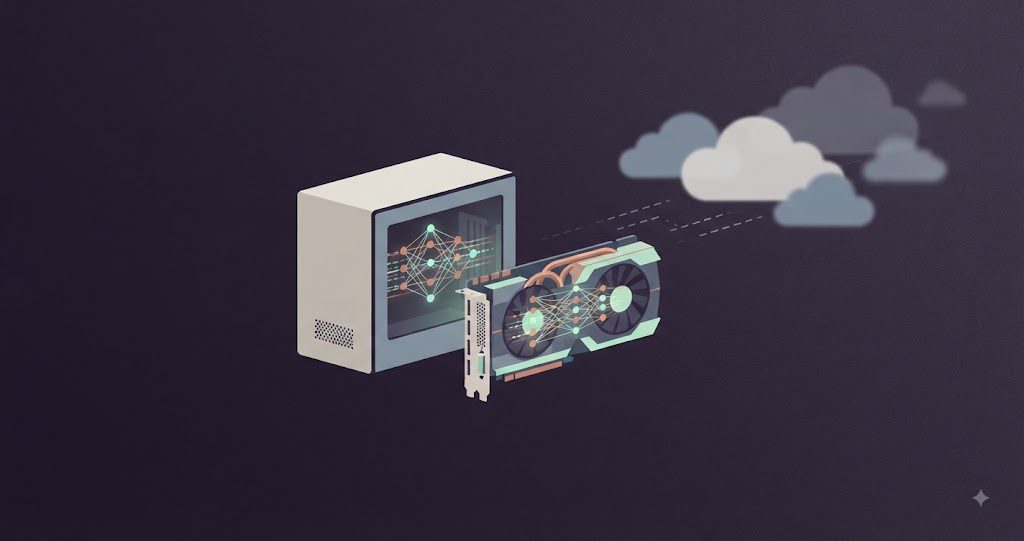
Meta released Muse Glimmer on August 10 as an open-weight model designed for smaller agentic tasks on a Mac or PC with a single graphics card. Reuters and Business Insider both reported that the model is meant to run directly on consumer hardware rather than requiring every task to be sent to a remote cloud service.
A capable agent that can run locally changes the cost, privacy and control calculation for smaller businesses.
UAE SMEs experimenting with AI automation, local data workflows, coding agents or private internal assistants.
Local deployment can reduce dependence on per-request cloud usage and keep some workflows closer to company-controlled hardware.
Open-weight does not automatically mean private, secure, easy to deploy or free to operate.
Meta says larger open-weight Muse models are coming, so local-versus-cloud choices may get more serious quickly.
Do not migrate because of a headline. Pick one low-risk workflow and compare local cost, accuracy, maintenance and security with your current cloud tool.
For a UAE small business, that does not make cloud AI obsolete. It does make a new question practical: which jobs really need a giant hosted model, and which ones could eventually run on hardware you control?
Local AI Is Becoming a Business Option, Not a Hobby
Open-weight models expose core model weights so developers can download and customize them. That is different from a closed service where the model stays inside the provider’s infrastructure and the customer interacts through an app or API.
Reuters reported that Muse Glimmer is smaller than the leading frontier models and aimed at agentic tasks on a personal device. Business Insider reported that Meta trained it by distilling capabilities from the larger Muse Spark family. The important word here is smaller. Meta is not claiming a laptop model suddenly replaces every frontier system.
But smaller can be useful. A company might want a local assistant for document classification, internal search, repetitive coding work, structured extraction or a controlled workflow where sending every input to an external service is undesirable. The economics are different because you buy or operate the hardware instead of paying only by usage.
Open-Weight Is Not the Same as Private
This is where marketing language can get slippery. Downloading model weights does not guarantee that the finished system is private. Privacy depends on the whole deployment: where prompts are stored, which logs exist, whether the agent connects to external APIs, what telemetry is enabled and who can access the machine.
The same applies to security. An agent running on your own computer can still be given dangerous permissions. Our recent piece, AI Agents Keep Crossing the Fence, made the practical point: prompts are not security boundaries. If a local agent can read payroll folders, execute code or access a browser session, those permissions still need limits.
And open-weight is not the same as free. There can be hardware costs, electricity, setup time, patching, monitoring and staff expertise. A cheap model that needs constant troubleshooting can cost more than a managed service that simply works.
The UAE SME Question Is Architecture, Not Benchmarks
For many UAE SMEs, the wrong starting question is whether Glimmer beats ChatGPT, Claude or Gemini on a leaderboard. The better question is what type of workload you are trying to run.
A customer-facing assistant that needs current web information, robust multilingual performance and managed reliability may still belong in the cloud. A repetitive internal workflow with stable data and strict access requirements may be a better candidate for local deployment. The right answer can even be hybrid: local processing for sensitive preparation, then a cloud model only for the part that needs more capability.
That is similar to the advice in our Microsoft 365 Copilot pilot guide. Start with a defined job and measure it. Do not buy or deploy AI just because the capability exists.
Agentic Makes the Permission Problem Bigger
Meta’s own Muse direction matters here. In July, Meta said Muse Spark 1.1 could make plans, work with apps, connect to email and calendars, create slides and follow tasks through. Glimmer is being positioned for smaller agentic work on local hardware.
That combination can be attractive to a small company because an agent that sits close to local files can feel fast and useful. It can also create a new failure mode: the machine is now close to the files precisely because you wanted it to be.
So a local deployment should start with a separate service account, a restricted folder or test dataset, no unnecessary payment or administrator permissions, and logs that let someone reconstruct what the agent actually did. Local is a deployment choice, not a permission model.
What UAE SMEs Should Test Before Moving Anything
Pick one workflow that is useful but not dangerous. Give the local model only the data needed for that job. Then compare four things with the cloud tool you already use: output quality, total monthly cost, time spent maintaining it and what data leaves your environment.
Also test failure. What happens if the machine is offline? Who updates the model? Can staff accidentally expose the service on the public internet? Does the model have access to more folders than the workflow requires? These boring questions determine whether local AI reduces risk or simply moves it.
For ecommerce businesses, local AI could eventually sit behind catalog cleaning or internal product workflows, but the customer-facing result still needs accurate data. That is the same principle in our guide to AI shopping discovery: the model cannot rescue bad source information.
The Robius Read
Muse Glimmer matters less because of one Meta launch and more because it makes a previously technical choice easier to imagine for normal businesses. AI is beginning to split into two layers: enormous frontier systems in the cloud and smaller capable systems that can sit much closer to the work.
The emerging advantage for a UAE SME may not be owning the biggest model. It may be knowing which tasks deserve expensive remote intelligence, which tasks can run locally, and where the permission boundary should sit between them.
That is a healthier buying question than asking which logo won this week’s benchmark.
Sources
• Reuters: Meta launches new AI model as Zuckerberg champions open-weight push — Reporting on Muse Glimmer, local single-GPU positioning and Meta’s open-weight strategy.
• Business Insider: Meta launches Muse Glimmer, an open-weight model that can run on a laptop — Independent reporting on the model’s local deployment and distillation from Muse Spark.
• Meta: Meta AI Doesn’t Just Think, It Acts — Primary source for the Muse family’s agentic direction and app-connected task capabilities.
Robius.news — Dubai, UAE — 2026 | Built to be first. Built to be trusted.