

Dubai airport AI smart gates 3.4 seconds
Some AI stories are about the future. This one already happened to nine million people. GDRFA Dubai released its first-half 2026 figures in early July. They are worth reading slowly, because they describe the largest AI system most UAE residents physically walk through.
In six months, 9,464,057 travelers used Dubai’s Smart Travel ecosystem. Of those, 9,024,736 cleared immigration through Smart Gates. Another 439,321 used something more unusual: the Travel Without Borders Red Carpet service, which clears you while you walk.
| THE ROBIUS VERDICT: Real, official numbers from GDRFA Dubai, and a genuine glimpse of where airport travel is heading. The consumer catch: eligibility for the most advanced tier is not universal, and checking yours takes two minutes. The Red Carpet service lets eligible arriving and departing passengers complete immigration by walking through a designated lane. No passport presented. No boarding pass shown. No stop at a counter or gate. AI and biometric recognition identify travelers in motion, and the system can process up to 10 people simultaneously through one corridor. GDRFA says average clearance time has fallen from 12.5 seconds to 3.4 seconds, an improvement of roughly 60%. Smart Gates remain the workhorse channel for the other nine million travelers. Officials tied the program directly to the D33 agenda and the UAE’s broader push to run government services on AI. |
What Actually Happens in 3.4 Seconds
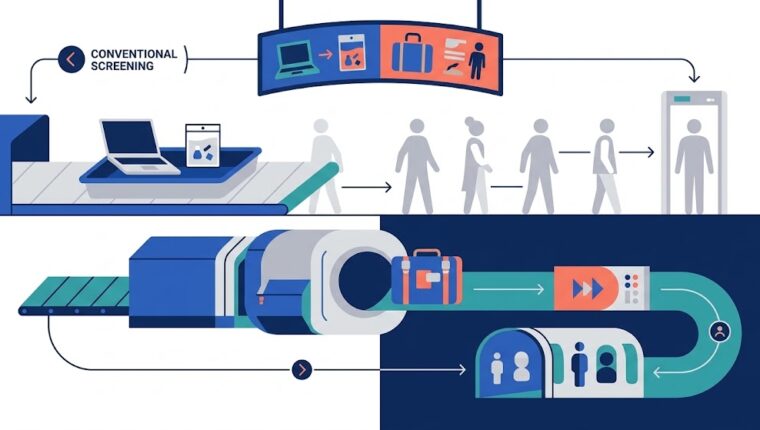
The Red Carpet lane works differently from a smart gate. There is no gate. Cameras and biometric systems identify you as you walk at normal speed. Your face is the document. The system matches you against enrolled records, confirms your immigration status, and logs your crossing. By the time you reach the end of the corridor, you have legally entered or exited the country.
The 12.5-second figure it replaced was already fast. That was the smart gate standard: scan, look at the camera, gate opens. Cutting that to 3.4 seconds, while processing ten people at once, changes the math of peak-hour queues entirely. It is the difference between a checkpoint and a hallway.
Who Can Use It, Honestly Answered
Here is where this site has to be precise, because the announcement was not. GDRFA describes Red Carpet users as eligible travelers enrolled in the system. The published coverage does not include a full public list of eligible nationalities or a standalone registration portal for the service. So this piece will not invent one.
What is verifiable: Smart Gates are already open to UAE citizens, residents with Emirates ID, GCC nationals, and visitors from dozens of eligible countries with biometric passports. Enrollment for smart travel services runs through GDRFA’s channels, including registration at the airport itself. The practical advice: if you hold an Emirates ID, you are already in the smart lane ecosystem. For Red Carpet specifically, check the GDRFA Dubai app or website, or ask at the smart gates on your next trip, and treat any third-party site selling Red Carpet registration as a red flag. Government enrollment does not run through resellers.
Why This Is an AI Story, Not Just an Airport Story
This site has covered the UAE’s AI-in-government record all year. Microsoft’s data ranking the UAE first in the world for AI adoption. The commitment to run half of government operations on agentic AI. Ministry systems processing millions of transactions automatically. The airport numbers belong to the same story, with one difference: this is the version of government AI that touches visitors physically, at scale, on day one of their trip.
It is also, quietly, a biometric identity system processing nine million people in six months. The convenience is real and the queues are shorter. The same question this site asks of any sufficiently advanced system anywhere applies here too: how the biometric data is stored, retained, and governed. That is not an accusation. It is the question every government running such systems should expect, and the UAE’s own data protection and AI governance frameworks are the standards to hold it to.
What to Expect Next
GDRFA framed the H1 figures as a milestone in an expanding program, not a finished one. The direction is clear: more corridors, more eligible traveler categories, and gradual expansion across arrivals and departures. For residents, the practical takeaway is simple. The fastest lane through DXB is increasingly the one where you do nothing at all. Check your eligibility before your next trip, and let the hallway do the work.
Sources
- Gulf News: Dubai smart border system serves 9.4 million travellers in H1 2026, with the full GDRFA figures — https://gulfnews.com/business/aviation/dubai-smart-gates-process-94-million-travellers-in-6-months-1.500598379
- Emirates 24|7: Smart travel system processes 9.4 million passengers at Dubai airports in six months — https://www.emirates247.com/business/smart-travel-system-processes-94-million-passengers-at-dubai-airports-in-six-months/3322
- GDRFA Dubai: Official portal for smart travel services and enrollment — https://www.gdrfad.gov.ae/en
Robius.news — Dubai, UAE — 2026 | Built to be first. Built to be trusted.