
DP World Fujairah port Strait of Hormuz
Almost everything in your kitchen arrived by sea. That is the fact that turns a shipping infrastructure story into a household one. The Financial Times reported in mid-July 2026 that DP World is in talks to build a new port and container terminal on the UAE’s east coast, at Fujairah, on the Gulf of Oman.
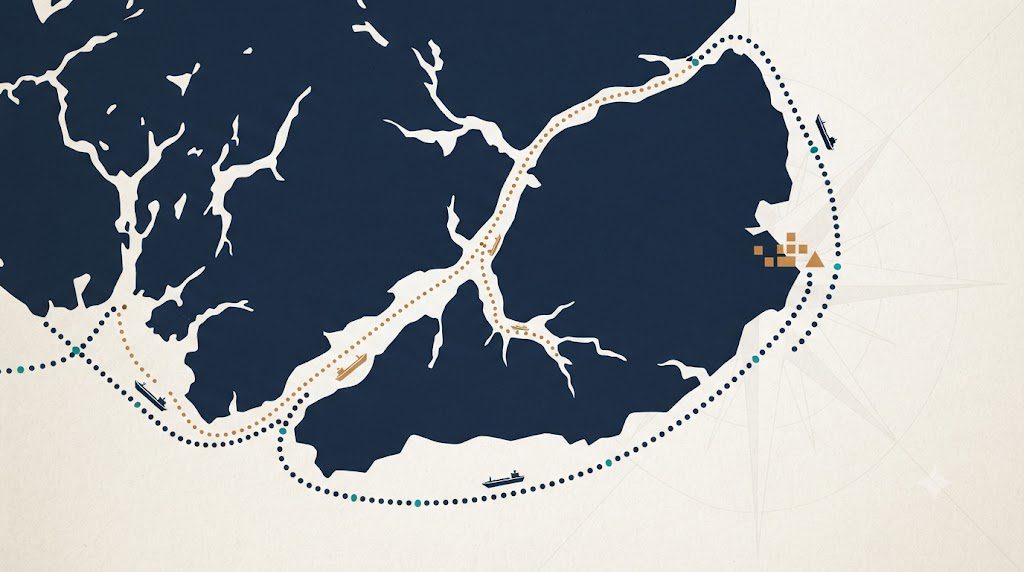
The reason is geography. A port there sits outside the Strait of Hormuz, which means cargo could reach the UAE without passing through the region’s most contested waterway.
| THE ROBIUS VERDICT: This is a reported plan, not a confirmed project, and it deserves that caveat up front. But the logic behind it is real, and it points at something that genuinely affects prices. The FT reported, citing people familiar with the matter, that DP World is in talks to develop a new multipurpose port in the Fujairah coastal area plus a terminal at the existing harbor. Reports say project structure and financing were still unsettled, and DP World declined to confirm details. Fujairah sits roughly 70 nautical miles south of the Strait of Hormuz on the Gulf of Oman. A senior company official described the plan to the FT as defensive in case things go wrong, and reports say the new port could be built within roughly 18 months of approvals. Treat timelines and specifics as provisional until the company or the government confirms them. |
What Is Reported, and What Is Confirmed
Start with the honesty, because it matters on a story this big. This came from the Financial Times citing people familiar with the plans, not from an official announcement by DP World or the UAE government.
DP World initially declined to comment on the details, saying it is working on business expansion to navigate ongoing disruptions. Other newsrooms reported that they could not independently verify the plan. Reports also indicated the project structure and financing were still being worked out.
So read this as a credible report of an active discussion rather than a groundbreaking. Timelines circulating in coverage, suggesting a port could be ready within around eighteen months to two years once terms are agreed, are conditional on an agreement that has not been publicly confirmed.
Why Geography Is the Whole Story
The Strait of Hormuz is the narrow waterway connecting the Arabian Gulf to the open ocean. A large share of the world’s seaborne energy trade passes through it, along with a great deal of container traffic serving Gulf ports.
Jebel Ali, DP World’s flagship hub and the busiest container gateway in the Gulf, sits inside that waterway. Reports put DP World’s capacity there at around 19 million twenty-foot equivalent units across four terminals, which is an enormous concentration of trade behind a single chokepoint. The FT report put a number on what that concentration cost. Cargo traffic at Jebel Ali reportedly fell 90 to 95% when shipping through the strait was disrupted. That collapse is the why-now behind these talks.
Fujairah is on the other side. It faces the Gulf of Oman and the Indian Ocean, roughly 70 nautical miles south of the Strait, and is already a major regional bunkering centre. Cargo arriving there does not need to transit Hormuz at all, which is precisely the point.
This Is Not a New Idea, and That Matters
The strategic logic here is well established rather than sudden. The UAE has been building alternatives to Hormuz for years, most visibly through pipeline infrastructure that lets Abu Dhabi export crude from Fujairah without passing through the Strait.
Other operators are moving in the same direction. Sharjah-based Gulftainer announced a two billion dollar investment to expand container capacity at Khor Fakkan, also on the east coast. When several independent players commit capital to the same coastline, that is a trend rather than a reaction.
That context should temper how you read the geopolitics. This is not a panic response to a single week of tension. It is a long-running structural hedge, and the reported DP World plan would be the container-shipping chapter of a strategy already visible in energy infrastructure.
How Shipping Reaches Your Receipt
Here is the consumer chain, and it is more direct than most people assume. The UAE imports the overwhelming majority of what it consumes, including most food, electronics, clothing, vehicles and household goods.
When a shipping route becomes riskier, several costs move at once. Marine insurance premiums rise for vessels transiting the affected waters. Carriers may reroute, adding days and fuel. Some add surcharges. Those costs sit in the landed price of goods long before they reach a shelf.
| What happens at sea | What it does to prices |
|---|---|
| Route risk rises | Insurance premiums increase for transiting vessels |
| Vessels reroute or wait | Longer voyages, more fuel, added surcharges |
| Capacity concentrates on one gateway | Congestion delays and less pricing pressure |
| An alternative gateway exists | Continuity, and less exposure to a single chokepoint |
The last row is the reason a port plan is a consumer story. Redundancy is not glamorous, but it is what stops a disruption in one waterway from turning directly into empty shelves and higher prices at the other end of the chain.
The Honest Limits of the Benefit
Robius is not going to tell you a new port would make your groceries cheaper, because that is not how this works and the claim would not survive scrutiny.
Infrastructure of this kind reduces the severity of disruption rather than lowering baseline costs. It is closer to insurance than to a discount. Shipping prices are driven by fuel, global capacity, demand, and dozens of other factors that a single new terminal does not control.
There is also the timeline. Even on the most optimistic reported schedule, this is a project measured in years, not months, and it has not been publicly confirmed. Nothing about it changes what you pay this year.
What to Actually Watch
- An official confirmation from DP World or UAE authorities, which would move this from report to project.
- Announced financing and project structure, the two items reported as unsettled.
- Further east coast investment from other operators, which would confirm the wider shift.
- Shipping surcharges appearing on imported goods, the clearest sign disruption is reaching consumers.
- Any official guidance on food and essential goods supply routes, which the UAE monitors closely.
The Bottom Line
Strip away the geopolitics and this is a story about not keeping all your trade behind one door. A country that imports nearly everything it consumes has an obvious interest in more than one way in.
For now, treat it as a well-sourced report rather than a confirmed build, and do not expect it to change any price you pay soon. What it does tell you is where UAE trade infrastructure is heading, and that direction is worth understanding before the next disruption, not during it.
Sources
- Arab News: FT report that DP World is in talks to develop a new Fujairah port and terminal to bypass the Strait of Hormuz — https://www.arabnews.com/node/2650809/business-economy
- FreightWaves: Jebel Ali capacity of around 19 million TEU across four terminals, and Fujairah’s position 70 nautical miles from the Strait — https://www.freightwaves.com/news/dp-world-plans-uae-port-container-terminal-to-bypass-strait-of-hormuz-report
- The News: Reported timeline, unsettled financing, and DP World declining to comment on details — https://www.thenews.com.pk/latest/1409080-dp-world-in-crucial-talks-to-build-new-uae-port-bypassing-the-strait-of-hormuz
- El Estrecho Digital: Wider east coast context including the Fujairah crude pipeline and Gulftainer’s Khor Fakkan expansion — https://www.elestrechodigital.com/en/2026/07/14/dp-world-plans-a-new-port-on-the-east-coast-of-the-united-arab-emirates-to-bypass-the-strait-of-hormuz
Robius.news — Dubai, UAE — 2026 | Built to be first. Built to be trusted.