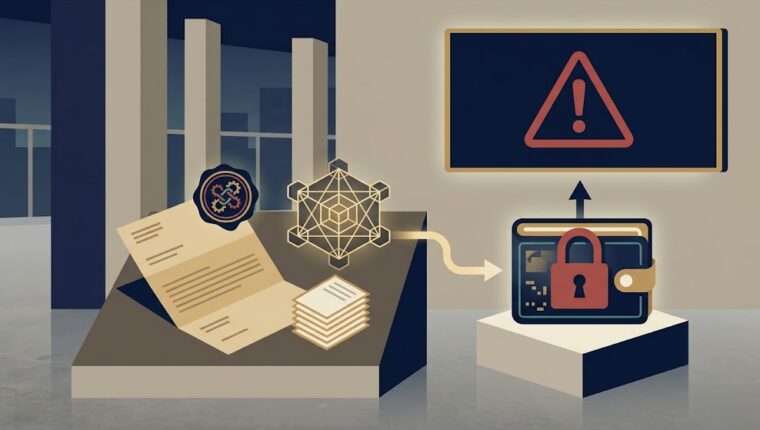


Emirates ID sharing fraud risk UAE
Handing over a photo of your Emirates ID at a shop or a delivery counter feels like nothing. It is the most routine request in UAE daily life. That routine is exactly where the risk starts. A copy of your ID is not a formality. It is raw material.
Cybersecurity experts say Emirates ID fraud follows a small set of named patterns, and informal sharing is what feeds most of them. Here is how, and how to share it more safely.
| THE ROBIUS VERDICT: One Emirates ID copy rarely causes harm alone. Combined with other leaked scraps of your data, it becomes enough to impersonate you. Cybersecurity specialist Rayad Kamal Ayub of Rayad Group told Khaleej Times that Emirates ID fraud typically follows identifiable patterns, not random incidents. He names four: SIM-swap fraud, fake KYC onboarding, UAE PASS social engineering, and identity stitching. The card itself carries residence number, passport data, fingerprints, and iris scan references. The weakest point, he says, is informal document sharing, when residents send copies over WhatsApp or email. That is the habit worth changing. |
Why a Simple Photocopy Matters More Than It Looks
A single Emirates ID copy usually does no damage on its own. The danger is compounding. The risk grows when copies are stored carelessly, passed around without control, or combined with other leaked fragments of your data. That last one is the mechanism Ayub calls identity stitching.
A phone number from one leak. An email from another. An ID copy from a third. Stitched together, they build a profile complete enough to impersonate you, or open accounts in your name, without anyone ever touching your physical card.
The Four Patterns Worth Knowing by Name
Naming them helps, because once you see the pattern you stop feeding it. SIM-swap fraud is the most financially direct. With enough of your identity data, a fraudster tries to convince a telecom operator to issue a replacement SIM for your number, then intercepts the codes your bank sends. There is good news here. UAE operators tightened this significantly, generally requiring in-person verification with the original Emirates ID and a fingerprint, which is why fraudsters now need your actual ID data first.
Fake KYC onboarding uses your data to open financial accounts you never asked for, often mule accounts used to move stolen funds. That shifts real legal risk onto you, because an account opened in your name can implicate you in transactions you never made.
UAE PASS social engineering targets your digital identity directly, tricking you into sharing UAE PASS credentials or codes through fake calls and messages. Dubai Police have warned about exactly this pattern during periods of regional tension. Never share a UAE PASS code with anyone, for any reason. If a bank dispute later results, Sanadak, the UAE’s free financial ombudsman, is your backstop.
A Real Case Worth Knowing
This is not hypothetical. In 2020, an expat was arrested in Dubai after allegedly using another man’s Emirates ID to cash cheques in a Dh350,000 fraud scheme involving multiple transactions and accomplices.
The case is old, but the shape is unchanged today. Identity documents get exploited when access and verification protocols are not followed, and the loss from a single misused ID can run into hundreds of thousands of dirhams.
Share It vs Protect It
| The routine ask | The safer response |
|---|---|
| “Send your ID on WhatsApp” | Ask for a secure, official intake channel |
| “We need a full copy on file” | Ask why, and for how long it is stored |
| “Just the photo is fine” | Offer only what is strictly needed to verify |
| Unsolicited call about your ID | Hang up and verify through an official channel |
What to Actually Do Differently
You cannot avoid sharing your ID entirely. You can share it with more friction, which is what protects you.
- Before handing over a copy, ask why it is needed, and whether partial verification would do instead of a full photo.
- If a business needs a copy on file, ask how it is stored and for how long.
- Be wary of any request through an informal channel like WhatsApp rather than a secure, official system.
- Never share a UAE PASS code or a one-time password, however official the request sounds.
- Treat any unsolicited call or message about your Emirates ID or a pending government process as suspect until you verify it independently.
If You Suspect Misuse
Move quickly. Report suspected misuse of your Emirates ID through the Dubai Police eCrime platform or by calling 901. Contact your bank to freeze cards and flag any account you do not recognize.
If a fraudulent account or transaction reaches your bank and the dispute stalls, you have a route most people miss: the UAE’s independent financial ombudsman resolves bank disputes for free. The register check comes first, but the ombudsman is your backstop.
The Bottom Line
Your Emirates ID is not just a card. It is the key to your telecom line, your bank, and your digital identity, bundled into one document. So treat a copy of it the way you would treat a spare key to your home. Hand it over when you genuinely must, to people who genuinely need it, through channels you actually trust. And never leave it lying in a WhatsApp thread.
Sources
- Khaleej Times: Rayad Kamal Ayub on the four Emirates ID fraud patterns, the biometric data the card holds, and the 2020 Dh350,000 case — https://www.khaleejtimes.com/uae/uae-emirates-id-fraud-risks-data-protection-guide
- Gulf News: How in-person Emirates ID and fingerprint verification sharply cut SIM-swap fraud in the UAE — https://gulfnews.com/business/banking/sim-swap-fraud-drops-in-the-uae-1.1603181458614
- Gulf News: Dubai Police warning on fraudsters seeking UAE PASS and Emirates ID data to enable SIM swaps — https://gulfnews.com/uae/crime/dubai-police-caution-residents-against-fake-calls-seeking-uae-pass-details-1.500460239
- Dubai Police eCrime: Official platform for reporting identity fraud and electronic crime — https://www.ecrime.ae/
Robius.news — Dubai, UAE — 2026 | Built to be first. Built to be trusted.