 UAE, UNFILTERED
‘Specifically Curated for the Population She’s Going to Serve.’ The UAE’s First AI Physician Assistant Has a Dialect
Amal AI physician assistant UAE ‘Specifically Curated for the Population She’s Going to Serve.’ The UAE’s First AI Physician Assistant Has a Dialect. That…
The short answer
Amal AI physician assistant UAE ‘Specifically Curated for the Population She’s Going to Serve.’ The UAE’s First AI Physician Assistant Has a Dialect. That…
Amal AI physician assistant UAE
‘Specifically Curated for the Population She’s Going to Serve.’ The UAE’s First AI Physician Assistant Has a Dialect.
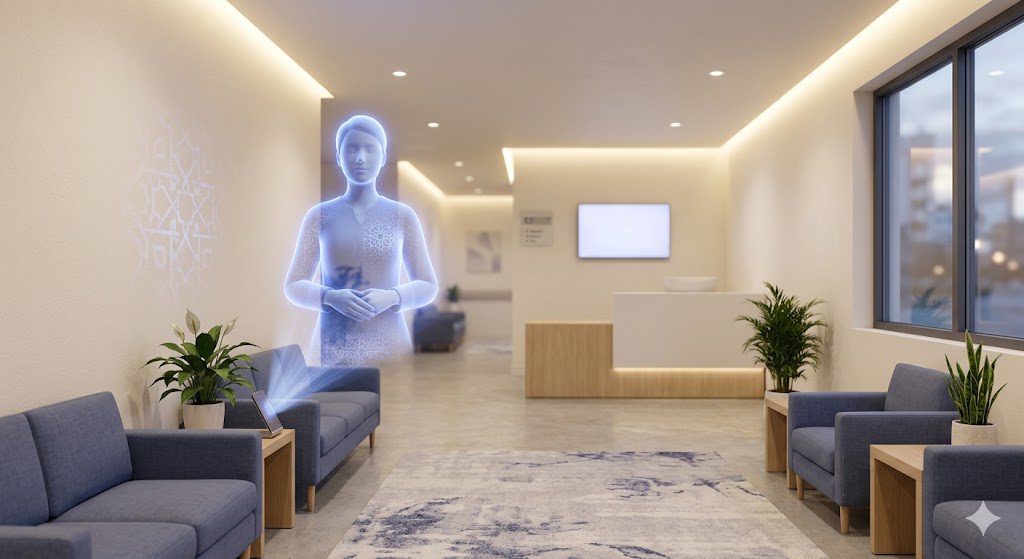
That is how the team behind Amal, the UAE’s first AI-powered physician assistant, described the deliberate choice to build her with a specific dialect, accent, and appearance rather than a generic, one-size-fits-all voice. Amal was developed by Boston Health AI and showcased by Emirates Health Services at the World Health Expo in Dubai earlier this year, and the cultural adaptation was not an afterthought bolted on after launch. It was a design requirement from the start.
| VERDICT: A genuinely well-targeted AI deployment, built to fix a specific, well-documented gap rather than chase a generic AI headline. Amal conducts pre-consultation interviews with patients and generates structured medical-grade summaries for doctors before the actual appointment begins, reducing waiting times and giving physicians better information walking into the room. The deliberate dialect and accent curation directly addresses a known weakness in most AI tools, which handle formal written Arabic reasonably and then struggle with the way people in the Gulf actually speak. Two sibling systems, Maitha for nursing workforce management and Hamda for contact centre support, were unveiled alongside her, suggesting a coordinated programme rather than a single showcase product. |
What Amal Actually Does
Amal is not a chatbot bolted onto a hospital website. According to Emirates Health Services, she takes a medical-grade history from patients before they see their doctor, structuring that information into a clear summary the physician can review immediately. The goal is twofold: reduce the time patients spend waiting simply to repeat their symptoms to multiple staff members, and give doctors a head start on diagnosis with structured information rather than a rushed verbal history taken under time pressure.
Dr Yousif Mohammed Al Serkal, Director General of Emirates Health Services, described Amal as one of three interactive AI-powered initiatives unveiled at the World Health Expo. The other two extend the same logic to different parts of the healthcare system. Maitha is described as the world’s first AI-powered system for managing the nursing workforce specifically, streamlining recruitment, organizing training programmes, and supporting career development pathways for nurses. Hamda is an interactive digital agent built to support contact centre operations, the part of the healthcare system patients interact with most often outside the clinic itself.
Why the Dialect Detail Actually Matters
This is the part of the story that connects directly to something we have tested and reported on before. Large AI language models trained primarily on internet text tend to handle Modern Standard Arabic reasonably well, because that is the form of Arabic that appears most often in formal written documents, news articles, and government communications, all of which get digitised in volume. Khaleeji dialect, the way people actually speak across the Gulf day to day, is comparatively underrepresented in that training data, and what does exist is often inconsistently spelled, since spoken dialect lacks the standardised written conventions that Modern Standard Arabic has.
A patient describing symptoms to an AI system in their natural spoken dialect, rather than formal Arabic, is exactly the scenario where most general-purpose AI tools perform worst. Building Amal’s dialect, accent, and appearance specifically for the population she serves, rather than adapting a generic assistant after the fact, is a direct, sensible response to that known weakness. It is also a meaningfully different approach from simply deploying an off-the-shelf AI chatbot and calling it a healthcare innovation, which is the more common and less effective pattern seen elsewhere.
The Broader Context This Sits Inside
Amal’s launch is not an isolated initiative. A 2026 Edelman Trust Barometer special report on health found that 59% of UAE respondents already use AI to help manage their health, compared with a global average of 35%, alongside 89% who say they trust their doctor to tell them the truth, and 90% who trust local and national health authorities generally. The UAE’s own Ministry of Health AI Office runs a parallel set of tools, including a fraud detection system for forged health certificates called Wafed and a predictive model supporting health planning around births, deaths, and disease patterns.
The UAE’s AI healthcare sector was valued at roughly 39 million dollars in 2024 and is projected to grow nearly tenfold to 337.9 million dollars by 2033, according to sector analysis cited in regional coverage. That growth trajectory, combined with the unusually high existing trust in both AI and doctors simultaneously, gives the UAE a genuinely distinctive position: most healthcare systems globally are managing declining public trust alongside AI adoption, while the UAE is seeing both rise together.
The Honest Caveat
Cultural adaptation in voice and dialect is a real, meaningful improvement, but it does not by itself solve every challenge an AI physician assistant faces. Taking an accurate pre-consultation history depends on more than language comprehension, it depends on the system correctly interpreting ambiguous or minimised symptom descriptions, a known difficulty even for human clinicians. No public data has yet been released on Amal’s accuracy rate at structuring patient histories correctly, how physicians are using or overriding her summaries in practice, or what happens when a patient’s description does not fit the structured categories she expects.
What is clear is that Emirates Health Services built the cultural adaptation in from the start rather than retrofitting it, which is the right instinct and the part most AI healthcare deployments elsewhere get wrong. Whether that translates into genuinely better patient outcomes, rather than just a smoother first impression, is the next thing worth tracking as Amal moves from showcase to daily use across the country’s clinics.
Sources
• Digital Health News: UAE unveils Amal, first AI physician assistant to support patient care — https://www.digitalhealthnews.com/uae-unveils-amal-first-ai-physician-assistant-to-support-patient-care
• Big News Network: Edelman Trust Report 2026 reinforces UAE’s leadership in health trust, AI — https://www.bignewsnetwork.com/news/279113605/edelman-trust-report-2026-reinforces-uae-leadership-in-health-trust-ai
• Gulf Today: UAE positions AI as a scalable growth engine for healthcare — https://www.gulftoday.ae/business/2026/03/24/uae-positions-ai-as-a-scalable-growth-engine-for-healthcare
• UAE Ministry of Health and Prevention, Artificial Intelligence Office, official programme listing
Robius.news — Dubai, UAE — 2026 | Built to be first. Built to be trusted.