Salik fine SMS scam UAE 2026
If you live in the UAE and drive, you have probably received this message in the last six months.
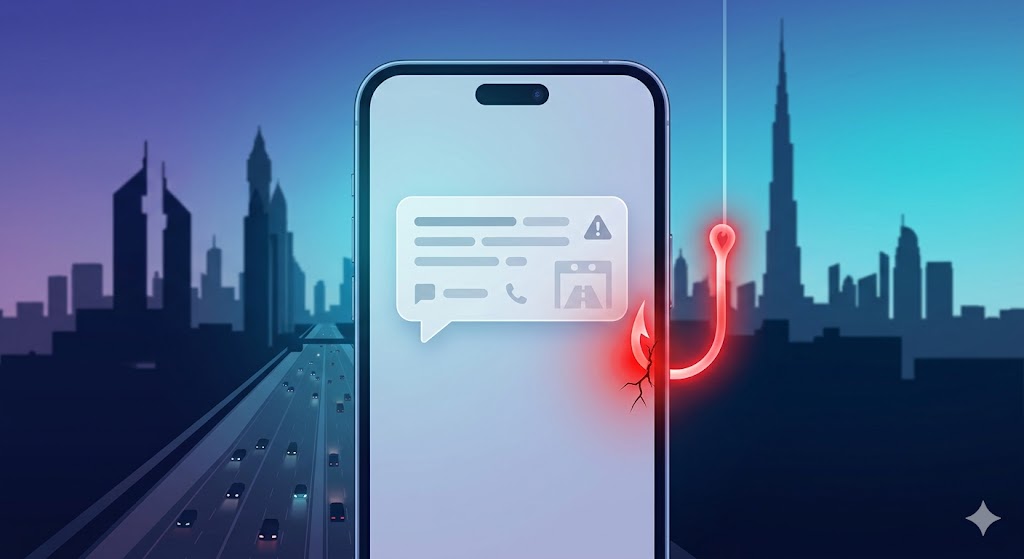
“You have an outstanding Salik violation of AED 4.00. Pay now to avoid additional penalties. Click here to settle.”
The link looks official. The amount is small enough that most people pay it without thinking. The fine is fake.
That is the entire scam. Dubai Police uncovered 35 cases of this exact pattern across the UAE in the first quarter of 2026, with 29 of those cases in Dubai alone. Real victims. Real losses. Many in the four-digit dirham range, some considerably higher.
| VERDICT: The fake AED 4 Salik fine SMS is one of the most successful scams running in the UAE right now, because the amount is too small to verify. Your AED 4 payment is not the prize. The card details you enter into the fake payment page are. Once they have those, the second hit comes within hours, often AED 1,500 to AED 5,000, processed through POS machines registered to shell entities. The single step that stops this scam is to never pay any Salik, RTA, DEWA, Etisalat, du, or courier charge from an SMS link. Always pay through the official app, even when the link looks correct. |
Why the Number Is So Small
This is the part of the scam that almost nobody explains.
If the SMS said you owed AED 400, you would call Salik. You would check the app. You would push back. AED 400 is enough money for friction to kick in.
AED 4 is below the friction threshold. It is the cost of a coffee. It feels easier to tap and clear the notification than to investigate. That is the entire psychological hook.
The scammers are not trying to steal AED 4. They are trying to get you to enter your card details into a fake payment page without thinking. The economics work in their favour. If even 2 % of people who receive the message tap and enter card data, the scammers harvest thousands of valid card numbers a week. Each card is then used for a second, much larger unauthorised charge within hours. The AED 4 was the door.
How the Second Hit Works
Once your card details are entered, the scam moves into a different phase that has nothing to do with Salik.
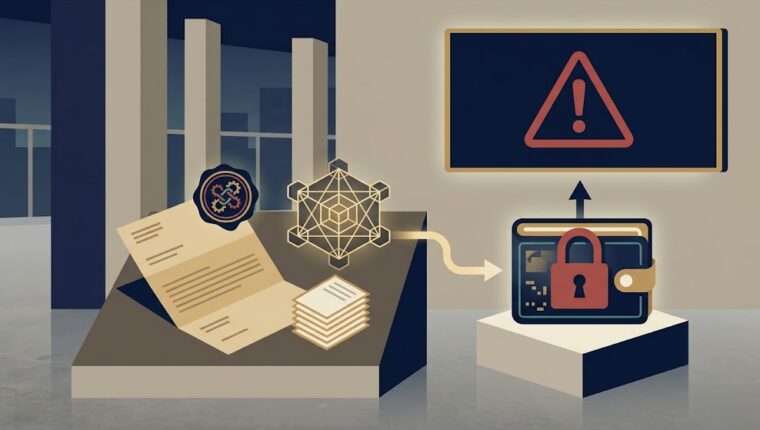
In the cases Dubai Police investigated this year, scammers used the stolen card data to process transactions through POS machines registered to fraudulent shell entities. The transactions appear as ordinary merchant payments on your bank statement, often in the AED 1,500 to AED 5,000 range. Some are higher.
This is why the scam works even on financially careful people. They know to look out for crypto payments and overseas charges. The fake Salik scam routes the stolen money through what looks like a regular UAE merchant transaction. Your bank does not flag it. Your card does not get blocked. The money is gone before you notice.
The Variations Already Running
The AED 4 Salik SMS is the most active version. The same pattern is being used across at least four other small-amount scams in the UAE right now.
DEWA bill underpayment. “You have AED 6.50 overdue. Pay now to avoid disconnection.” Same fake page. Same card harvest.
Etisalat or du recharge top-up. “Your recharge of AED 5 failed. Re-enter your payment to complete.” Often targets people who have just topped up a phone.
RTA traffic fine. “AED 3 unpaid violation, click to pay.” Lower amount than even Salik because it is designed to look like a long-forgotten micro-fine.
Courier redelivery fee. “Your package needs AED 4 redelivery clearance.” Often shows up right after someone genuinely placed an online order, which is the part that fools people.
The common shape is always the same. A small, plausible amount. A link that looks like the right brand. A payment page that takes a card and then disappears.
The Single Step That Stops It
There is only one rule. Never pay any Salik, RTA, DEWA, Etisalat, du, or courier charge from an SMS link.
Open the official app instead. Salik for Salik. RTA Dubai for fines. DEWA for utilities. Your telco app for top-ups. Aramex, FedEx, or DHL for redelivery. If the charge is real, it will appear in the official app. If it does not, it was never real.
This single habit will stop the vast majority of small-amount SMS scams running in the UAE. It costs you 20 seconds per message. It is the single most valuable digital habit a UAE resident can build in 2026.
What to Do If You Already Tapped
If you have entered card details on a fake payment page recently, do these four things in this order.
Block the card. Call your bank and block the card immediately. Do not wait for fraudulent transactions to appear. They are usually scheduled to land overnight or during the weekend when fewer customers check their accounts.
Check the official app. Open the official app for whichever service the SMS pretended to be from. Check your actual account status. If the bill or fine is real, pay it there.
Report the scam. Report the SMS to the eCrime platform at ecrime.ae and to Dubai Police on the Dubai Police app or by dialing 901.
Forward the SMS. Forward the original SMS to your telco’s fraud reporting number. Etisalat: forward to 4546. du: forward to 1012. Telcos are tracking these patterns and the reports actually help.
The Bottom Line
The AED 4 Salik fine scam is the most successful active small-amount fraud in the UAE because the number is too small to verify. The amount you pay is not the loss. The card you used to pay is.
No genuine UAE government service or utility will ever send you a payment link by SMS for an amount you do not already know about. The official channel is always the app.
Stop tapping links. Open the app.
Sources
Khaleej Times: Dh4 traffic fine cross-emirate fraud network busted, April 2026
Dubai Police Anti-Fraud Center, 2026 quarterly report on SMS fraud cases
UAE Federal e-Crime portal: ecrime.ae
Salik Corporation: official customer charge disputes process
Etisalat and du official scam reporting channels
Robius.news — Dubai, UAE — 2026 | Built to be first. Built to be trusted.